Commercial Applications
Case Study
With the advancement in technology and the goal to scale its business, JK Tyre & Industries has been working on a two-pronged strategy to add 'significant relevance' to its overall business. Along with the mainstream tyres, the Delhi based company is also running a fleet operating management business and a mobility business vertical.
"In the fleet management business, from selling a tyre as a commodity, it becomes a kind of service. We have tied up with 1300 of the 1800 large fleets across India. We provide all the services and the customer pays for the tyre's upfront cost." Anuj Kathuria, India President, JK Tyres, said. Any fleet of 100 trucks/buses, or more, is considered a 'large fleet'.
An initiative like the fleet management service also contributes to sustained relationship with customers, leading to repeat purchases of tyres by them. The customer base of 1300 fleet operators hasn't come easily for JK Tyres, an early mover with such a business intervention in the industry. The customer base has been built over the past two decades.
Under the fleet management business, JK Tyres is also offering tyre-as-a-service. It has about 250 pit stops, and close to 100 truck wheel centres, where its services are provided.
The company, which has also developed a tyre with 80% biodegradable materials, says that the 'green tyre' is close to a market launch. The tyre major has a target to achieve net zero emissions by 2050.
Source: auto.economictimes.indiatimes.com, February 9, 2024.
With reference to the above case study answer the following question:
Explain how 'Industrialisation' and 'Transport' cause ecological damage.
Answer
As the case study mentions, JK Tyre & Industries is an industrial company linked to the transport sector, both of which contribute to ecological damage. The company's efforts towards developing 'green tyres' and achieving net zero emissions by 2050 reflect awareness of these damages.
1. Industrialisation as a Cause of Ecological Damage:
Setting up of more and more industries and expansion of existing industrial units is leading to ecological damage in the following ways:
(i) Clearing of Forest Land — Industries require large tracts of land, leading to clearing of forest land and fertile agricultural land. This results in deforestation and loss of natural habitats.
(ii) Loss of Biodiversity — Biological diversity is being lost forever as natural ecosystems are destroyed to set up industries.
(iii) Industrial Waste — Industries produce chemicals, fertilisers, dyes, paints and other waste products that have a direct adverse effect on the environment.
(iv) Air and Water Pollution — Industrialisation is an important cause of air pollution (through emissions of sulphur dioxide, nitrogen oxides and carbon dioxide) and water pollution (through discharge of effluents into rivers and water bodies).
(v) Greenhouse Gas Emissions — Industries are major contributors to greenhouse gases like carbon dioxide, leading to global warming and climate change.
2. Transport as a Cause of Ecological Damage:
For transport facilities, new roads and railway lines are constantly being constructed, causing ecological damage in the following ways:
(i) Encroachment on Natural Habitats — Roads that were once croplands, forests and even wetlands are being occupied. Even in villages, new roads and railways are being constructed.
(ii) Filling of Wetlands — Shallow lakes, ponds and other wetland areas are being filled up due to non-availability of land. This causes destruction of ecosystems and affects migratory birds.
(iii) Construction in Traditional Areas — Traditional ecosystems are being altered to build schools, hospitals, community centres, sports complexes and government offices.
(iv) Vehicular Pollution — Vehicles emit harmful gases like carbon monoxide, nitrogen oxides and particulate matter, causing severe air pollution. This is one of the major contributors to greenhouse effect, smog and acid rain.
(v) Disposal of Tyres and Vehicle Waste — Used tyres and vehicle parts contribute to solid waste pollution, which is why JK Tyres' initiative to develop biodegradable tyres is a positive step.
Related Questions
Write a short note on the five beliefs of environmental ethics.
Acid rain essentially an outcome of aggressive industrialisation in the developed countries. In view of the above statement explain any two impacts of Acid Rain on the environment.
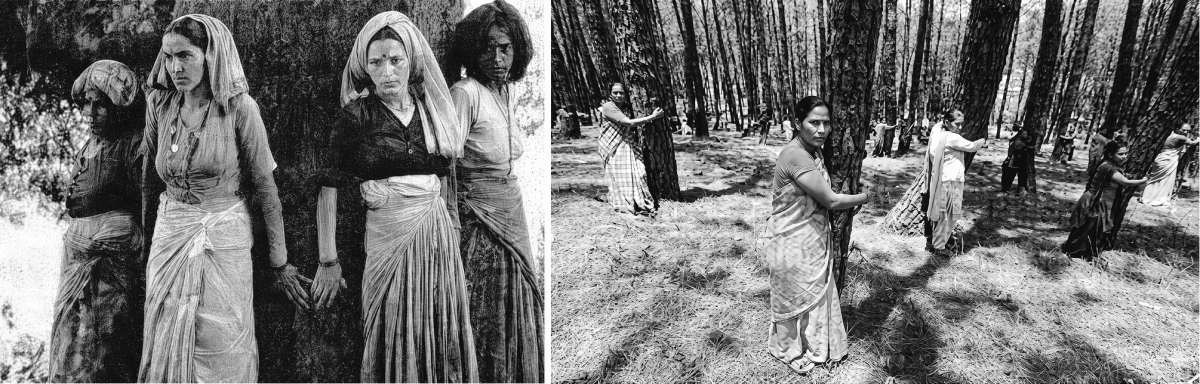
Study the pictures given below and describe the movement.
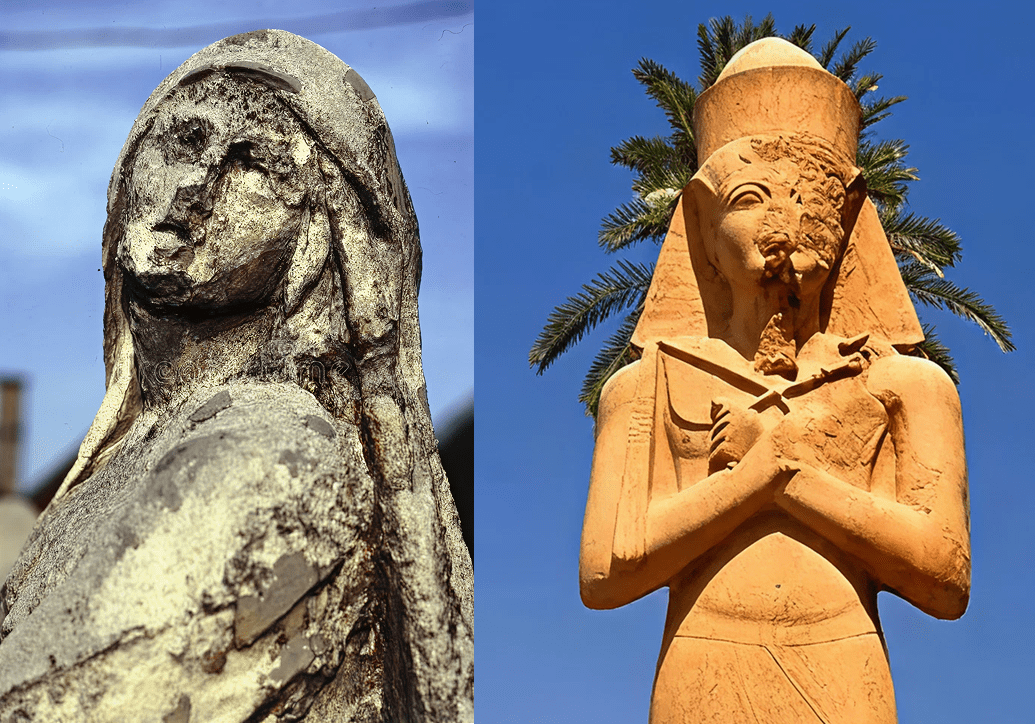
Study the pictures below. Give the reason for the corrosion of these statues and state its causes created by nature and human activities.