History & Civics
Explain briefly how did Mahatma Gandhi try to promote Hindu-Muslim unity from the Rowlatt Satyagraha to the Third Round Table conference.
Answer
Mahatma Gandhi tried to promote Hindu-Muslim unity from the Rowlatt Satyagraha to the Third Round Table conference in the following ways:
- Rowlatt Satyagraha — An important feature of the Rowlatt Satyagraha was Hindu-Muslim unity. This was the call given by Mahatma Gandhi, who always saw a unified India belonging to the people of all religions. He wanted that Hindus and Muslims should support each other in any just cause.
- Khilafat movement — Gandhiji saw in the Khilafat Movement an opportunity for uniting Hindus and Muslims. He said that the Congress plea for Hindu-Muslim unity "would be an empty phrase if the Hindus hold aloof from the Muslims when their vital interests are at stake".
- Non-Cooperation Movement — It fostered Hindu-Muslim unity which could be seen in the merger of the Khilafat issue with this Movement. It provided an opportunity to the Congress to bring the urban Muslims into the National Movement by convincing them that the nation was equally concerned with the problems affecting them.
Related Questions
Replace the underlined phrase with the correct option:
The objective of the Non-Cooperation Movement was to demobilise public opinion all over the country.
- to make the movement rare and unique.
- to provide an international base for Congress.
- to generate a wedge between Hindu-Muslim unity.
- to attain self-governance.
Read the excerpt given below and answer the questions that follow:
Being conscientiously of opinion that the Bills known as the Indian Criminal Law (Amendment) Bill No. I of 1919 and the Criminal Law (Emergency Powers) Bill No. II of 1919 are unjust, subversive of the principles of liberty and justice, and destructive of the elementary right of individuals on which the safety of the community, as a whole, and the State itself is based, we solemnly affirm that in the event of these Bills becoming law and until they are withdrawn, we shall refuse civility to obey these laws and such other laws as a Committee to be hereafter appointed may think fit, and we further affirm that in this struggle we will faithfully follow truth and refrain from violence to life, person or property.
—The Bombay Chronicle, March 4, 1920
(a) What name was given to the two Indian Criminal Law Bills mentioned in the excerpt above? Why have they been described as unjust?
(b) Which movement was started in 1920 after these bills were passed in the Central Legislature? State any two objectives of this movement.
Name two leaders linked with the Home Rule Leagues.
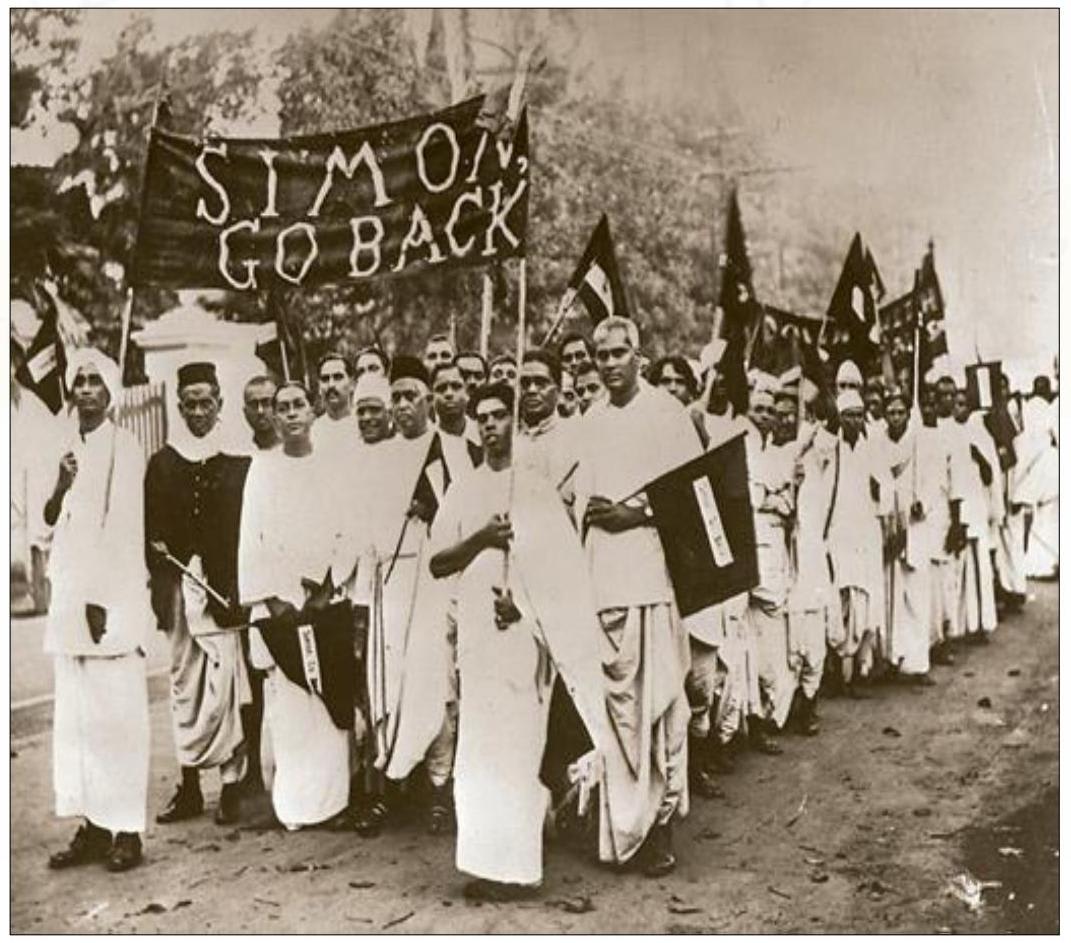
(a) Identify the event associated with the above-mentioned slogan.
(b) Why did the Indian leaders decide to boycott the event?