Biology
Given below is a part of the human respiratory system showing the air passage in the nose and throat. Read the information below the diagram and fill in the blanks with the technical terms of each structure.
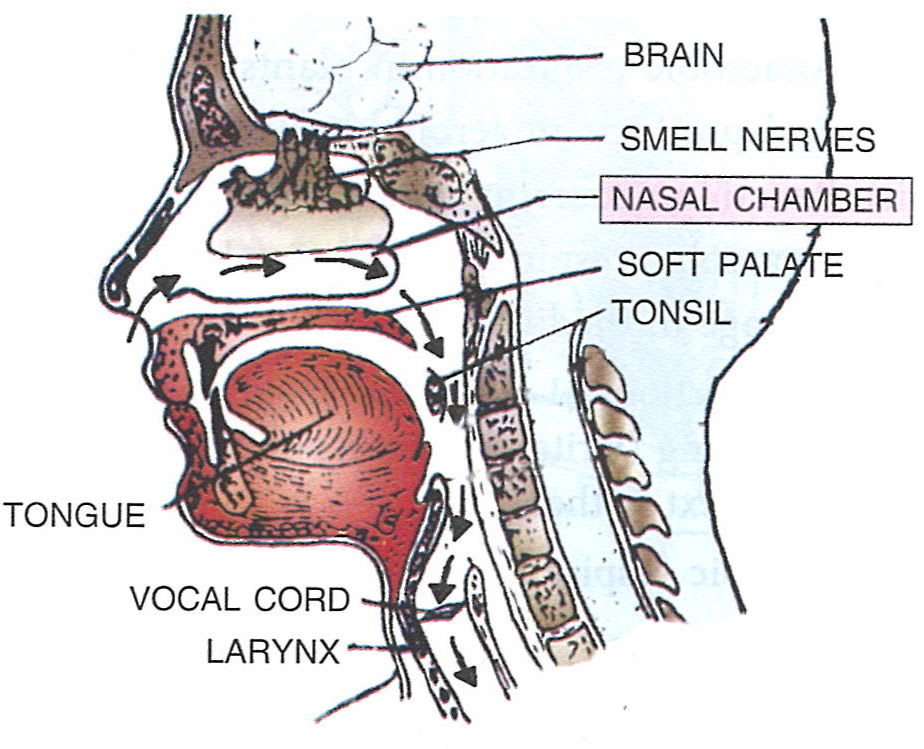
Human respiratory system consists of organs from nose to lungs. These organs are responsible for air passage and the diffusion of respiratory gases (oxygen and carbon dioxide) into the blood stream.
The (a) …………… helps to breathe and smell. The nasal chamber opens at the back into a wide cavity, called (b) …………… situated at the back of the mouth. It leads into an air tube, called (c) …………… and the (d) …………… located dorsally behind the windpipe. The entrance to the windpipe is guarded by a flap called (e) ………….. which closes at the time of swallowing food.
Answer
The Nose helps to breathe and smell. The nasal chamber opens at the back into a wide cavity, called Pharynx situated at the back of the mouth. It leads into an air tube, called Trachea and the Oesophagus located dorsally behind the windpipe. The entrance to the windpipe is guarded by a flap called Epiglottis which closes at the time of swallowing food.
Related Questions
What is the normal percentage composition of gases in inspired air and expired air respectively?
Match the items in Column I with the ones most appropriate in Column II. Rewrite the matching pairs:
Column I Column II (a) Alveoli (i) where aerobic respiration takes place (b) Bronchioles (ii) lined with hair (c) Nasal chamber (iii) diffusion of gases (d) Bronchi (iv) small air tubes (v) An inverted Y-shaped tube (vi) A common passage for food and air Given below is an example of a certain structure and its special functional activity:
"Kidney and excretion"
Fill in the blanks on a similar pattern.
(a) Alveoli and ……………
(b) Mitochondria and ……………
(c) Epiglottis and ……………
(d) Pleura and ……………
(e) Diaphragm and ……………
(f) 'C' shaped cartilage rings and ……………
Match the items in Column A with those in Column B.
Column A Column B Cartilaginous Epiglottis Large surface area Diaphragm Breathing movements Bronchi Voice Alveoli Complemented air larynx Swallowing Extra inhalation