
Dev, a rag picker, was very happy to find a large roll of electric wires because they contained ................. .
- Iron
- Copper
- Manganese
- Aluminium.
Answer
Copper
Reason — Electric wires are mainly made of copper because it is an excellent conductor of electricity. Scrap copper has a high resale value, making it valuable for rag pickers.
Quality and quantity of minerals are inversely related. This means good quality minerals are ............... in quantity than low quality minerals.
- equal
- lesser
- higher
- Both (2) and (3)
Answer
lesser
Reason — Minerals have an inverse relationship in quality and quantity, which means good quality minerals are lesser in quantity than low quality minerals.
Assertion (A): Iron ore forms the backbone of modern civilisation.
Reason (R): The iron ore deposits in India occur as hill masses and are easily accessible.
- Both A and R are true and R is the correct explanation of A.
- Both A and R are true but R does not explain A.
- A is true but R is false.
- A is false but R is true.
Answer
Both A and R are true but R does not explain A.
Explanation — Iron ore's importance comes from its role in industrialization and infrastructure development, not just its availability. That is why Reason (R) does not explain Assertion (A).
............... is one of the most widely distributed minerals found in the earth's crust.
- Iron ore
- Copper
- Coal
- Limestone
Answer
Iron ore
Reason — Iron ore is one of the most widely distributed minerals found in the earth's crust and forms the backbone of modern civilisation.
Which ore of iron is reddish in colour?
- Magnetite
- Haematite
- Limonite
- All of the above.
Answer
Haematite
Reason — Haematite is reddish in colour and is also known as 'Red Ore'.
What is also known as 'Black ore'?
- Limonite
- Haematite
- Magnetite
- None of the above.
Answer
Magnetite
Reason — Magnetite is dark brown to blackish in colour and is therefore known as 'Black Ore'.
Name the best quality of iron that contains more than 70 per cent of iron.
- Magnetite
- Limonite
- Haematite
- Ironite
Answer
Magnetite
Reason — Magnetite is the best quality of iron and contains more than 70 per cent of iron.
About 90 per cent of iron ore is used to make ................ .
- Bauxite
- Steel
- Brass
- Bronze
Answer
Steel
Reason — About 90 per cent of iron ore is used to make steel, as raw iron by itself is not as strong and hard as needed for construction and other purposes.
Which of the following is one of the chief iron ore exporting ports in India?
- Paradip
- Haldia
- Mormugao
- Kandla
Answer
Mormugao
Reason — The main iron ore exporting ports in India are Mormugao and Visakhapatnam.
Manganese is used to make which ore tough and resistant to rusting?
- copper
- mica
- bauxite
- iron
Answer
iron
Reason — Manganese is used to make steel tough and resistant to rusting, and is therefore an important raw material for the iron and steel industry.
Assertion (A): Aluminium is the best material for telescopes.
Reason (R): Aluminium is lightweight, strong and rust resistant metal.
- Both A and R are true and R is the correct explanation of A.
- Both A and R are true but R does not explain A.
- A is true but R is false.
- A is false but R is true.
Answer
Both A and R are true and R is the correct explanation of A.
Explanation — Aluminium's properties of being lightweight, strong and rust resistant make it the best material for making telescopes.
You had gone to visit your aunt at Visakhapatnam where you saw large containers being shipped. On enquiring you are told it is an ore of a metal. Which ore is it?
- Iron
- Manganese
- Copper
- Bauxite
Answer
Iron
Reason — Visakhapatnam is one of the main iron ore exporting ports in India.
Name the mineral needed to regulate blood sugar levels and to support the immune system.
- Manganese
- Iron
- Mica
- Copper
Answer
Manganese
Reason — Manganese can regulate blood sugar levels and supports the immune system.
An excess of ................ in plants and animals is toxic.
- iron
- bauxite
- manganese
- haematite
Answer
manganese
Reason — An excess of manganese in plants and animals is toxic.
............... is essential for plant growth and reduction of nitrates in green plants.
- Mica
- Iron
- Manganese
- Copper
Answer
Manganese
Reason — Manganese is essential for plant growth and is involved in the reduction of nitrates in green plants.
Name the earliest metal used by man because it is malleable.
- Iron
- Manganese
- Bauxite
- Copper
Answer
Copper
Reason — Copper is the earliest metal used by man and it is highly malleable and ductile.
Which of the following is a principal combination in which copper occurs in nature?
- Sulphides
- Oxides
- Carbonate
- All of the above.
Answer
All of the above
Reason — In nature, copper occurs in three principal combinations, that is, sulphides, oxides and carbonates.
............... is a good conductor of electricity, highly malleable and ductile.
- Copper
- Iron
- Bauxite
- Mica
Answer
Copper
Reason — Copper is a good conductor of electricity, highly malleable and ductile, and is therefore used for making electric wires and other equipment.
What is a mineral? State two characteristics of minerals.
Answer
Minerals are natural substances of organic or inorganic origin with definite chemical and physical properties.
Two characteristics of minerals are-
- Minerals are not evenly distributed over space.
- Minerals have inverse relationship in quality and quantity.
What is the difference between metallic and non-metallic minerals?
Answer
| Metallic minerals | Non-metallic minerals |
|---|---|
| Metallic minerals are minerals in which metal elements are present in their raw form. | Non-metallic minerals do not contain any metal substances in them. |
| Metallic minerals are usually found in igneous and metamorphic rock formations. | Non-metallic minerals are often found embedded in young fold mountains and sedimentary rocks. |
| Metallic minerals are good conductors of electricity as well as heat. | Non-metallic minerals are basically good insulators of electricity and heat. |
| Metallic minerals have high malleability and ductility. | Non-metallic minerals lack malleability and ductility and these minerals break down easily. |
| Metallic minerals generally have lustre. | Non-metallic minerals do not have any shine or lustre. |
Name the three varieties of iron ore mined in India. Name one state where each is found.
Answer
The three varieties of iron ore mined in India are-
1. Haematite — It is found in Odisha.
2. Magnetite — It is found in Tamil Nadu.
3. Limonite — It is found in Uttarakhand.
(i) Name the best quality of iron ore.
(ii) Name two states where it is found.
Answer
(i) Magnetite is the best quality of iron ore.
(ii) It is found in Tamil Nadu and Karnataka.
What type of mineral is copper? Name any two states where copper is found in India.
Answer
Copper is a non-ferrous metal. It is found in Madhya Pradesh and Rajasthan.
State two uses of aluminium.
Answer
Aluminium is used in aircrafts and automobiles.
Give a reason for each of the following:
(i) Manganese is an important raw material in the iron and steel industry.
(ii) Bauxite is used in electrical equipment industry.
(iii) Raw iron needs to be alloyed in order to be useful in construction and automobile industry.
Answer
(i) Manganese is an important raw material in the iron and steel industry because it is used to make steel tough and resistant to rusting.
(ii) Bauxite is used in electrical equipment industry because it is a good conductor of electricity.
(iii) Raw iron needs to be alloyed in order to be useful in construction and automobile industry because raw iron by itself is not as strong and hard as needed for construction and automobile industry.
Bauxite is an oxide of which metal? Where are the deposits of Bauxite found in India?
Answer
Bauxite is an oxide of aluminium. The deposits of Bauxite are found in Goa, Odisha, Gujarat, Madhya Pradesh, Chattisgarh, Jharkhand, Maharashtra, Karnataka and Tamil Nadu.
How is brass and bronze made? State two uses of copper.
Answer
Copper is alloyed with zinc to form brass and with tin to make bronze.
Two uses of copper are-
- It is used in building construction for roofing and plumbing.
- It is used in ship-building industry.
Name two leading states producing manganese. State two industrial uses of manganese.
Answer
Two leading states producing manganese are Karnataka and Odisha.
Two industrial uses of manganese are-
- It is an important raw material for the iron and steel industry.
- It is used in chemical industries for manufacturing bleaching powder.
Give a reason for each of the following:
(i) Magnetite is so called.
(ii) Copper is used for making electric wires.
(iii) Manganese and Copper are metallic minerals with different properties.
Answer
(i) Magnetite is so called because it possesses magnetic property.
(ii) Copper is used for making electric wires because it is a good conductor of electricity, highly malleable and ductile.
(iii) Manganese is a ferrous mineral while Copper is a non-ferrous mineral. They have a distinct composition and hence, different physical and chemical properties.
(i) Name two characteristics of iron ore deposits in India that facilitate their optimum use in the iron and steel plants.
(ii) Name two industries that require iron ore as raw material.
Answer
(i) Two characteristics of iron ore deposits in India that facilitate their optimum use in the iron and steel plants are-
- Iron ore deposits occur as hill masses and are easily accessible.
- They are found in close proximity to the areas producing coal, dolomite, limestone and manganese.
(ii) Two industries that require iron ore as raw material are iron and steel industries.
Mineral resources are richly distributed on the earth though unevenly distributed in India. They are exhaustible and non-renewable and need to be used judiciously. They have a huge impact on environment and economy.
State the environmental impact of mining and minerals use.
Answer
Following are the environmental impacts of mining and mineral use:
- Deforestation and Loss of Biodiversity
- Soil Erosion and Land Degradation
- Air and Water Pollution
- Health Hazards
- Formation of Mine Wastelands
- Climate Change contribution
In regard to ferrous metals, state the economic uses of any one mineral studied by you.
Answer
Economic Uses of Iron Ore —
- About 90 per cent of iron ore is used to make steel. Raw iron by itself is not as strong and hard as needed for construction and other purposes. So it is alloyed with other elements to strengthen and harden it, making it useful for construction, automobiles and other forms of transportation such as trucks, trains and train tracks.
- Powdered iron is used in manufacturing metallurgy products, magnets, high frequency cores, auto parts and catalysts.
- Radioactive iron (iron is 59 per cent) is used in medicine as tracer element and in biochemical and metallurgical research.
- Iron blue is used in paints, printing inks, plastics, cosmetics (eye shadow), artist colours, laundry blue, paper dyeing, fertilizer ingredient, baked enamel finishes for autos and appliances and industrial finishes.
- Black iron oxide is used as pigment in polishing compounds, metallurgy, medicine, and magnetic inks.
What are the different methods to conserve minerals?
Answer
The different methods to conserve minerals are as follows:
- Judicious and Planned Use – Minerals should be extracted and used carefully to minimize wastage.
- Recycling of Minerals – Used metals like iron, copper, and aluminum should be recycled to reduce the need for fresh mining.
- Use of Substitutes – Alternative materials should be used wherever possible to reduce mineral consumption.
- Improved Mining Techniques – Advanced methods should be used to extract minerals efficiently and reduce losses.
- Reclamation of Mined Areas – After mining, the land should be restored and rehabilitated to conserve mineral resources.
- Government Regulations – Strict policies should be enforced to prevent over-extraction and promote conservation.
With reference to the picture answer the following questions:
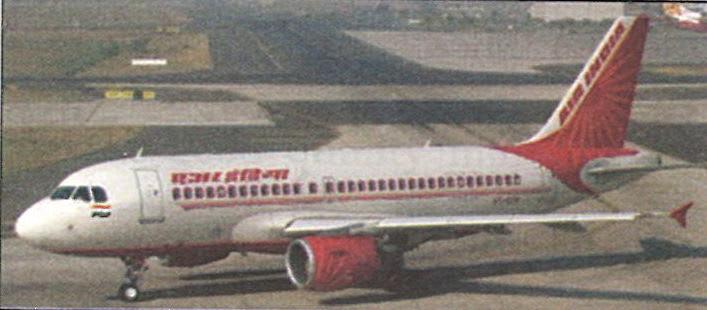
(i) Which ore is used to manufacture the object in the picture?
(ii) Which qualities of the ore make it suitable for this purpose?
Answer
(i) Bauxite.
(ii) Aluminium is extracted from Bauxite and Aluminium being light weight, strong and rust-resistant makes it suitable for building aircrafts.
You have to prepare a feasibility report for establishing mineral based industries in your state? Which industries would you recommend? Give reasons to support your answer.
Answer
I would recommend developing iron and steel industry in my state because of the following reasons:
- My state has adequate deposits of iron ore, coal, dolomite, limestone and manganese. This will cut down importing costs.
- The area is well connected by roads and railways. Thus transportation will be hassle free.
- Labour at reasonable wages can be employed from nearby areas.
- Availability of a nearby port will facilitate export of finished products.
Suppose you live in an area which has rich deposits of coal, dolomite, limestone and manganese and two exporting ports. Which industry can be developed in your area and why?
Answer
Iron and Steel industry can be developed in my area because of the following reasons:
- The raw material will be easily available. Iron ore, fuel and flux supplies can be obtained at low costs.
- The area has two exporting ports which means that it well connected with hassle free transportation.
- Labour at reasonable wages can be employed from nearby areas.
- The ports will make exporting of finished steel cost effective.
Minerals are exhaustible over time. Make a list of household items that could be reused by repairing, recycling or refurbishing and the benefits of doing so.
Answer
The household items that could be reused by repairing, recycling or refurbishing are as follows:
- Furniture — Repair or refurbish old furniture instead of discarding it.
- Clothing — Stitch torn clothes or reuse them as bags, quilts, or cleaning cloths.
- Cardboard boxes — Reuse for storage and packaging.
- Plastic containers — Reuse for storage or as plant pots.
- Electronics — Repair appliances and gadgets instead of replacing them.
- Kitchenware — Repair or reuse pots, pans, and utensils.
- Garden tools — Repair and maintain tools for continued use.
The benefits of repairing, recycling or refurbishing household items are as follows:
- Reduces waste and conserves natural resources.
- Saves money by reducing the need to buy new items.
- Minimises pollution and protects the environment.
- Extends the life of useful products.
- Promotes sustainable use of resources and supports the circular economy.