
The normal temperature of a healthy human being is close to ............... .
- 98.6 °C
- 37.0 °C
- 32.0 °C
- 27.0 °C
Answer
37.0 °C
Reason — The normal temperature of a healthy human body is taken to be 37.0 °C, which is the same as 98.6 °F. The value 98.6 belongs to the Fahrenheit scale, not the Celsius scale, while 32.0 °C and 27.0 °C are far too low to be the normal body temperature.
37 °C is the same temperature as ............... .
- 97.4 °F
- 97.6 °F
- 98.4 °F
- 98.6 °F
Answer
98.6 °F
Reason — A temperature measured as 37.0 °C on the Celsius scale is equivalent to 98.6 °F on the Fahrenheit scale.
Fill in the blanks:
(i) The hotness or coldness of a system is determined by its ............... .
(ii) The temperature of ice-cold water cannot be measured by a ............... thermometer.
(iii) The unit of temperature is degree ............... .
Answer
(i) The hotness or coldness of a system is determined by its temperature.
(ii) The temperature of ice-cold water cannot be measured by a clinical thermometer.
(iii) The unit of temperature is degree Celsius.
The range of a laboratory thermometer is usually ............... .
- 10 °C to 100 °C
- –10 °C to 110 °C
- 32 °C to 45 °C
- 35 °C to 42 °C
Answer
–10 °C to 110 °C
Reason — A laboratory thermometer is used to measure temperatures over a wide range, and such a thermometer typically measures temperatures from –10 °C to 110 °C.
Four students used a laboratory thermometer to measure the temperature of water as shown in Fig. 7.6:
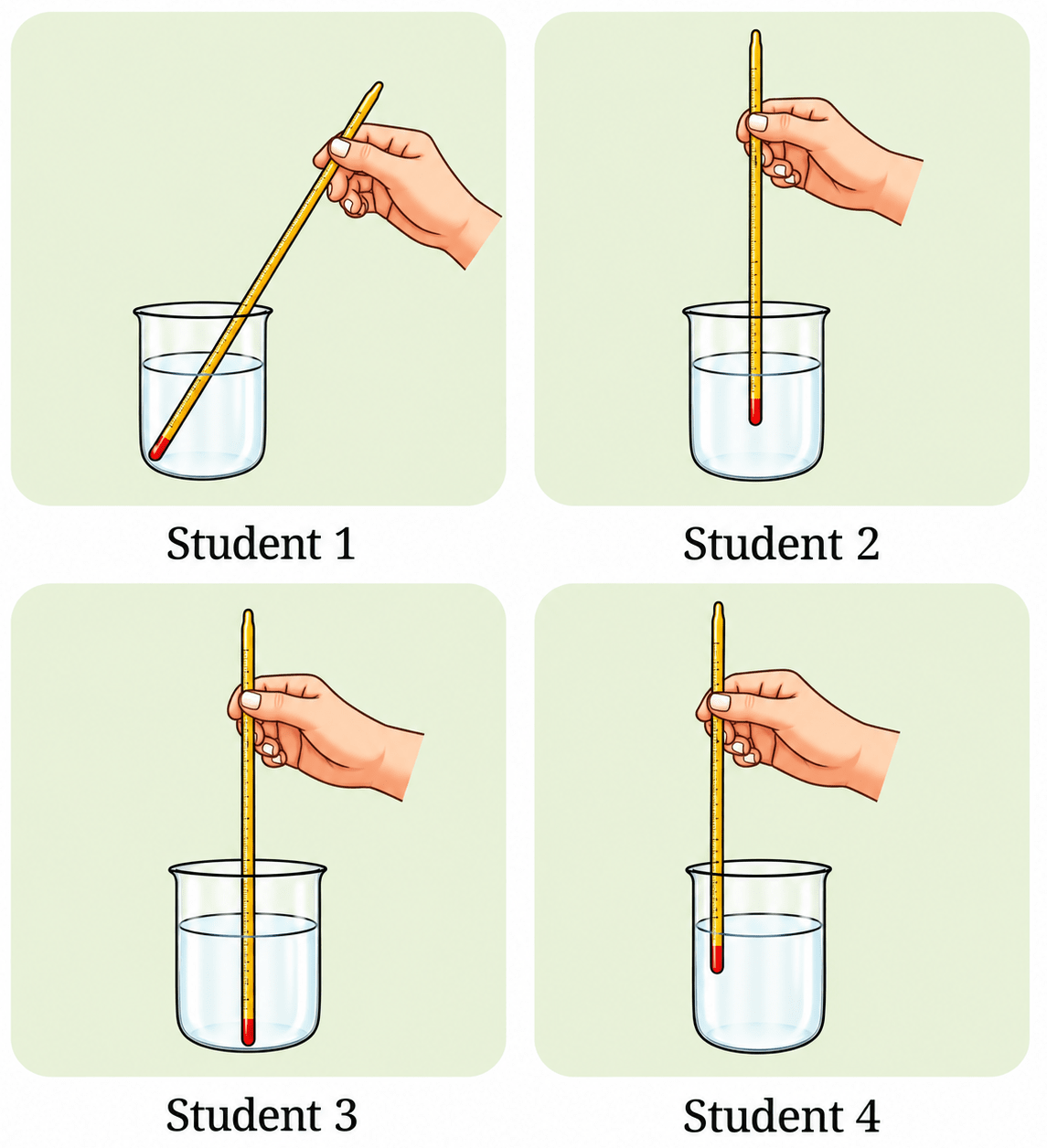
Who do you think followed the correct way for measuring temperature?
- Student 1
- Student 2
- Student 3
- Student 4
Answer
Student 2
Reason — While measuring temperature, the thermometer should be held vertically with its bulb fully immersed in the water but not touching the bottom or the sides of the beaker. Only Student 2 holds the thermometer in this correct way.
Colour to show the red column on the drawings of thermometers (Fig. 7.7) as per the temperatures written below:
14 °C, 17 °C, 7.5 °C
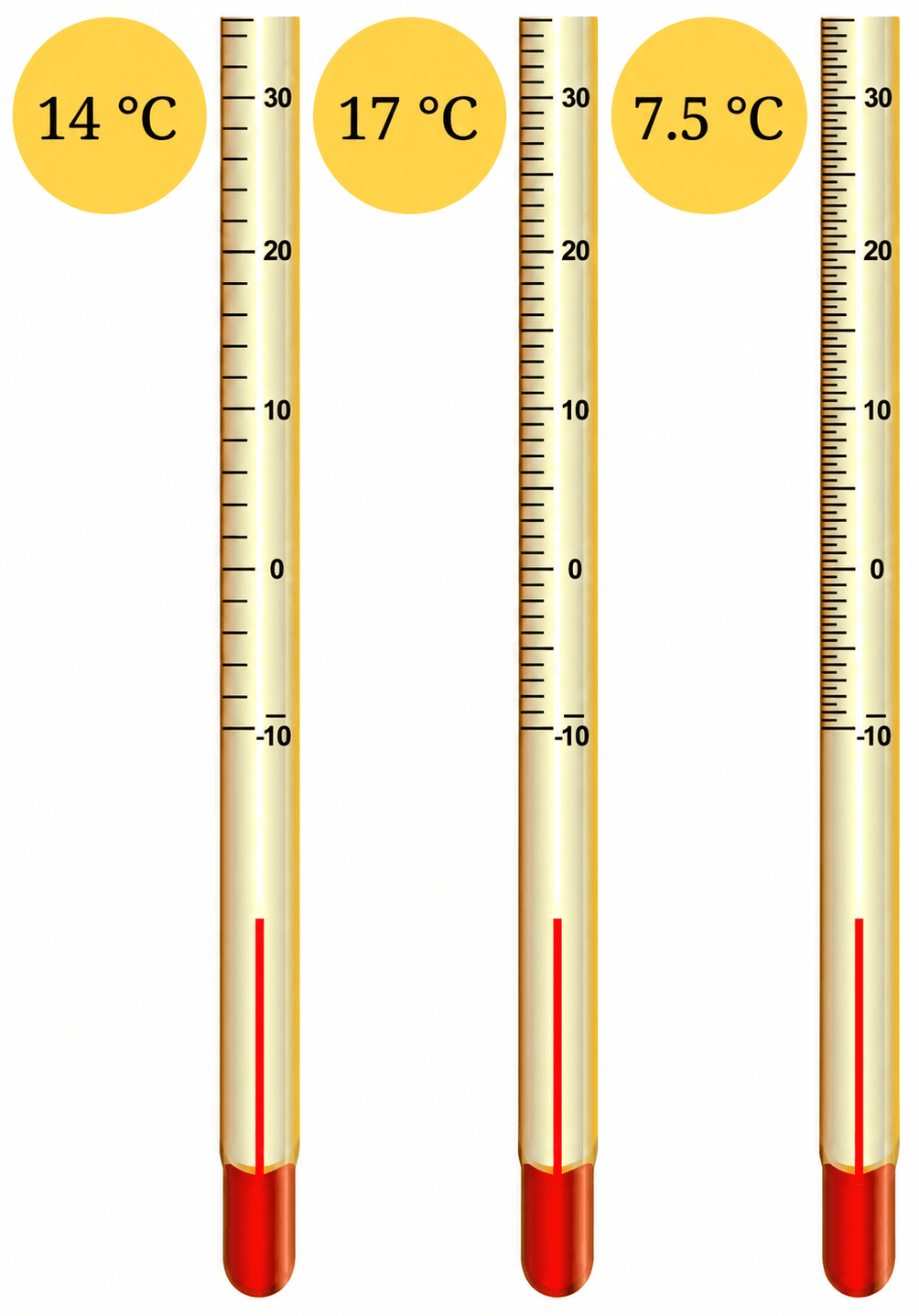
Answer
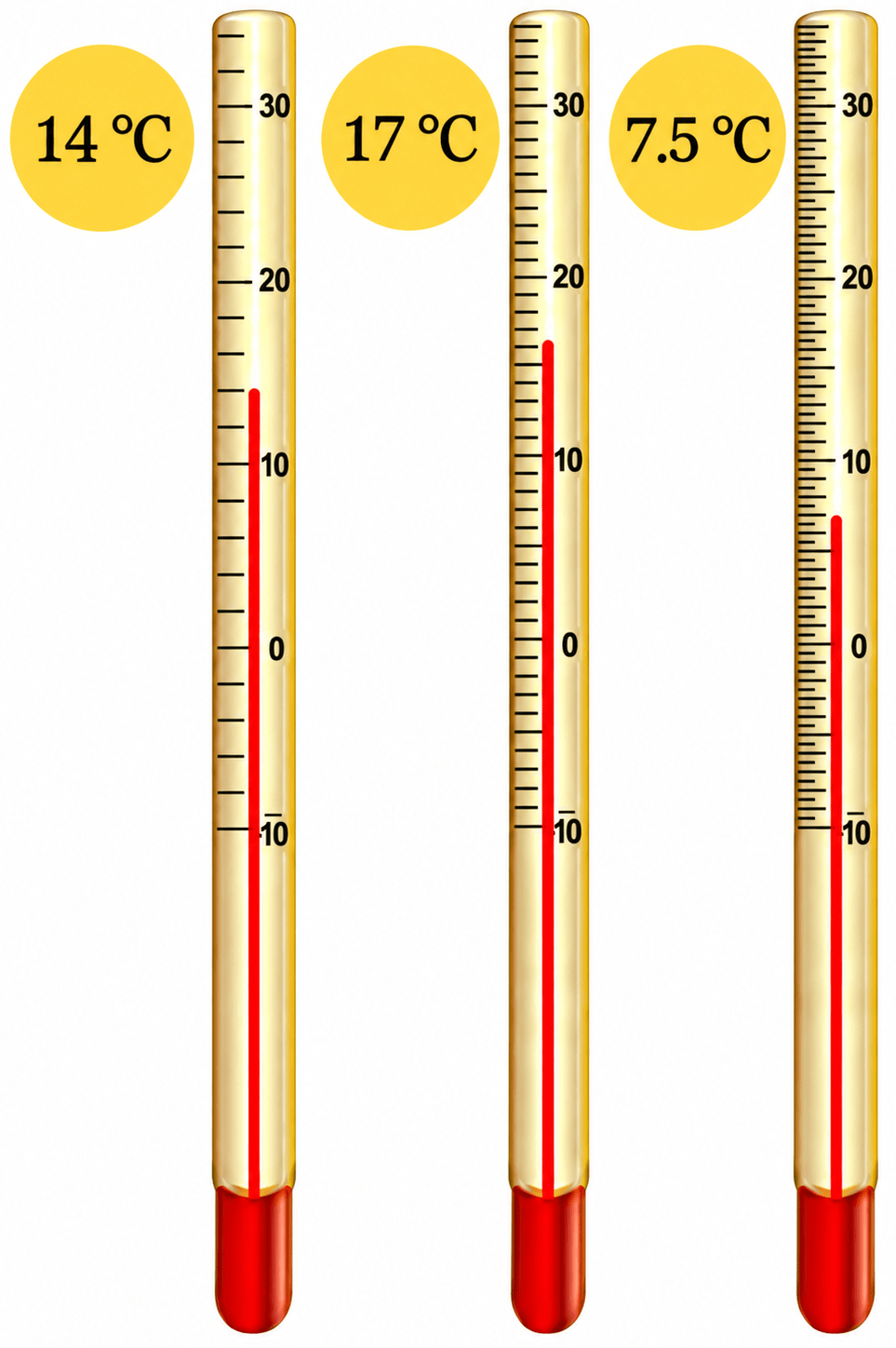
The red liquid column should be coloured so that its top reaches the correct mark on each thermometer:
- First thermometer — red column up to the 14 °C mark.
- Second thermometer — red column up to the 17 °C mark.
- Third thermometer — red column up to the 7.5 °C mark (midway between the 5 °C and 10 °C marks).
Observe the part of thermometer shown in Fig. 7.8 and answer the following questions:

(i) What type of thermometer is it?
(ii) What is the reading of the thermometer?
(iii) What is the smallest value that this thermometer can measure?
Answer
(i) It is a laboratory thermometer.
(ii) The reading of the thermometer is 26 °C.
(iii) The temperature difference between two bigger marks is 10 °C and there are 10 divisions between them. So, the smallest value it can measure is °C.
A laboratory thermometer is not used to measure our body temperature. Give a reason.
Answer
A laboratory thermometer is not used to measure our body temperature because its reading begins to fall as soon as it is taken out of contact with the body, so the temperature has to be read while the thermometer is still in contact. Since we cannot read it while it is inside the mouth, it is unsuitable for this purpose. Also, its range (–10 °C to 110 °C) is far larger than needed, and its smallest division (usually 1 °C) is too large to measure body temperature accurately.
Vaishnavi has not gone to school as she is ill. Her mother has kept a record of her body temperature for three days as shown in Table 7.4.
Table 7.4: Body temperature record of Vaishnavi
| DAY | 7am | 10am | 1pm | 4pm | 7pm | 10pm |
|---|---|---|---|---|---|---|
| One | 38.0 °C | 37.8 °C | 38.0 °C | 38.0 °C | 40.0 °C | 39.0 °C |
| Two | 38.6 °C | 38.8 °C | 39.0 °C | 39.0 °C | 39.0 °C | 38.0 °C |
| Three | 37.6 °C | 37.4 °C | 37.2 °C | 37.0 °C | 36.8 °C | 36.6 °C |
(i) What was Vaishnavi's highest recorded temperature?
(ii) On which day and at what time was Vaishnavi's highest temperature recorded?
(iii) On which day did Vaishnavi's temperature return to normal?
Answer
(i) Vaishnavi's highest recorded temperature was 40.0 °C.
(ii) The highest temperature was recorded on Day One at 7 pm.
(iii) Vaishnavi's temperature returned to normal on Day Three. It reached 37.0 °C at 4 pm.
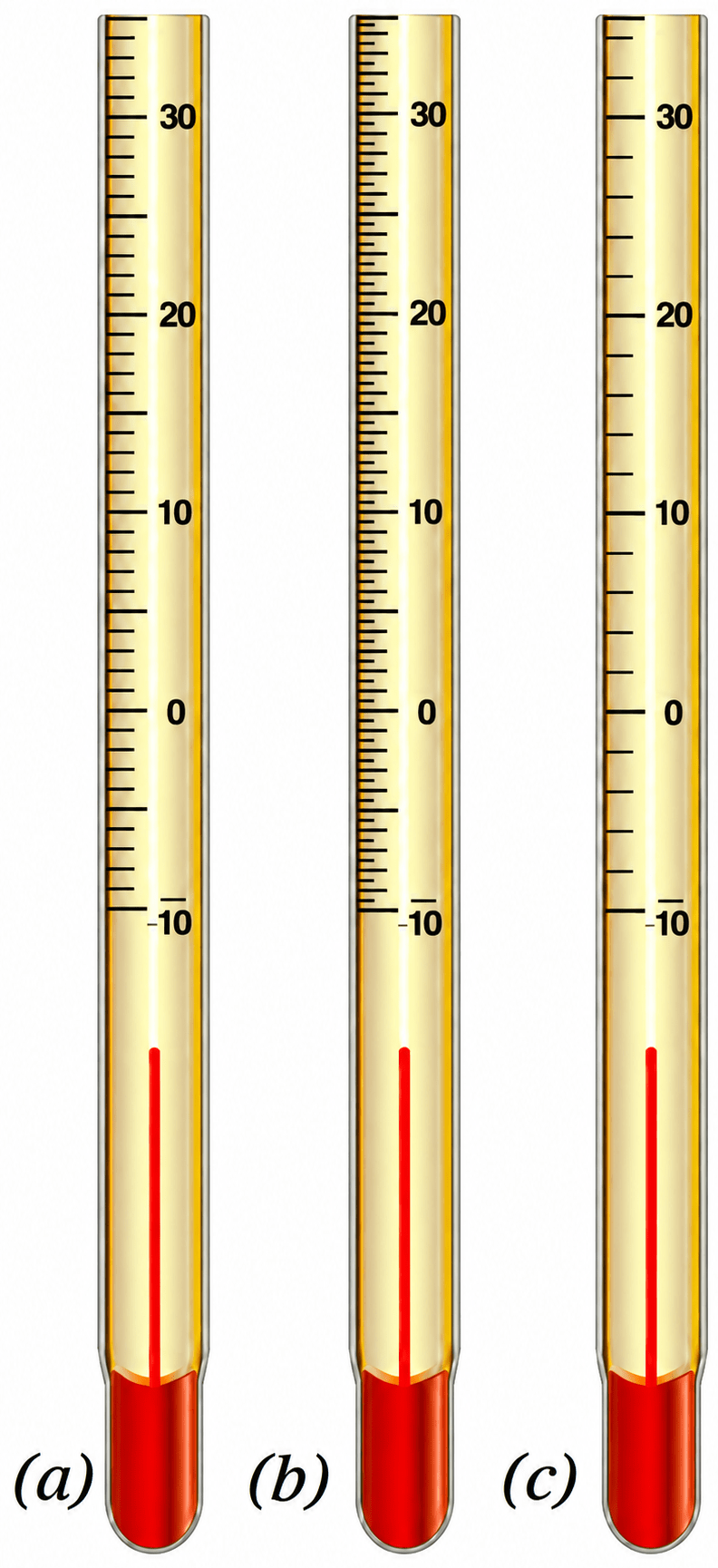
If you have to measure the temperature 22.5 °C, which of the following three thermometers will you use (Fig. 7.9)? Explain.
Answer
I will use thermometer (b). To measure a temperature of 22.5 °C, the smallest division of the thermometer must be able to read 0.5 °C. Thermometer (b) has the most closely spaced divisions, with each small division reading 0.5 °C, so it can show 22.5 °C exactly. Thermometers (a) and (c) have larger smallest divisions (1 °C and 2 °C), so they cannot read 22.5 °C accurately.
The temperature shown by the thermometer in Fig. 7.10 is

- 28.0 °C
- 27.5 °C
- 26.5 °C
- 25.3 °C
Answer
27.5 °C
Reason — On this thermometer, the smallest division reads 0.5 °C. The top of the liquid column lies midway between the 27 °C and 28 °C marks, so the temperature shown is 27.5 °C.
A laboratory thermometer has 50 divisions between 0 °C and 100 °C. What does each division of this thermometer measure?
Answer
The temperature difference between 0 °C and 100 °C is 100 °C, and this range is divided into 50 divisions.
So, each division measures °C.
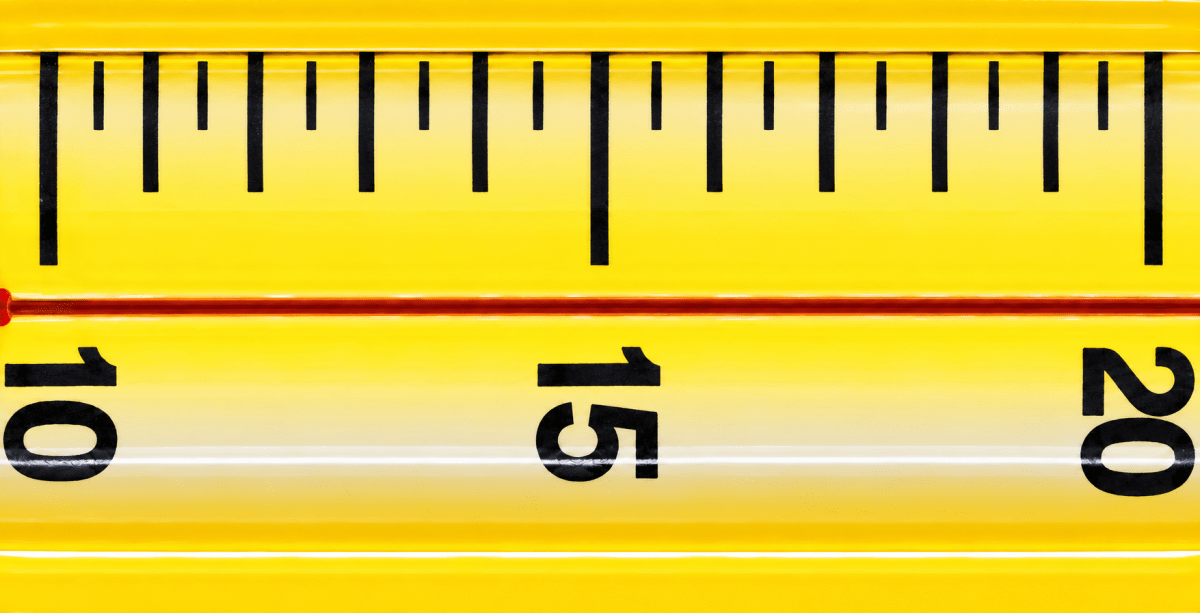
Draw the scale of a thermometer in which the smallest division reads 0.5 °C. You may draw only the portion between 10 °C and 20 °C.
Answer
The difference between 10 °C and 20 °C is 10 °C. Since each smallest division represents 0.5 °C, the number of equal divisions required is . Draw 20 equally spaced divisions between 10 °C and 20 °C, and label the 10 °C, 15 °C and 20 °C marks clearly.
Komal tells you that she has a fever of 101 degrees. Does she mean it on the Celsius scale or Fahrenheit scale?
Answer
Komal means it on the Fahrenheit scale. Normal human body temperature is about 37 °C (98.6 °F), and body temperature does not normally rise above 42 °C. Therefore, 101 °C cannot be a plausible reading for her fever, whereas 101 °F is above the normal body temperature and indicates fever. Hence, she means 101 °F.