
State true or false :
(i) The letter B has one line of symmetry.
(ii) The letter F has no line of symmetry.
(iii) Figure O has only two lines of symmetry.
(iv)
(v) The letter N has one line of symmetry.
(vi)
(vii) The letter D has only one line of symmetry.
(viii) A scalene triangle has three lines of symmetry.
Answer
(i) The letter B can be folded into two coincident parts only about the horizontal line passing through its middle. So, it has one line of symmetry.
Hence, the given statement is true.
(ii) In whatever manner we fold the letter F, the two parts of the letter do not coincide. So, it has no line of symmetry.
Hence, the given statement is true.
(iii) Figure O is a circle and a circle has an infinite number of lines of symmetry, as every line that passes through the centre of a circle is a line of symmetry. So, it does not have only two lines of symmetry.
Hence, the given statement is false.
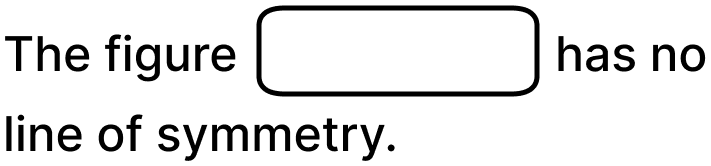
(iv) The given figure is a rectangle with rounded corners. It can be folded into two coincident parts about the vertical line and about the horizontal line passing through its centre. So, it has two lines of symmetry.
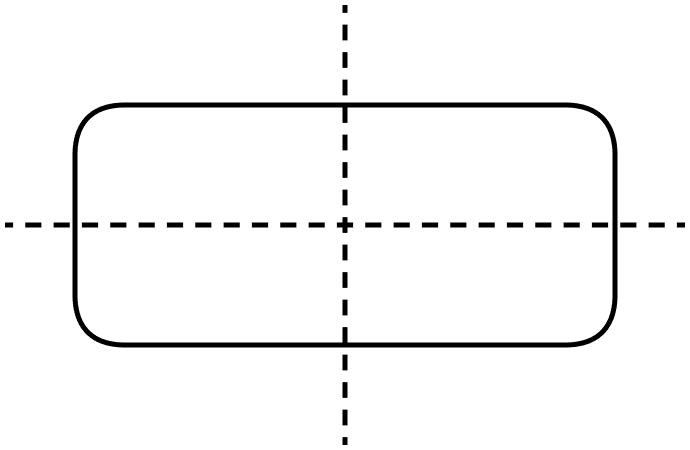
Hence, the given statement is false.
(v) In whatever manner we fold the letter N, the two parts of the letter do not coincide. So, it has no line of symmetry.
Hence, the given statement is false.
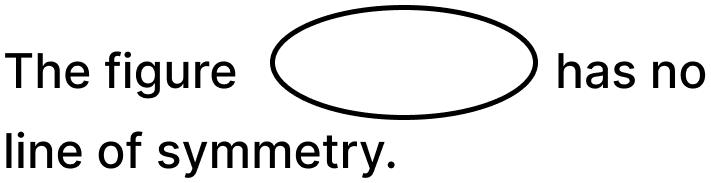
(vi) The given figure is an oval (ellipse). It can be folded into two coincident parts about the horizontal line and about the vertical line passing through its centre. So, it has two lines of symmetry.
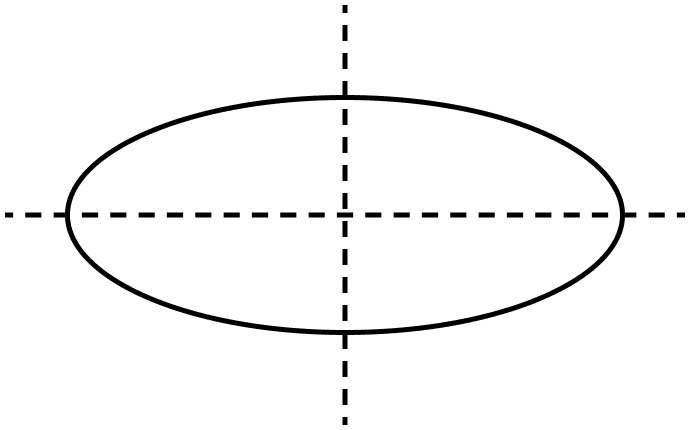
Hence, the given statement is false.
(vii) The letter D can be folded into two coincident parts only about the horizontal line passing through its middle. So, it has only one line of symmetry.
Hence, the given statement is true.
(viii) A scalene triangle has no line of symmetry. In whatever manner we fold a scalene triangle, the two parts of the figure do not coincide.
Hence, the given statement is false.
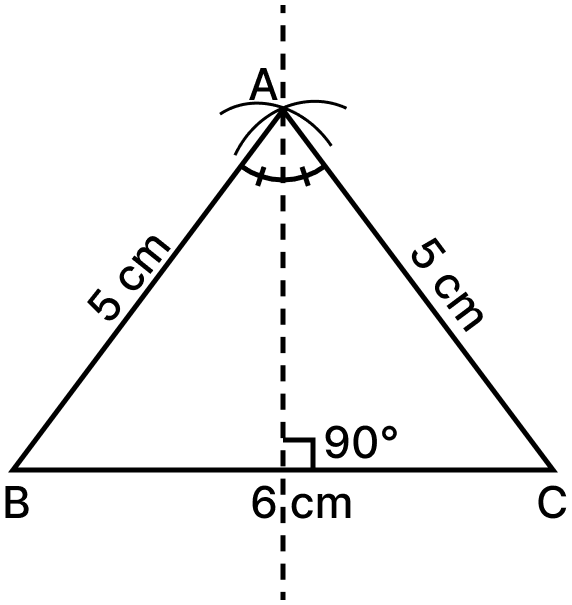
Construct a triangle ABC in which AB = AC = 5 cm and BC = 6 cm. Draw all its lines of symmetry.
Answer
Steps of construction:
Draw BC = 6 cm.
With B as centre and radius 5 cm, draw an arc.
With C as centre and the same radius, draw another arc which cuts the previous arc at the point A.
Join AB and AC.
Draw the bisector of ∠A.
Since, AB = AC
∴ ABC is an isosceles triangle
An isosceles triangle has only one line of symmetry, which is the bisector of the angle of vertex A and is also the perpendicular bisector of its base BC. It is shown dotted in the figure above.
Hence, ABC is the required triangle and it has only 1 line of symmetry.
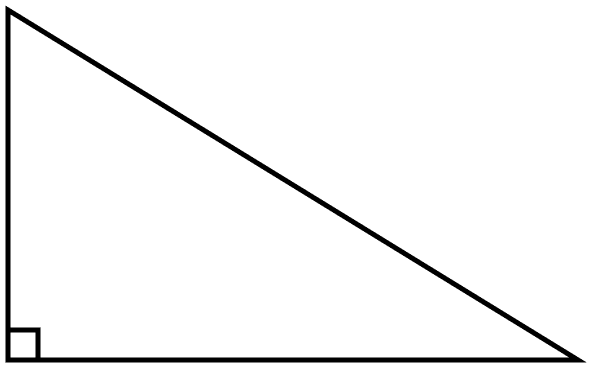
Examine the following figure carefully, draw line(s) of symmetry if possible :
Answer
The given figure is a right angled triangle whose sides are all unequal, i.e., it is a scalene triangle. In whatever manner we fold it, the two parts of the figure do not coincide.
Hence, a line of symmetry is not possible for the given figure.
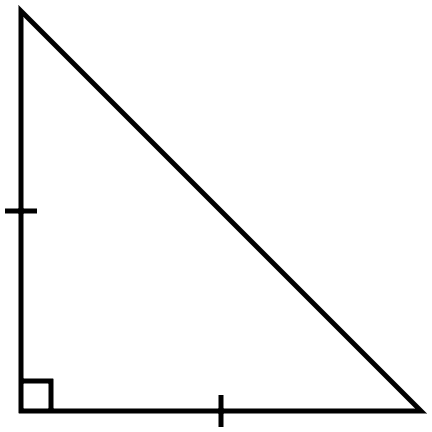
Examine the following figure carefully, draw line(s) of symmetry if possible :
Answer
The given figure is an isosceles right angled triangle, as its two arms containing the right angle are equal. It can be folded into two coincident parts only about the bisector of the right angle, which is also the perpendicular bisector of its hypotenuse.
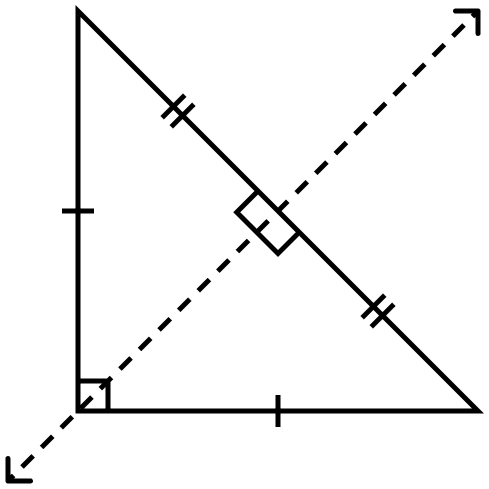
Hence, the given figure has 1 line of symmetry, shown dotted in the figure above.
Examine the following figure carefully, draw line(s) of symmetry if possible :
Answer
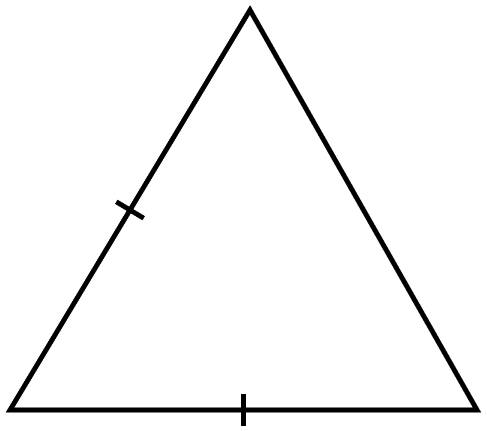
The given figure is an isosceles triangle, as two of its sides are marked equal. It can be folded into two coincident parts only about the bisector of the angle contained by the two equal sides, which is also the perpendicular bisector of the third side.
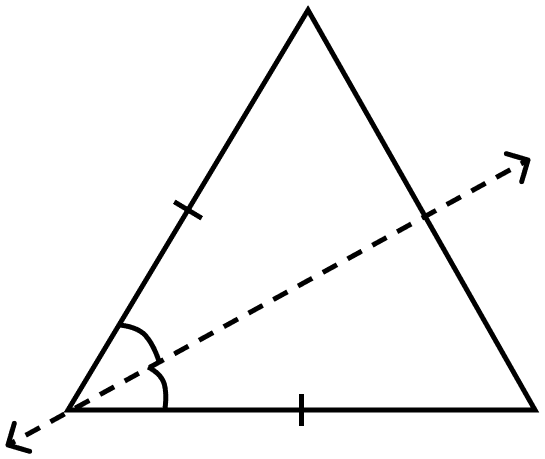
Hence, the given figure has 1 line of symmetry, shown dotted in the figure above.
Examine the following figure carefully, draw line(s) of symmetry if possible :
Answer
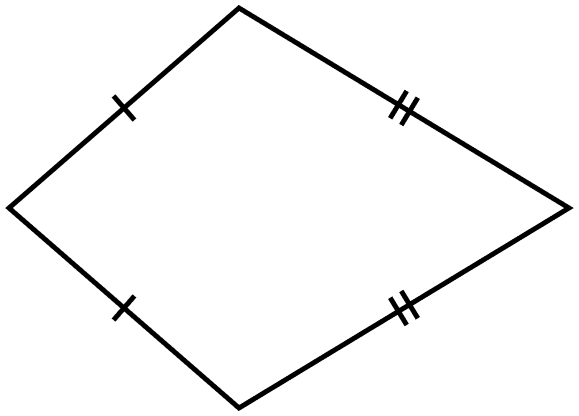
The given figure is a kite shaped figure, as its two pairs of adjacent sides are equal. It can be folded into two coincident parts only about the diagonal joining the vertices at which its pairs of equal sides meet.
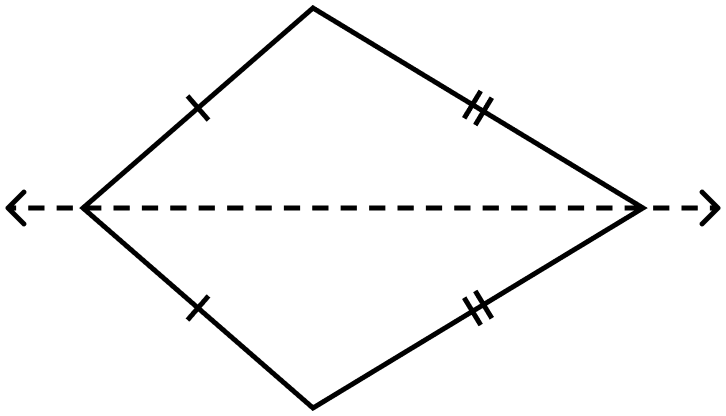
Hence, the given figure has 1 line of symmetry, shown dotted in the figure above.
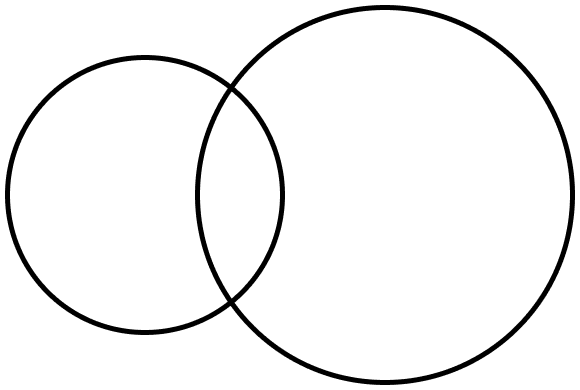
Examine the following figure carefully, draw line(s) of symmetry if possible :
Answer
The given figure is made up of two unequal circles which intersect each other. It can be folded into two coincident parts only about the line passing through the centres of the two circles.
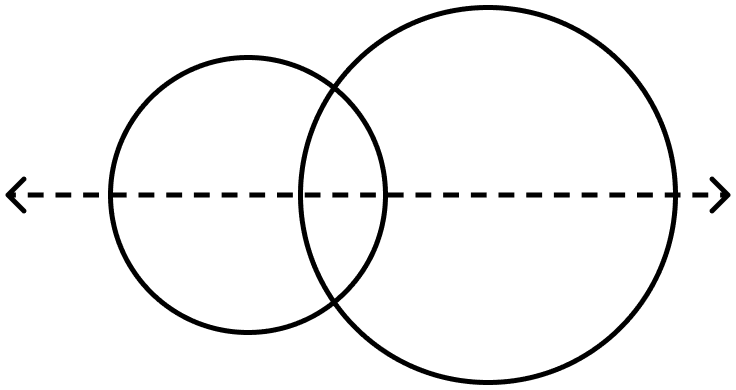
Hence, the given figure has 1 line of symmetry, shown dotted in the figure above.
Examine the following figure carefully, draw line(s) of symmetry if possible :
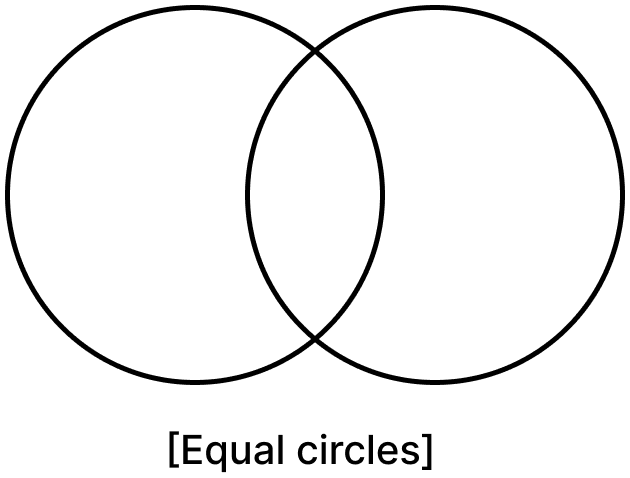
[Equal circles]
Answer
The given figure is made up of two equal circles which intersect each other. It can be folded into two coincident parts about the line passing through the centres of the two circles and about the line passing through the two points of intersection of the circles.
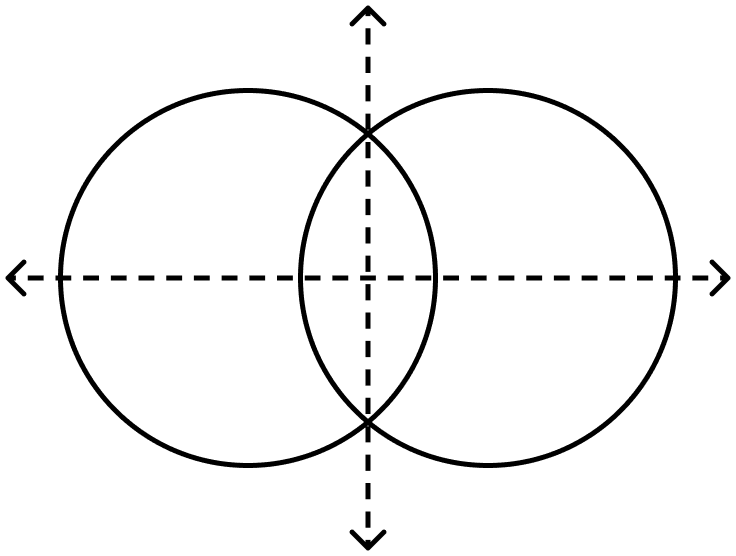
Hence, the given figure has 2 lines of symmetry, shown dotted in the figure above.
Construct a triangle XYZ in which XY = YZ = ZX = 4.5 cm. Draw all its lines of symmetry.
Answer
Steps of construction:
Draw YZ = 4.5 cm.
With Y as centre and radius 4.5 cm, draw an arc.
With Z as centre and the same radius, draw another arc which cuts the previous arc at the point X.
Join XY and XZ.
Draw the bisectors of ∠X, ∠Y and ∠Z.
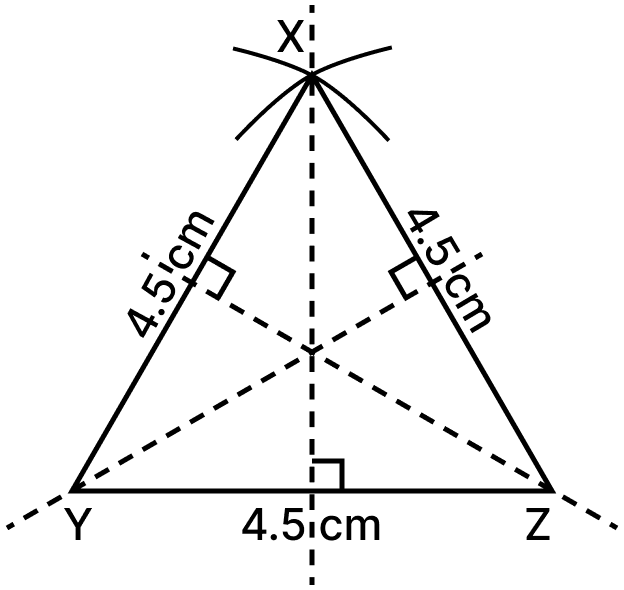
XYZ is an equilateral triangle. An equilateral triangle has three lines of symmetry, which are the bisectors of the angles of its vertices and are also the perpendicular bisectors of its sides. They are shown dotted in the figure above.
Hence, XYZ is the required triangle and, since it is equilateral, it has 3 lines of symmetry.
Construct a triangle ABC in which AB = BC = 4 cm and ∠ABC = 60°. Draw all its lines of symmetry.
Answer
Steps of construction:
Draw BC = 4 cm.
At B, construct ∠CBX = 60°.
From BX, cut off BA = 4 cm.
Join AC.
Draw the bisectors of ∠A, ∠B and ∠C.
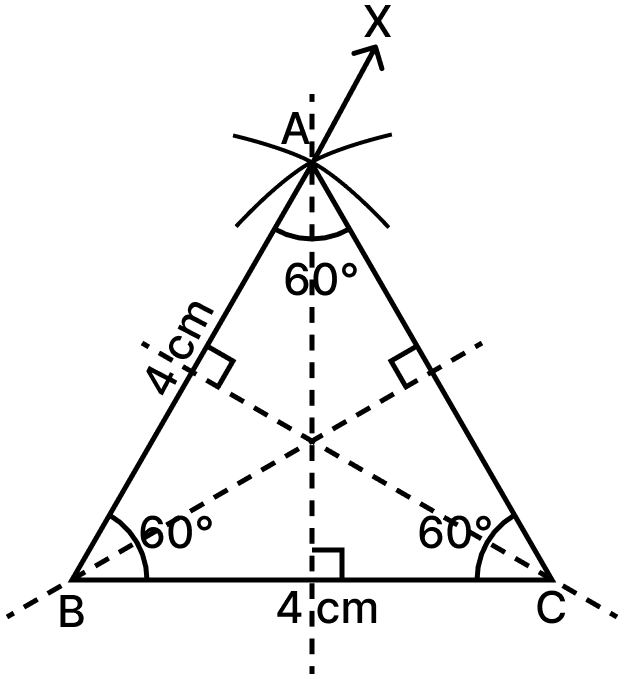
In ∆ABC,
⇒ AB = BC = 4 cm
⇒ ∠BAC = ∠BCA [Angles opposite to equal sides of a triangle are always equal]
Using angle sum property,
⇒ ∠BAC + ∠BCA + ∠ABC = 180°
⇒ ∠BAC + ∠BAC + 60° = 180°
⇒ 2∠BAC = 120°
⇒ ∠BAC = = 60°
⇒ ∠BAC = ∠BCA = ∠ABC = 60°
So, ∆ABC is an equilateral triangle.
An equilateral triangle has three lines of symmetry, which are the bisectors of the angles of its vertices and are also the perpendicular bisectors of its sides. They are shown dotted in the figure above.
Hence, ABC is the required triangle and, since it is equilateral, it has 3 lines of symmetry.
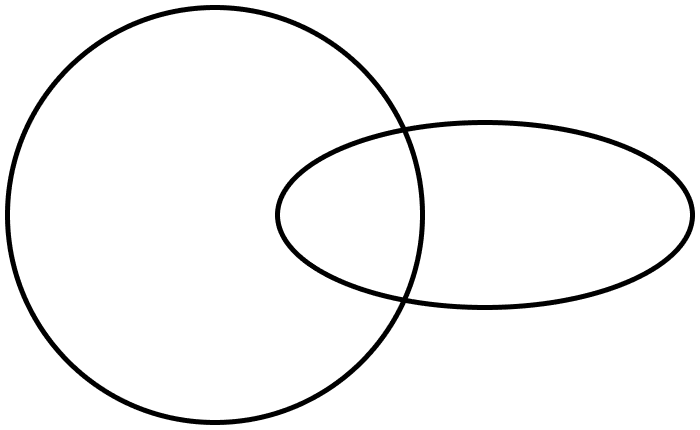
Draw the line(s) of symmetry for the figure drawn below :
Answer
The given figure is made up of a circle and an oval (ellipse) which intersect each other. It can be folded into two coincident parts only about the horizontal line passing through the centre of the circle and the centre of the oval.
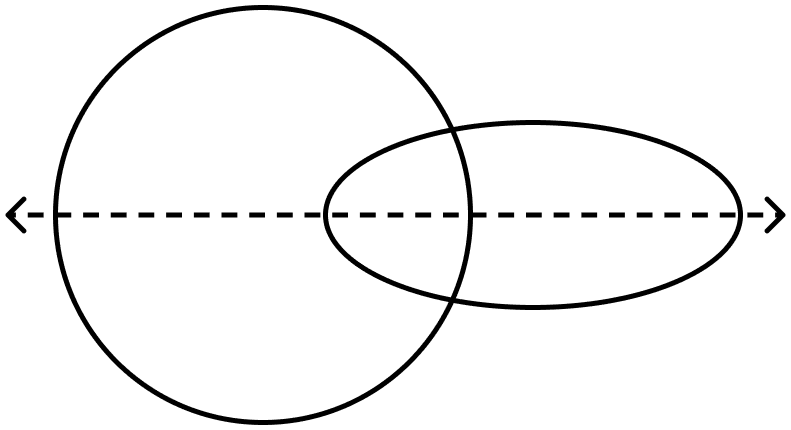
Hence, the given figure has 1 line of symmetry, shown dotted in the figure above.
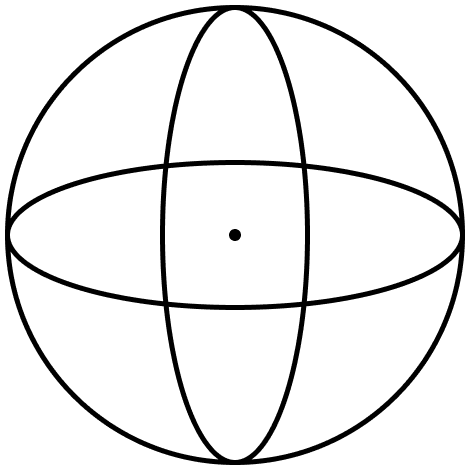
Draw the line(s) of symmetry for the figure drawn below :
Answer
The given figure is a circle with two identical ovals (ellipses) drawn inside it, one vertical and one horizontal, both having their centres at the centre of the circle. It can be folded into two coincident parts about the vertical line and the horizontal line through the centre, and also about the two lines through the centre which bisect the angles between them.
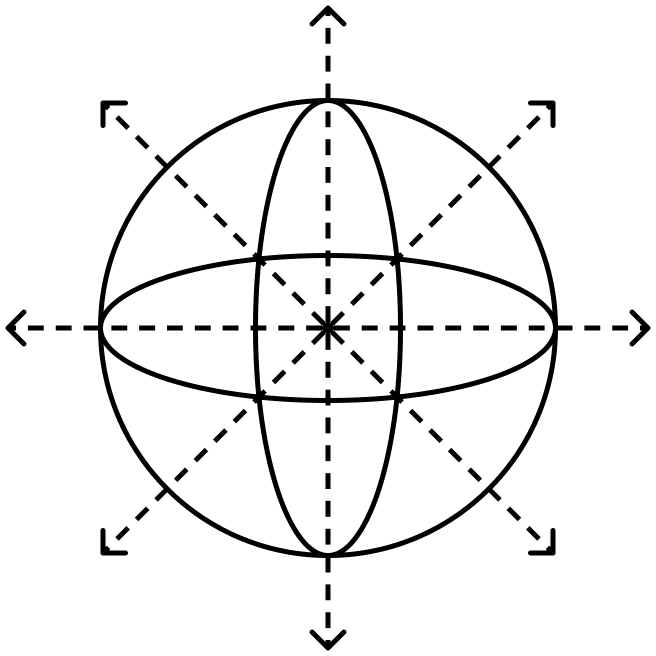
Hence, the given figure has 4 lines of symmetry, shown dotted in the figure above.
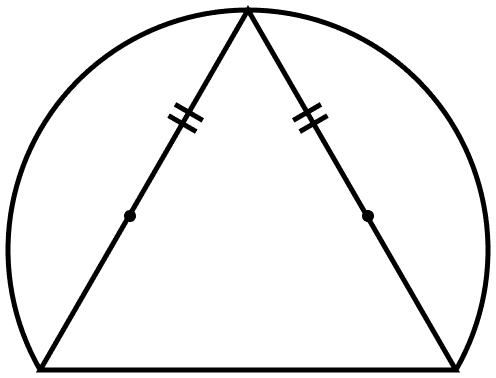
Draw the line(s) of symmetry for the figure drawn below :
Answer
The given figure is a circular arc with an isosceles triangle drawn in it, whose vertex lies on the circular arc and whose base is a chord of the circular arc. It can be folded into two coincident parts only about the bisector of the vertex angle of the triangle, which is also the perpendicular bisector of its base.
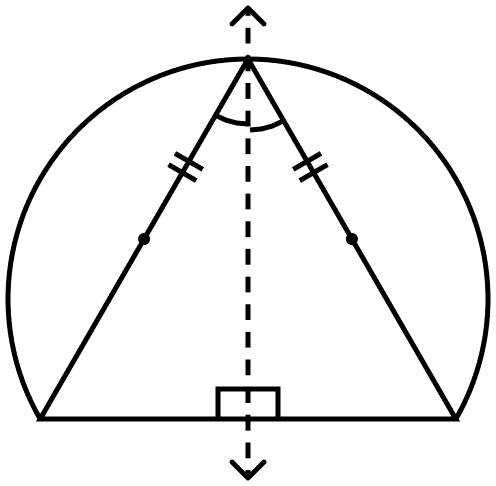
Hence, the given figure has 1 line of symmetry, shown dotted in the figure above.
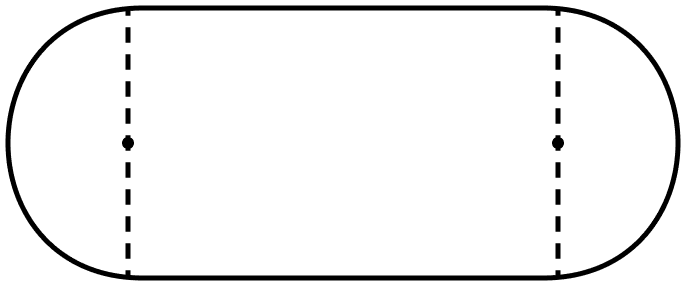
Draw the line(s) of symmetry for the figure drawn below :
Answer
The given figure is a rectangle with two equal semi-circles drawn on its left and right sides. It can be folded into two coincident parts about the horizontal line passing through the centres of the two semi-circles and about the vertical line joining the mid-points of the upper and lower sides of the rectangle.
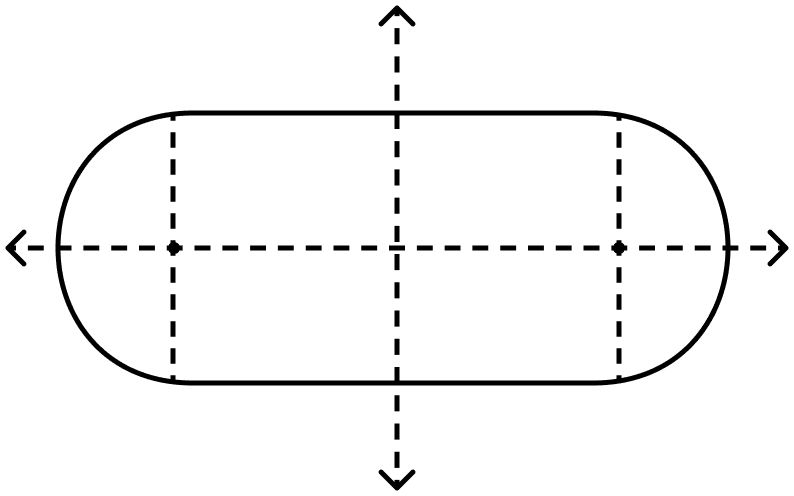
Hence, the given figure has 2 lines of symmetry, shown dotted in the figure above.
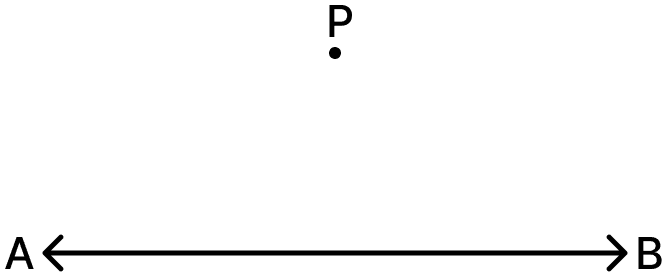
In the following case, construct a point that is symmetric to the given point P with respect to the given line AB.
Answer
Steps of construction:
Draw PO perpendicular to AB, and extend it upto a point R.
From OR cut OQ = OP.
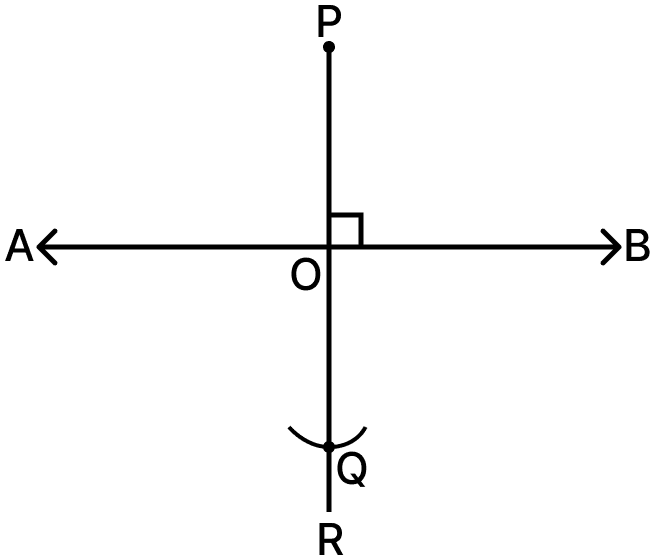
Hence, Q is the required point which is symmetric to the given point P with respect to the given line AB.
In the following case, construct a point that is symmetric to the given point P with respect to the given line AB.
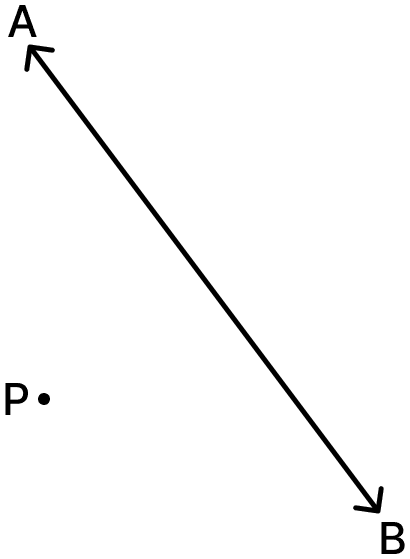
Answer
Steps of construction:
Draw PO perpendicular to AB, and extend it upto a point R.
From OR cut OQ = OP.
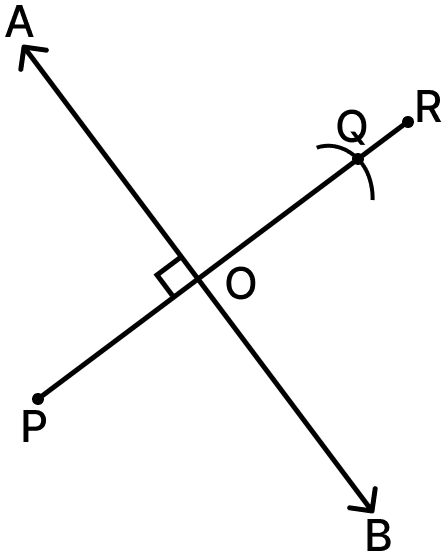
Hence, Q is the required point which is symmetric to the given point P with respect to the given line AB.
In the following case, construct a point that is symmetric to the given point P with respect to the given line AB.
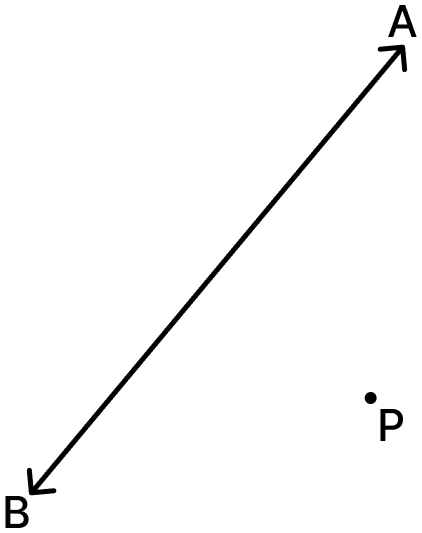
Answer
Steps of construction:
Draw PO perpendicular to AB, and extend it upto a point R.
From OR cut OQ = OP.
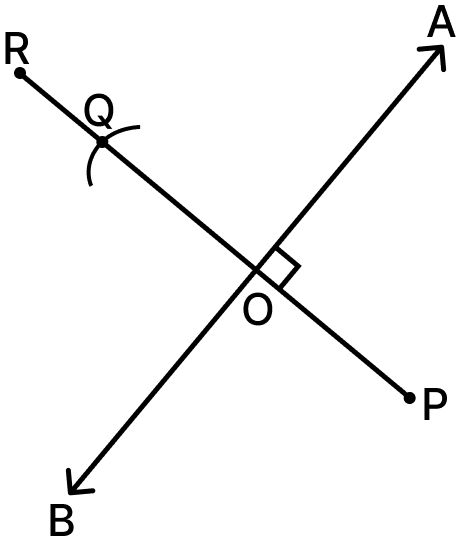
Hence, Q is the required point which is symmetric to the given point P with respect to the given line AB.
Mark two points A and B 5.5 cm apart. Draw a line PQ so that A and B are symmetric with respect to the line PQ. Give a special name to line PQ.
Answer
Steps of construction:
Mark two points A and B, 5.5 cm apart.
Join A and B.
Draw the perpendicular bisector PQ of the line segment AB.
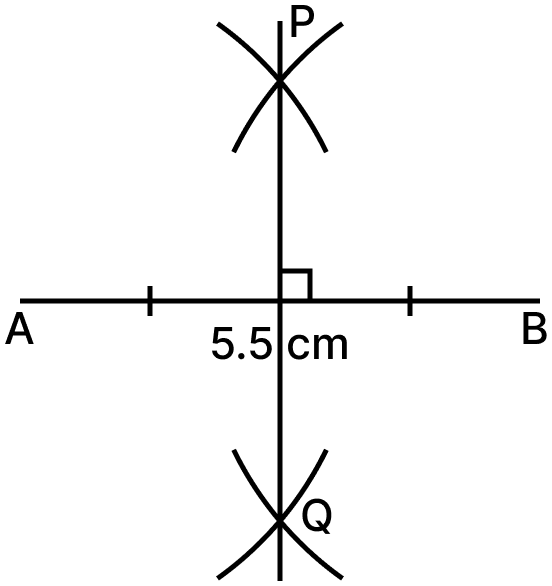
The obtained perpendicular bisector PQ is the required line of symmetry, i.e., with respect to PQ, the two points A and B are symmetric.
Hence, PQ is the perpendicular bisector of the line segment AB.
For each letter of the English alphabet, draw the maximum possible number of lines of symmetry.
Answer
The capital letters having line(s) of symmetry are shown below :
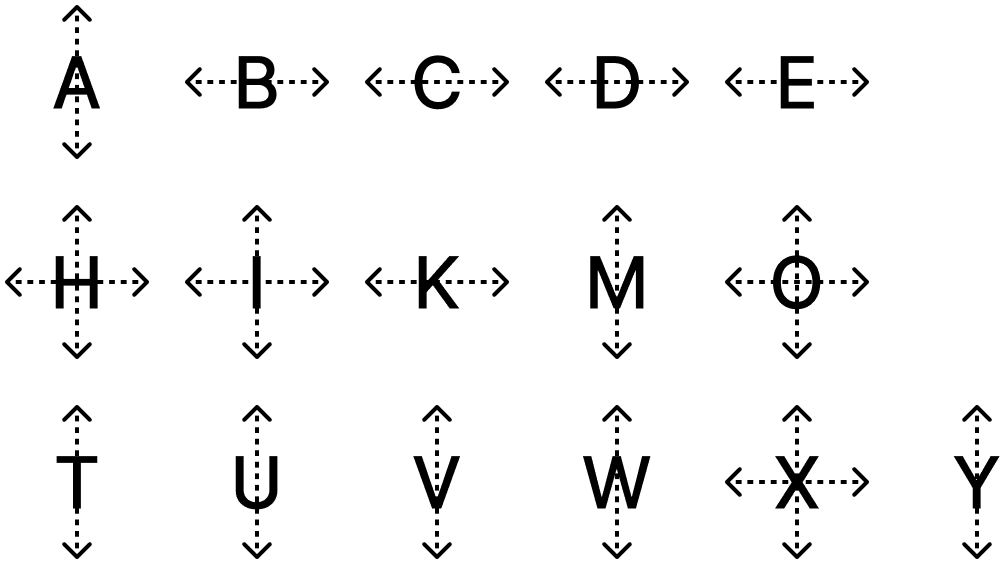
The letters A, M, T, U, V, W and Y have only one line of symmetry, which is vertical.
The letters B, C, D, E and K have only one line of symmetry, which is horizontal.
The letters H, I, O and X have two lines of symmetry, one vertical and one horizontal.
The letters F, G, J, L, N, P, Q, R, S and Z cannot be folded into two coincident parts about any line.
Hence, the letters H, I, O and X have the maximum number of lines of symmetry, i.e., 2 each; the letters A, B, C, D, E, K, M, T, U, V, W and Y have 1 line of symmetry each, and the letters F, G, J, L, N, P, Q, R, S and Z have no line of symmetry.
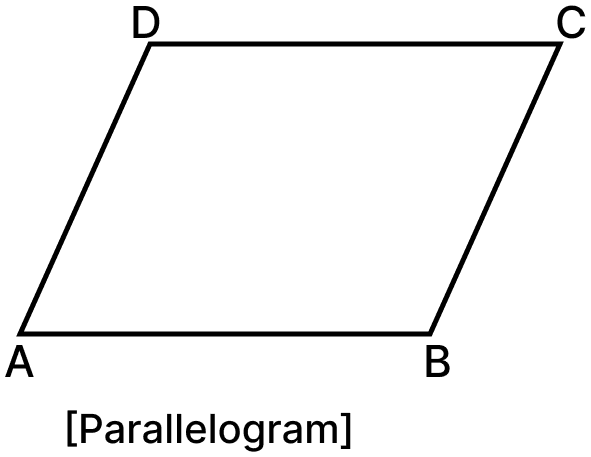
Draw all the possible lines of symmetry for each figure given below :
Answer
In whatever manner we fold a parallelogram, the two parts of the figure do not coincide.
Hence, a parallelogram has no line of symmetry.
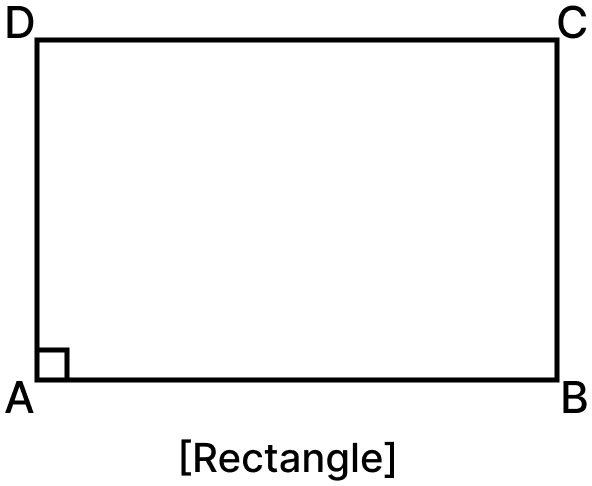
Draw all the possible lines of symmetry for each figure given below :
Answer
A rectangle has two lines of symmetry, which are the lines joining the mid-points of its opposite sides.
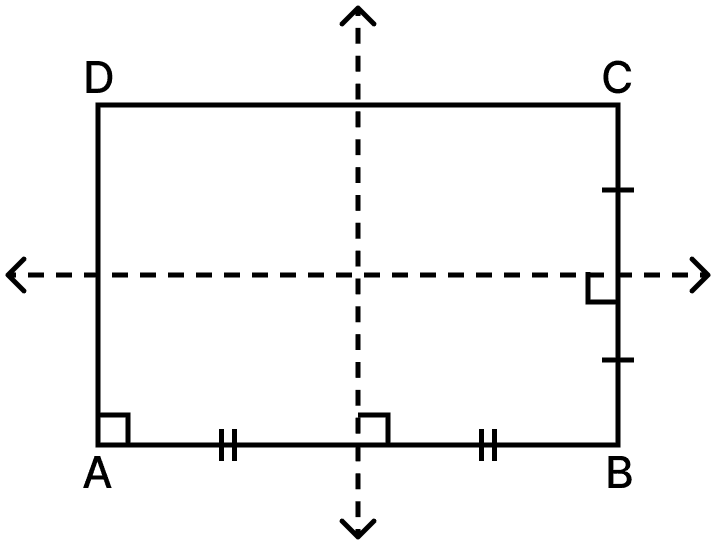
Hence, a rectangle has 2 lines of symmetry, shown dotted in the figure above.
Draw all the possible lines of symmetry for each figure given below :
Answer
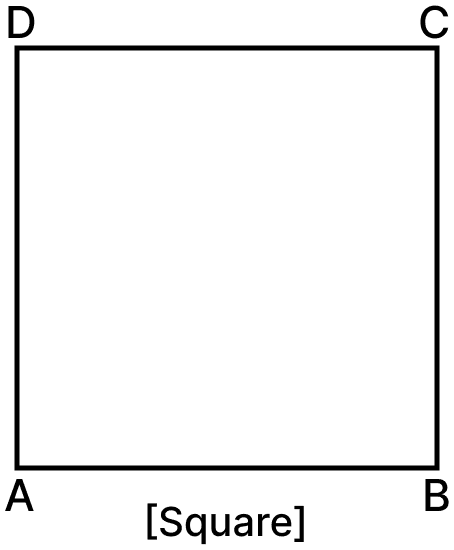
A square has four lines of symmetry, which are its two diagonals and the two lines joining the mid-points of its opposite sides.
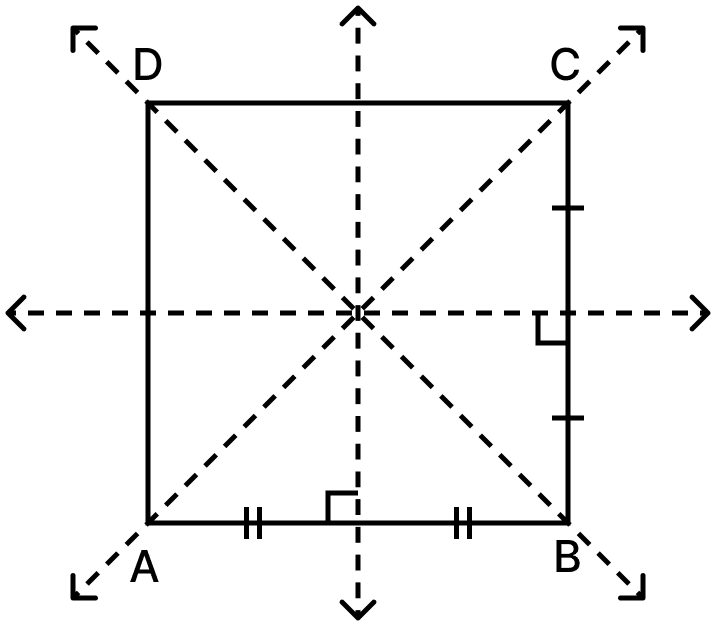
Hence, a square has 4 lines of symmetry, shown dotted in the figure above.
Draw all the possible lines of symmetry for each figure given below :
Answer
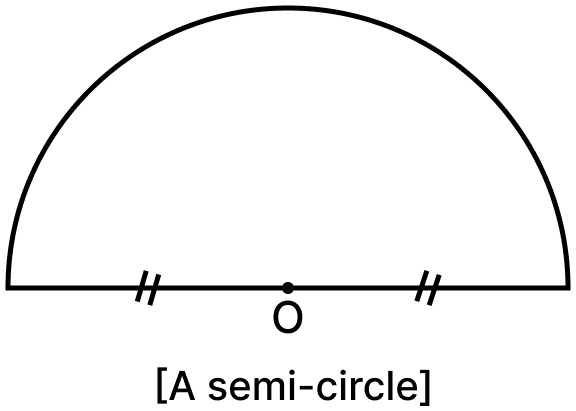
A semi-circle can be folded into two coincident parts only about the line drawn through the centre O perpendicular to its diameter, i.e., about the perpendicular bisector of its diameter.
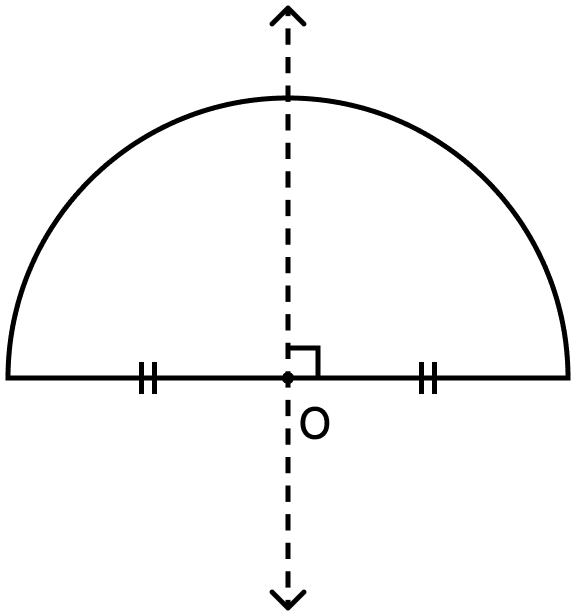
Hence, a semi-circle has 1 line of symmetry, shown dotted in the figure above.
Draw all the possible lines of symmetry for each figure given below :
Answer
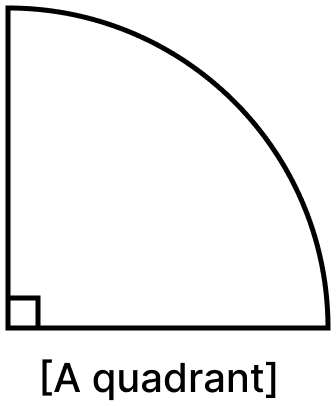
A quadrant is enclosed by two mutually perpendicular radii and an arc. It can be folded into two coincident parts only about the bisector of the right angle between its two radii.
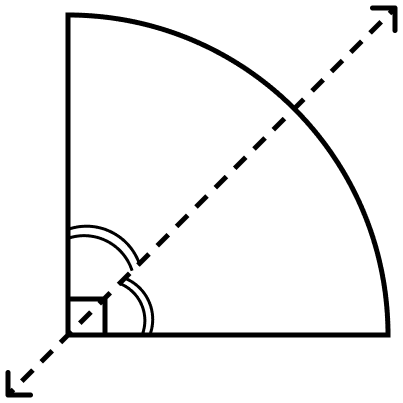
Hence, a quadrant has 1 line of symmetry, shown dotted in the figure above.
For each shaded portion given below, draw all the possible lines of symmetry :
Answer
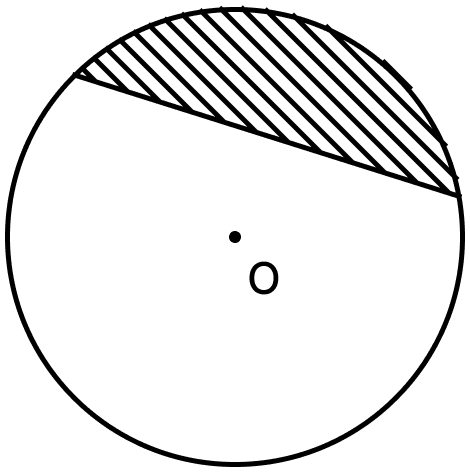
The shaded portion is the minor segment of the circle, enclosed by a chord and an arc. It can be folded into two coincident parts only about the perpendicular bisector of the chord, which passes through the centre O.
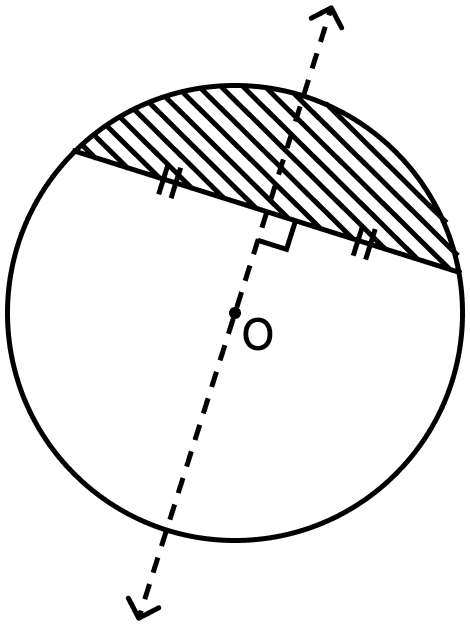
Hence, the shaded portion has 1 line of symmetry, shown dotted in the figure above.
For each shaded portion given below, draw all the possible lines of symmetry :
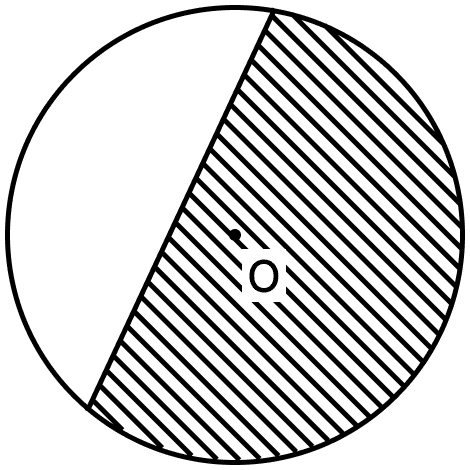
Answer
The shaded portion is the major segment of the circle, enclosed by a chord and an arc. It can be folded into two coincident parts only about the perpendicular bisector of the chord, which passes through the centre O.
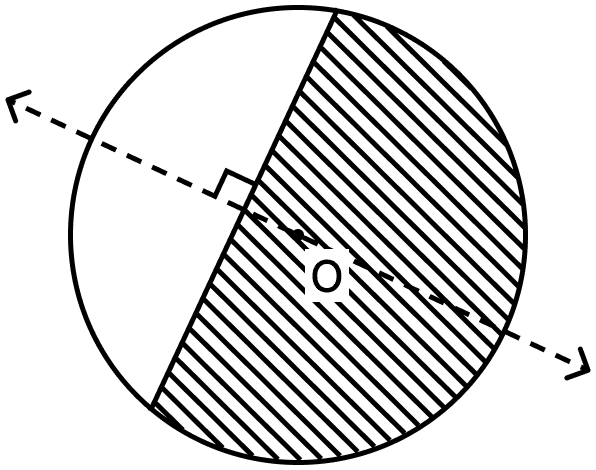
Hence, the shaded portion has 1 line of symmetry, shown dotted in the figure above.
For each shaded portion given below, draw all the possible lines of symmetry :
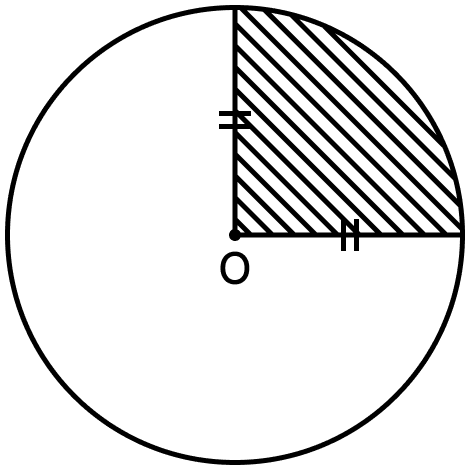
Answer
The shaded portion is a quadrant of the circle, enclosed by two mutually perpendicular radii and an arc. It can be folded into two coincident parts only about the bisector of the right angle between the two radii.
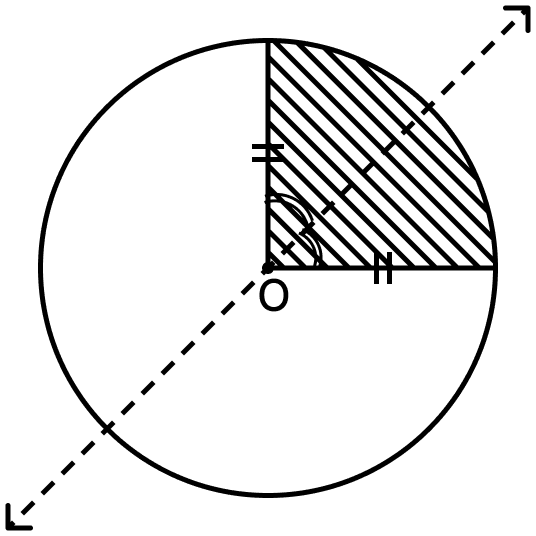
Hence, the shaded portion has 1 line of symmetry, shown dotted in the figure above.
For each shaded portion given below, draw all the possible lines of symmetry :
Answer
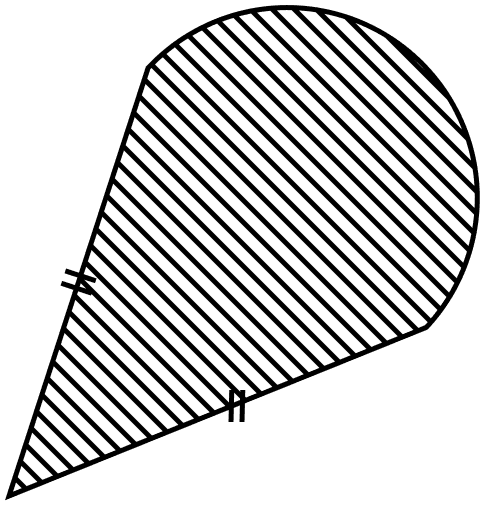
The shaded portion is a sector, enclosed by two equal radii and an arc. It can be folded into two coincident parts only about the bisector of the angle between the two radii.
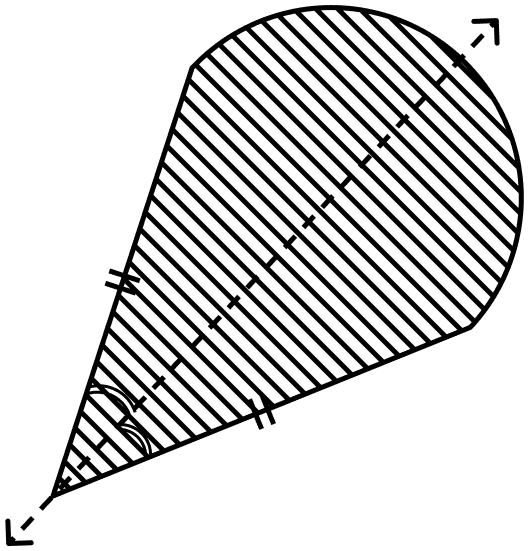
Hence, the shaded portion has 1 line of symmetry, shown dotted in the figure above.