
The governance of big cities in India is divided into:
- colonies.
- blocks.
- wards.
Answer
wards.
In big urban areas, the local government body is known as the:
- Municipal Council.
- Municipal Corporation.
- Block Samiti.
Answer
Municipal Corporation.
Which of these is a function of the Municipal Corporation?
- Cleaning roads and drains; disposal of garbage
- Maintaining the defence forces
- Establishing diplomatic relations with other countries
Answer
Cleaning roads and drains; disposal of garbage
The Municipal Corporation is elected for a period of:
- five years.
- three years.
- six years.
Answer
five years.
Which of these statements applies to a Municipal Council?
- These are local governing bodies of big urban areas.
- These are local governing bodies of small urban areas.
- Delhi and Mumbai are examples of places governed by Municipal Councils.
Answer
These are local governing bodies of small urban areas.
Why are Municipal Corporations required to help the COVID-19 vaccination drives in India?
Answer
Municipal Corporations are required to help COVID-19 vaccination drives by forming an Urban Task Force, chaired by the Municipal Commissioner, to ensure smooth functioning of the drive in their area.
Your area is governed by a Municipal Corporation.
- Based on this information, where do you live?
- What are the issues for which you can approach the Municipal Corporation?
Answer
My area is governed by a Municipal Corporation as I live in a big urban area or metropolis.
The issues for which I can approach the Municipal Corporation are as follows:
- Safe drinking water supply
- Cleaning roads and drains
- Disposal of garbage
- Construction and maintenance of public roads
- Arrangement for street lighting and security
- Maintenance of records for births and deaths
- Maintenance of primary schools
- Construction of public parks, gardens, libraries and museums
- Conducting surveys
- Providing housing for low income groups
- Planting of trees along the roadside
Name two types of urban local self-governments.
Answer
Two types of urban local self-governments are-
- Municipal Corporation
- Municipal Council
Discuss the composition of a Municipal Corporation.
Answer
Big cities are divided into wards. The people of these wards elect Ward Councillors. The Ward Councillors and Councillor's Committees decide on various issues relating to their area. These decisions are implemented by the Municipal Commissioner and the administrative staff. In the Municipal Corporation elections:
- Seats are reserved for the Scheduled Castes and the Scheduled Tribes.
- One-third of the total seats are reserved for women.
What is a Municipal Council?
Answer
Municipal Councils are constituted in towns and cities whose population constitute a small urban area.
How do Municipal Corporations and Municipal Councils derive their income?
Answer
The Municipal Corporations and Municipal Councils derive their income from property taxes and grants from the state government. Income from profitable undertakings, such as shopping centres, malls and other entertainment centres are another source of income.
This is the picture of a centre of urban local-governance in New Delhi.
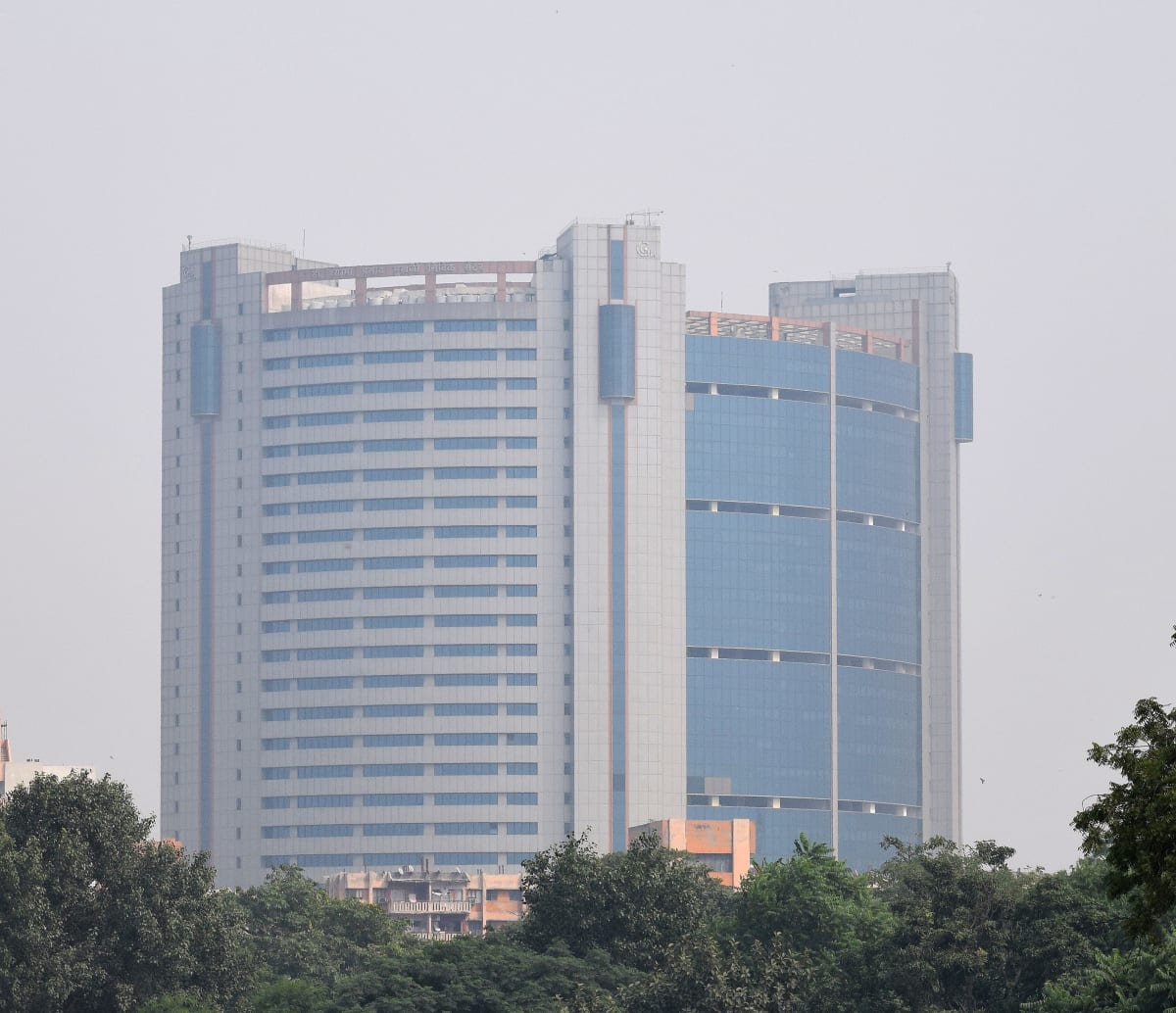
- Mention two sources of income for this centre.
- Mention two functions it performs to improve the life of the people in Delhi.
Answer
Two sources of income for Municipal Corporation of Delhi are property taxes and grants from the state government, and income from profitable undertakings, such as shopping centres.
Two functions Municipal Corporation of Delhi performs to improve the life of the people are-
- Providing safe drinking water supply
- Cleaning roads, drains, and disposal of garbage.
Urban areas in our country also have elected local self-governments. These governments ensure basic services to the citizens living in the urban areas. In this context, answer the following questions:
- What is the difference between urban and rural local self-governments?
- What is the difference between a Municipal Corporation and a Municipal Council?
- Who are the members of a Municipal Corporation?
Answer
Urban local self-governments function in cities and towns, while rural local self-governments operate in villages. Urban bodies include Municipal Corporations and Municipal Councils, whereas rural bodies include Gram Panchayats, Panchayat Samitis and Zila Parishad.
A Municipal Corporation governs large urban areas or big cities, while a Municipal Council governs small urban areas or towns.
The members of a municipal corporation include:
- Ward Councillors, elected by the people of each ward.
- Councillors' Committees, which help in decision-making.
- The Municipal Commissioner, who implements decisions with administrative staff.
Additionally, seats are reserved for the scheduled castes, scheduled tribes, and one-third of the total seats are reserved for women.
A Municipal Corporation has a wide variety of powers. In this context, answer the following questions:
- What are the functions of a Municipal Corporation?
- Mention any five important tasks that are to be catered to by urban local bodies as listed in the 12th Schedule of the 74th Constitutional Amendment Act of India.
Answer
The functions of the Municipal Corporation include provisions for public health and sanitation. These comprise the following.
- Safe drinking water supply.
- Cleaning roads and drains.
- Disposal of garbage.
- Construction and maintenance of public roads.
- Arrangement for street lighting and security.
- Maintenance of records for births and deaths.
- Maintenance of primary schools.
- Construction of public parks, gardens, libraries and museums.
- Conducting surveys.
- Providing housing for low income groups.
- Planting of trees along the roadside.
Five important tasks to be catered to by urban local bodies as listed in the 12th Schedule of the 74th Constitutional Amendment Act of India are-
- Regulation of land use and construction of building.
- Planning for economic and social development.
- Water supply for domestic, industrial and commercial purposes.
- Public health, sanitation conservancy and solid waste management.
- Urban forestry, protection of the environment and promotion of ecological aspects.