
Name each of the following angles :
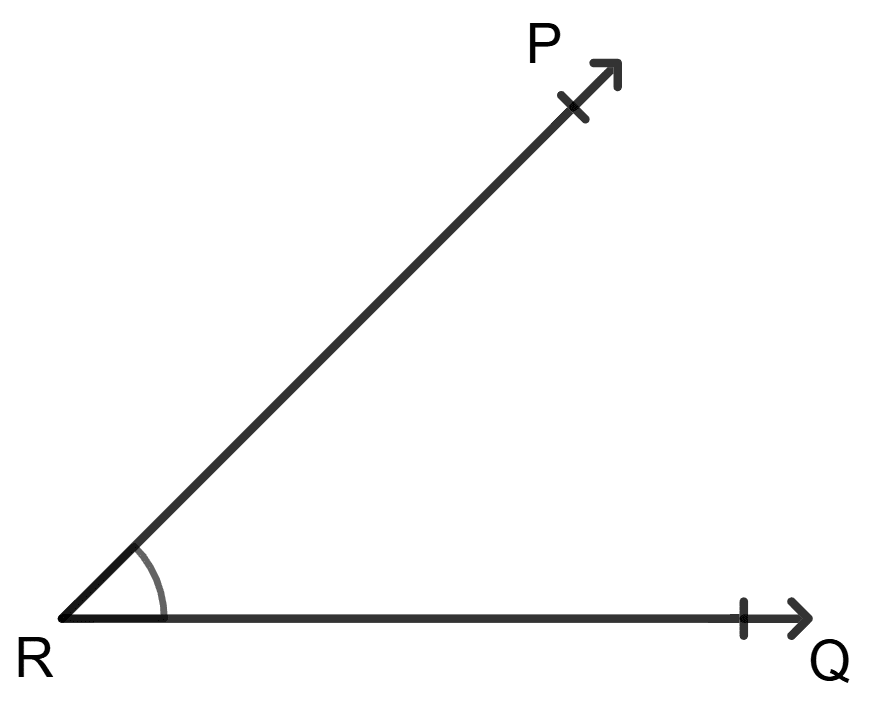
(i)
(ii)
(iii)
Answer
(i) The vertex is R, so the angle is named with R in the middle.
∠PRQ
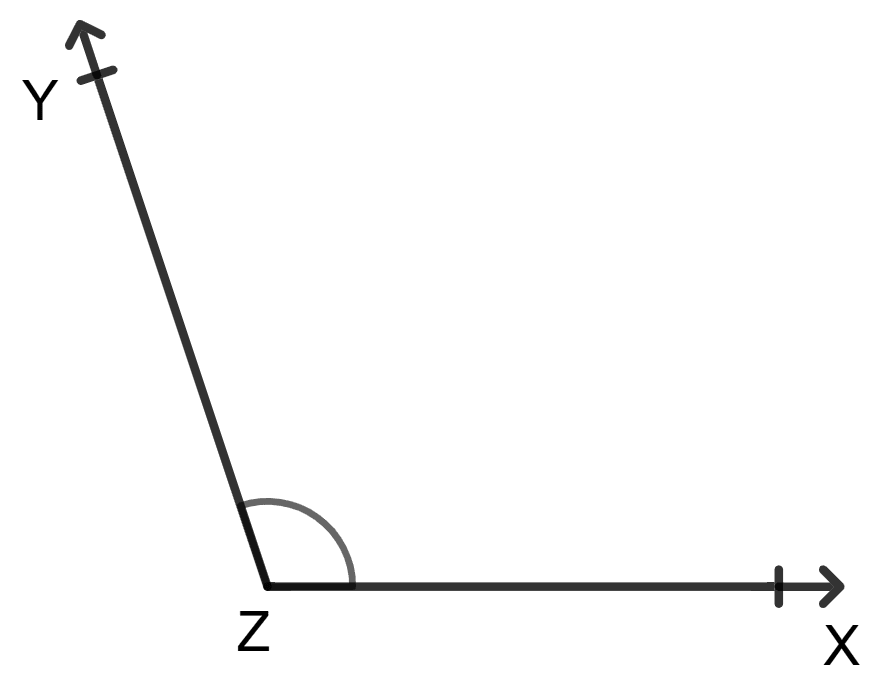
(ii) The vertex is Z, so the angle is named with Z in the middle.
∠YZX
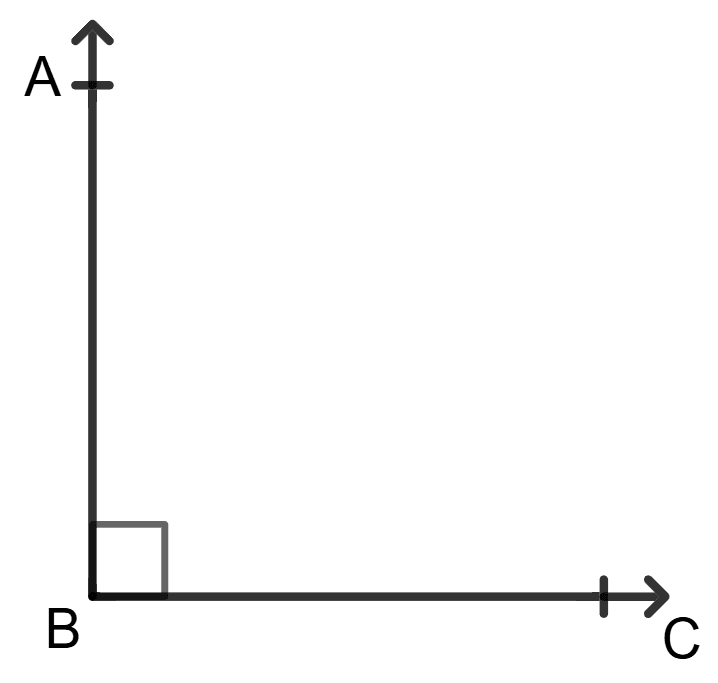
(iii) The vertex is B, so the angle is named with B in the middle.
∠ABC
Classify each of the following marked angles as acute, right, obtuse, straight or a reflex angle :
(i)
(ii)
(iii)
(iv)
(v)
(vi)
Answer
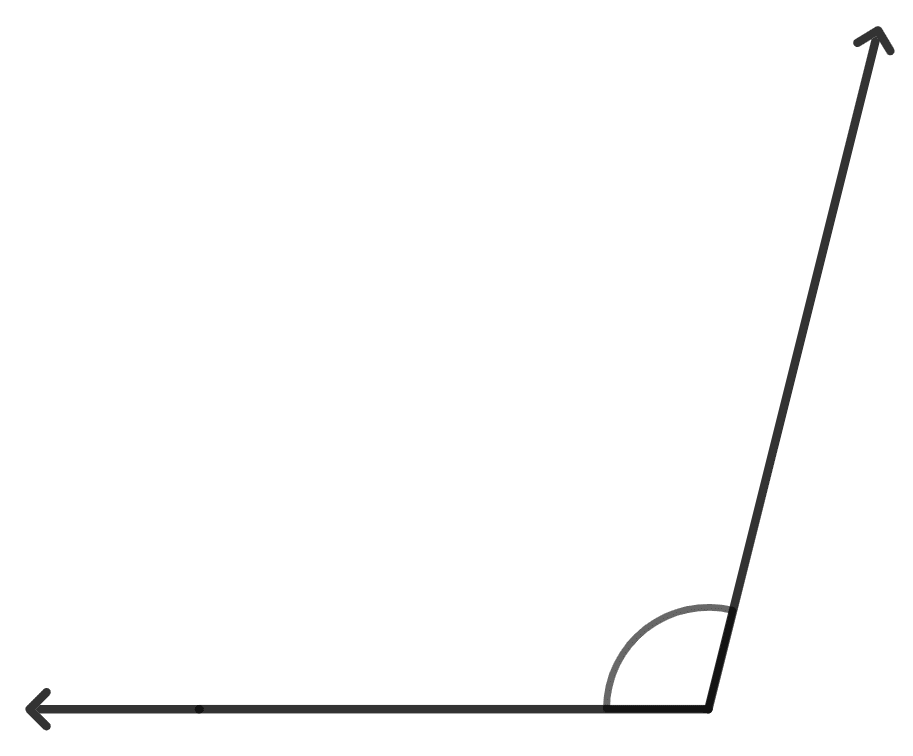
(i) The angle is greater than 90° but less than 180°.
∴ It is an obtuse angle.
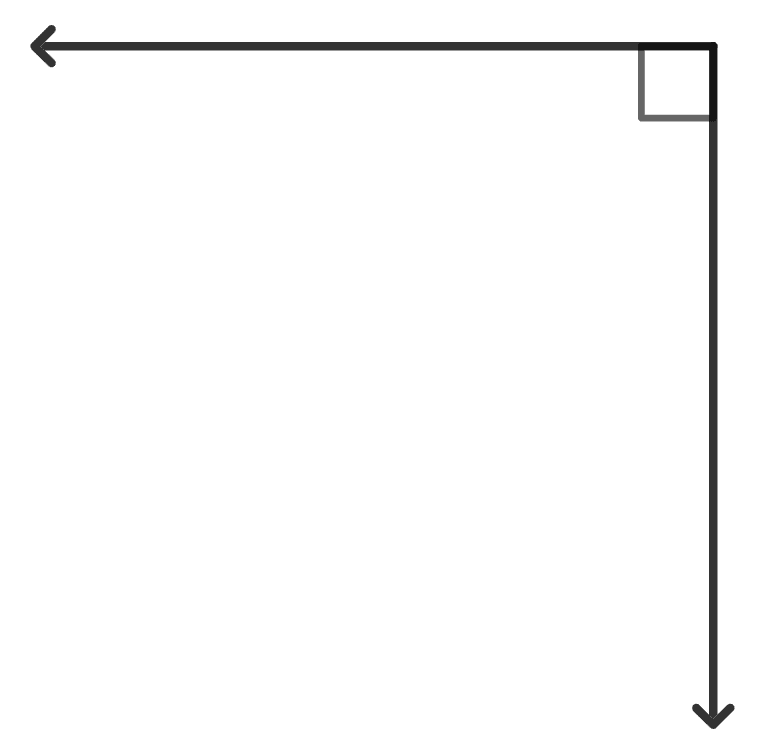
(ii) The angle is exactly 90°.
∴ It is a right angle.
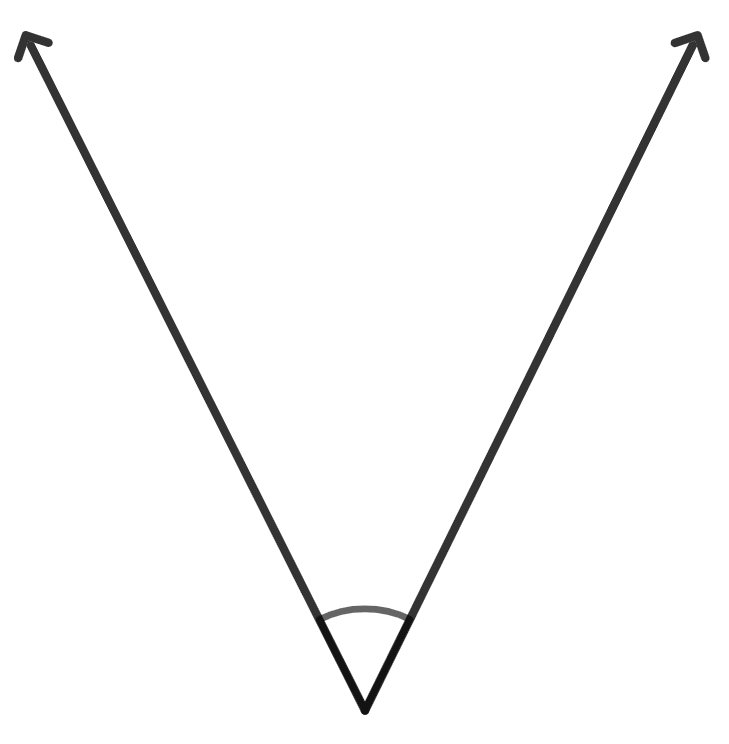
(iii) The angle is less than 90°.
∴ It is an acute angle.
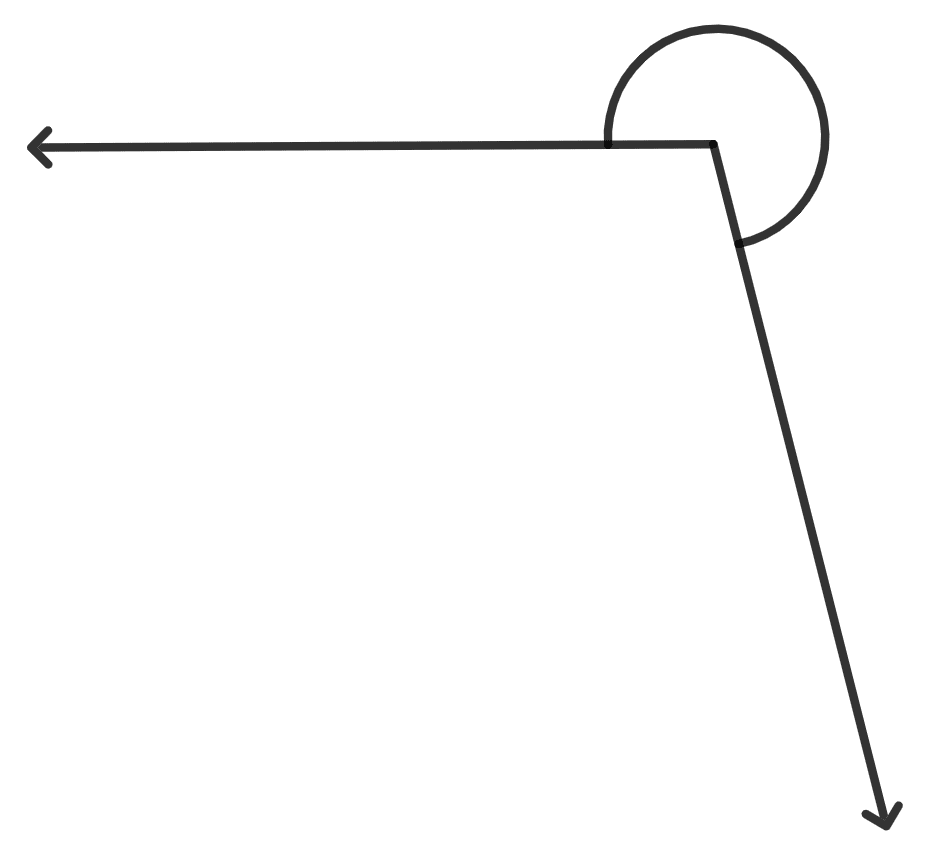
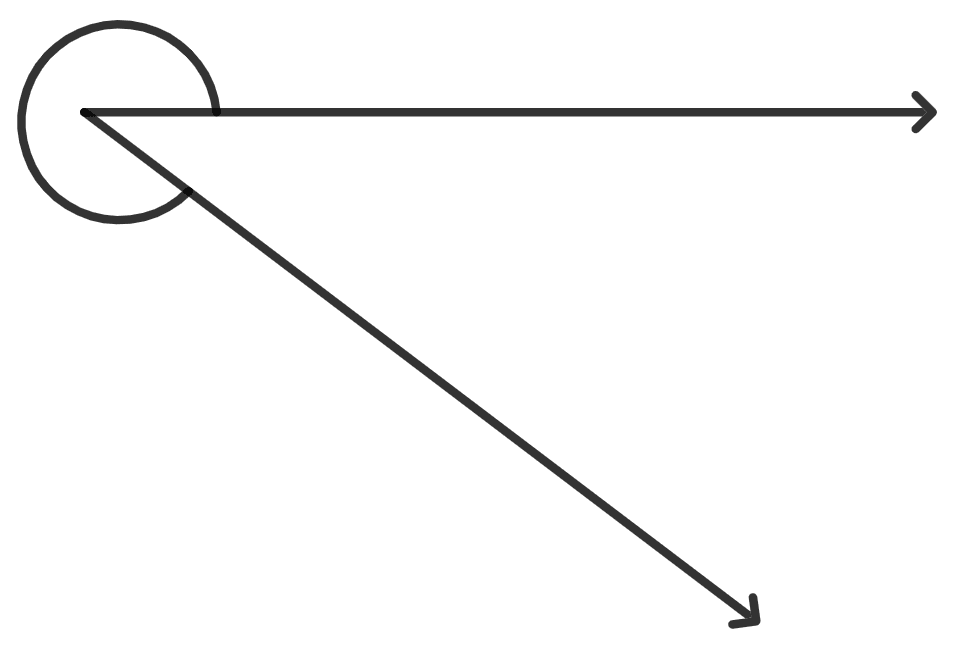
(iv) The angle is greater than 180° but less than 360°.
∴ It is a reflex angle.
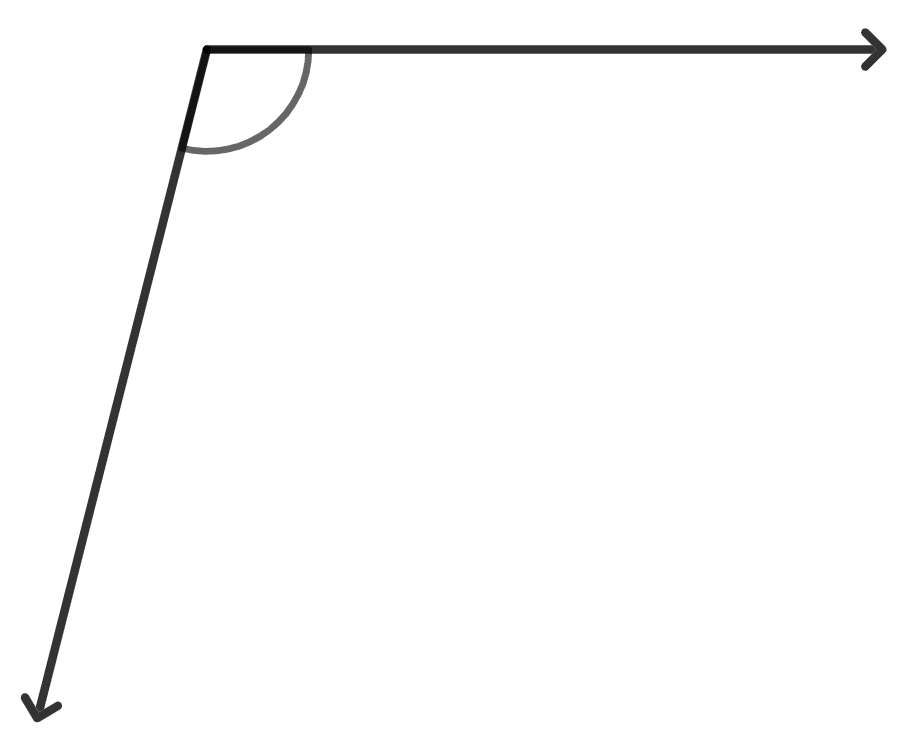
(v) The angle is greater than 90° but less than 180°.
∴ It is an obtuse angle.
(vi) The angle is greater than 180° but less than 360°.
∴ It is a reflex angle.
Classify each of the following as acute, obtuse or a reflex angle :
(i) 103°
(ii) 88°
(iii) 10°
(iv) 200°
(v) 89.5°
(vi) 105°
(vii) 176°
(viii) 182°
Answer
(i) 103°
The angle is more than 90° but less than 180°.
∴ It is an obtuse angle.
(ii) 88°
The angle is less than 90°.
∴ It is an acute angle.
(iii) 10°
The angle is less than 90°.
∴ It is an acute angle.
(iv) 200°
The angle is greater than 180° but less than 360°.
∴ It is a reflex angle.
(v) 89.5°
The angle is less than 90°.
∴ It is an acute angle.
(vi) 105°
The angle is more than 90° but less than 180°.
∴ It is an obtuse angle.
(vii) 176°
The angle is more than 90° but less than 180°.
∴ It is an obtuse angle.
(viii) 182°
The angle is greater than 180° but less than 360°.
∴ It is a reflex angle.
An angle is 30° larger than a straight angle. Find the angle.
Answer
A straight angle measures exactly 180°.
According to the problem, the required angle is 30° more than a straight angle.
∴ Required angle = 180° + 30° = 210°
The required angle is 210°.
At 5 o'clock the hands of a clock make an obtuse angle and a reflex angle. Find the measure of each of these angles.
Answer
A clock is a circle of 360°, divided into 12 hours. Therefore, each hour gap represents:
Obtuse Angle:
At 5 o'clock, there are 5 hour gaps between the hands (from 12 to 5).
∴ 5 x 30° = 150°
Reflex Angle:
This is the larger outer angle between the two hands.
∴ 360° - 150° = 210°
The obtuse angle is 150° and the reflex angle is 210°.
At 10 o'clock the hands of a clock make an acute angle and a reflex angle. Find the measure of each of these angles.
Answer
A clock is a circle of 360°, divided into 12 hours. Therefore, each hour gap represents:
Acute Angle:
At 10 o'clock, the minute hand is at 12 and the hour hand is at 10. The shortest distance between them is 2 hour gaps (from 10 to 11, and 11 to 12).
∴ 2 x 30° = 60°
Reflex Angle:
This is the larger outer angle between the two hands.
∴ 360° - 60° = 300°
The acute angle is 60° and the reflex angle is 300°.
How many degrees are there in :
(i) two right angles
(ii) right angle
(iii) right angles
(iv) a straight angle
(v) straight angle
Answer
(i) two right angles
One right angle = 90°
∴ Two right angles = 2 x 90° = 180°
Hence, the answer is 180°.
(ii) right angle
Right angle = 90°
∴ right angle = = 15°
Hence, the answer is 15°.
(iii) right angles
Let's convert mixed to improper fraction:
Right angle = 90°
∴ right angles =
=
= 135°
Hence, the answer is 135°.
(iv) a straight angle
A straight angle is always 180°.
Hence, the answer is 180°.
(v) straight angle
Straight angle = 180°
∴ straight angle =
=
= 72°
Hence, the answer is 72°.
Write the complement of each of the following angles :
(i) 46°
(ii) 90°
(iii) of a right angle
(iv) (x + 12)°
(v) 34° 27'
(vi) 42° 36' 25"
Answer
(i) 46°
Complement of 46° = 90° − 46° = 44°
Hence, the answer is 44°.
(ii) 90°
Complement of 90° = 90° − 90° = 0°
Hence, the answer is 0°.
(iii) of a right angle
First, let's find the angle:
of a right angle =
=
= 54°
Complement of 54° = 90° − 54° = 36°
Hence, the answer is 36°.
(iv) (x + 12)°
Complement of (x + 12)° = 90° − (x + 12)°
= 90° − x° - 12°
= 78° - x°
= (78 - x)°
Hence, the answer is (78 - x)°.
(v) 34° 27'
To subtract 27' from 0', we borrow 1° from the 90° and convert it into 60'.
Complement of 34° 27' = 90° − 34° 27'
= 89° 60' − 34° 27'
Thus,
Complement of 34° 27' = 55° 33'
Hence, the answer is 55° 33'.
(vi) 42° 36' 25"
To subtract 25'' and 36' from 0'' and 0', we borrow 1° from the 90° to get 60', and then borrow 1' from that to get 60'', leaving 89° and 59'.
Complement of 42° 36' 25" = 90° − 42° 36' 25"
= 89° 59' 60" − 42° 36' 25"
Thus,
Complement of 42° 36' 25" = 47° 23' 35"
Hence, the answer is 47° 23' 35".
Write the supplement of each of the following angles :
(i) 58°
(ii) 105°
(iii) 0.6 of a right angle
(iv) (x - 30)°
(v) 62° 56'
(vi) 83° 45' 30"
Answer
(i) 58°
Supplement of 58° = 180° − 58° = 122°
Hence, the answer is 122°.
(ii) 105°
Supplement of 105° = 180° − 105° = 75°
Hence, the answer is 75°.
(iii) 0.6 of a right angle
First, let's calculate the angle:
Right angle = 90°
∴ 0.6 of a right angle = 0.6 x 90° = 54°
Supplement of 54° = 180° − 54° = 126°
Hence, the answer is 126°.
(iv) (x - 30)°
Supplement of (x - 30)° = 180° − (x - 30)°
= 180° − x° + 30°
= 210° - x°
= (210 - x)°
Hence, the answer is (210 - x)°.
(v) 62° 56'
To subtract 56' from 0', we borrow 1° from the 180° and convert it into 60'.
Supplement of 62° 56' = 180° - 62° 56'
= 179° 60' - 62° 56'
Thus,
Supplement of 62° 56' = 117° 4'
Hence, the answer is 117° 4'.
(vi) 83° 45' 30"
To subtract 30'' and 45' from 00'' and 00', we borrow 1° from 180° to get 60', and then borrow 1' from that to get 60'', leaving 179° and 59'.
Supplement of 83° 45' 30" = 180° - 83° 45' 30"
= 179° 59' 60" - 83° 45' 30"
Supplement of 83° 45' 30" = 96° 14' 30"
Hence, the answer is 96° 14' 30".
If x° and (x + 30)° are complements of each other, find the value of x.
Answer
Complementary angles sum = 90°
∴ x° + (x + 30)° = 90°
⇒ 2x° + 30° = 90°
⇒ 2x° = 90° - 30°
⇒ 2x° = 60°
⇒ x° =
⇒ x° = 30°
Hence, the value of x is 30°.
If z° and (z + 50)° are supplements of each other, find the value of z.
Answer
Supplementary angles sum = 180°
∴ z° + (z + 50)° = 180°
⇒ 2z° + 50° = 180°
⇒ 2z° = 180° - 50°
⇒ 2z° = 130°
⇒ z° =
⇒ z° = 65°
Hence, the value of z is 65°.
Two complementary angles are in the ratio 4 : 5. Find the angles.
Answer
Let angles be (4x)° and (5x)°
Complementary angles sum = 90°
∴ 4x° + 5x° = 90°
⇒ 9x° = 90°
⇒ x° =
⇒ x° = 10°
Angles:
(4x)° = (4 x 10)° = 40°
(5x)° = (5 x 10)° = 50°
Hence, the required angles are 40° and 50°.
Two supplementary angles are in the ratio 7 : 8. Find the angles.
Answer
Let angles be (7x)° and (8x)°
Supplementary angles sum = 180°
∴ 7x° + 8x° = 180°
⇒ 15x° = 180°
⇒ x° =
⇒ x° = 12°
Angles:
(7x)° = (7 x 12)° = 84°
(8x)° = (8 x 12)° = 96°
Hence, the required angles are 84° and 96°.
25% of an angle is the complement of 50°. Find the angle.
Answer
The complement of an angle is found by subtracting it from 90°.
∴ 90° − 50° = 40°
Let the required angle be x.
25% of x = 40°
Hence, the required angle is 160°.
80% of an angle is the supplement of 140°. Find the angle.
Answer
The supplement of an angle is found by subtracting it from 180°.
∴ 180° − 140° = 40°
Let the required angle be y.
80% of y = 40°
Hence, the required angle is 50°.
An angle is double its complement. Find the angle.
Answer
Let the angle be x.
Its complement is (90° - x).
The problem states the angle is double its complement.
∴ x = 2(90° - x)
⇒ x = 180° - 2x
⇒ x + 2x = 180°
⇒ 3x = 180°
⇒ x =
⇒ x = 60°
Hence, the required angle is 60°.
The measure of an angle is 20° more than its complement. Find the measure of the angle.
Answer
Let the angle be x.
Its complement is (90° - x).
The problem states the angle is 20° more than its complement.
∴ x = (90° - x) + 20°
⇒ x = 110° - x
⇒ x + x = 110°
⇒ 2x = 110°
⇒ x =
⇒ x = 55°
Hence, the required angle measures 55°.
The measure of an angle is 30° less than its supplement. Find the measure of the angle.
Answer
Let the angle be x.
Its supplement is (180° - x).
The problem states the angle is 30° less than its supplement.
∴ x = (180° - x) - 30°
⇒ x = 150° - x
⇒ x + x = 150°
⇒ 2x = 150°
⇒ x =
⇒ x = 75°
Hence, the required angle measures 75°.
Find an angle which is two-thirds of its complement.
Answer
Let the angle be x.
Its complement is (90 - x).
The problem states the angle is of its complement.
∴ x =
⇒ 3x = 2(90° - x)
⇒ 3x = 180° - 2x
⇒ 3x + 2x = 180°
⇒ 5x = 180°
⇒ x =
⇒ x = 36°
Hence, the required angle measures 36°.
Find an angle which is one-fifth of its supplement.
Answer
Let the angle be x.
Its supplement is (180° - x).
The problem states the angle is of its supplement.
∴ x =
⇒ 5x = 180° - x
⇒ 5x + x = 180°
⇒ 6x = 180°
⇒ x =
⇒ x = 30°
Hence, the required angle measures 30°.
Find an angle which is 5° more than four times its supplement.
Answer
Let the angle be x.
Its supplement is (180° - x).
The problem states that the angle is 5° more than four times its supplement.
∴ x = 4(180° - x) + 5
⇒ x = 720° - 4x + 5
⇒ x = 725° - 4x
⇒ x + 4x = 725°
⇒ 5x = 725°
⇒ x =
⇒ x = 145°
Hence, the required angle measures 145°.