
In schools and colleges, a bell is used to inform teachers and students about the beginning of a period and end of the previous period. This is the popular method of ______ communication.
- Aural
- Visual
- Both (1) & (2)
- None of these
Answer
Aural
Reason — A bell produces sound that is heard by teachers and students. Communication through sound that is heard is called aural (auditory) communication. Bells, buzzers, horns and whistles are common sources of aural communication used in schools and commercial organisations.
Audio-visual communication combines both sound and sight means. Which of the following is not Audio-Visual Communication?
- Television
- Smart-phone
- Radio
- All of these
Answer
Radio
Reason — Audio-visual communication combines both sound (aural) and sight (visual) means. Radio is purely an audio (aural) medium as it can only be heard and not seen, so it is not audio-visual communication. Television and smart-phones combine both sound and picture.
When the message is confidential, which one of the methods is desirable?
- Telephone
- Face to face conversation
- Non-verbal communication
- None
Answer
Face to face conversation
Reason — When the message is confidential, face-to-face conversation is most desirable because the message can be conveyed privately and directly without leaving any record. It is easier to maintain secrecy in oral, face-to-face communication.
Analyse the primary benefit of using such a visual.
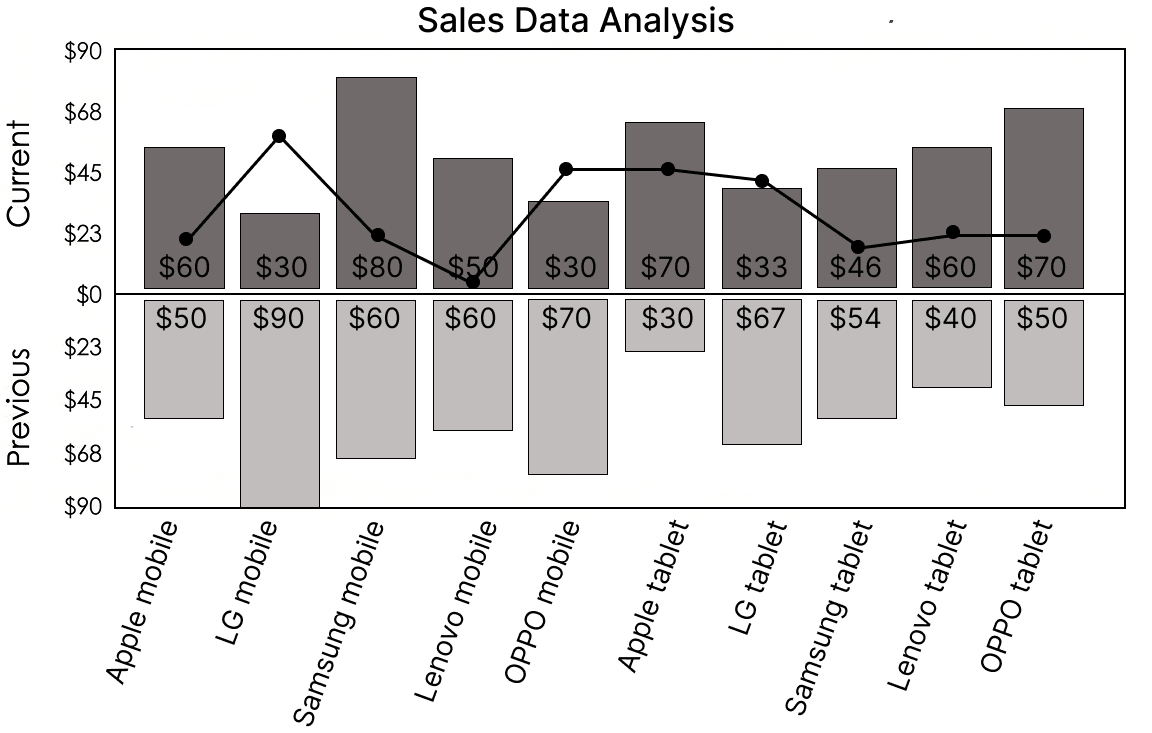
- It makes data engaging and easy to interpret.
- It provides a legal record of communication.
- It emphasizes body language in communication.
- It limits the ability to compare data effectively.
Answer
It makes data engaging and easy to interpret.
Reason — The visual shown is a chart comparing sales data. Graphs and diagrams give a bird's eye view of data, are more attractive to the eye and facilitate quick and accurate comparison, thereby making the data engaging and easy to interpret.
Method of communication used by salesman, businessman and managers to boost their work is
- speech
- interview
- face to face conversation
- none
Answer
speech
Reason — In the world of business, a salesman makes mini speeches to persuade customers, while businessmen and managers make formal speeches at company meetings, seminars and other important occasions. Speech is therefore used by salesmen, businessmen and managers to boost their work.
A conference is a kind of meeting in which people exchange views and talk together. They can pick up valuable tips from other's experience.
- True
- False
Answer
True
Reason — A conference (to 'confer' means to converse or discuss) is a kind of meeting in which people exchange views and talk together on problems and issues. Such an exchange of views is a learning process, and members can pick up valuable tips from each other's experience.
A company shares its quarterly performance review through an infographic sent via email. What is the main purpose of using an infographic in this scenario?
- To provide a detailed explanation
- To make the information more visually appealing and easier to understand
- To establish formality
- To ensure accuracy
Answer
To make the information more visually appealing and easier to understand
Reason — An infographic is a form of visual communication. Its main purpose is to present data in a pictorial form that is attractive to the eye and easy to understand, helping the receiver grasp the quarterly performance quickly.
Which method of communication is the most suitable in case of emergency?
- Spoken
- Written
- Both
- None
Answer
Spoken
Reason — Spoken (oral) communication is the fastest means of conveying a message. During emergent situations, oral communication is the only means of conveying messages quickly, so it is most suitable in case of emergency.
Which of the given methods of communication is most suitable when the message is brief and needs to transmit quickly?
- Written communication
- Spoken communication
- Both
- None
Answer
Spoken communication
Reason — Spoken communication has fast speed; messages can be exchanged quickly and it saves time. It is therefore most suitable when the message is brief and needs to be transmitted quickly.
News bulletins is widely used for communication in the world today. This is a method of ______ communication.
- Spoken
- Written
- Both spoken and written
- None
Answer
Written
Reason — Written communication takes place through letters, circulars, memos, reports, news bulletins, notices, e-mails, etc. News bulletins are therefore a method of written communication.
The parts of body movement with spoken words give a precise meaning. It is
- True
- False
Answer
True
Reason — A body movement may not by itself convey a precise meaning, but when used along with spoken words it gives a precise meaning. Body language reinforces and supports the spoken words.
Folding your arms and looking away, in body language, can be interpreted as
- security
- insecurity
- happiness
- none
Answer
insecurity
Reason — In body language, folding the arms and looking away is a closed, defensive posture that is interpreted as a sign of insecurity or discomfort.
"A picture is worth 10,000 words" is very true. Therefore visual communications are used as
- Graph
- Diagrams
- Both (1) & (2)
- None
Answer
Both (1) & (2)
Reason — The saying "A picture is worth 10,000 words" highlights the power of visual communication. Both graphs and diagrams are forms of visual communication used to present data in an attractive and easily understandable manner.
Fidgeting and doodling, in body language, can be interpreted as
- nervousness
- defensiveness
- listening
- none of these
Answer
nervousness
Reason — Fidgeting (slight movement of hands and feet) and doodling (scribbling aimlessly) are body postures that indicate nervousness.
While body movements are silent dimensions of non-verbal communication, paralanguage are verbalised dimensions. It is
- True
- False
Answer
True
Reason — Body movements (kinesics) are the silent dimensions of non-verbal communication, whereas paralanguage — voice quality, pitch, rate of speech, intonation, etc. — consists of the verbalised dimensions of non-verbal communication.
Which method of communication is most suitable for announcing a sudden fire evacuation in a multi-story office building?
- Written communication
- Face-to-face communication
- Aural communication
- Visual communication
Answer
Aural communication
Reason — A sudden fire evacuation must reach everyone instantly. An aural signal such as a fire alarm, bell or buzzer (or a public address announcement) is heard immediately by all occupants throughout the building, making aural communication the most suitable method.
During a video interview, a candidate maintains a strong posture, makes consistent eye contact, and uses calm tone. However, their slow speech rate affects the clarity of their responses. Which area of communication needs improvement?
- Non-verbal communication
- Paralanguage
- Written communication
- Feedback
Answer
Paralanguage
Reason — The candidate's posture and eye contact (non-verbal) and calm tone are good, but the slow speech rate is affecting clarity. Rate of speech is an element of paralanguage, so paralanguage is the area that needs improvement.
What can be inferred when a manager sits at the edge of their seat during a meeting?
- Nervousness
- Defensive attitude
- Active listening
- Formality
Answer
Active listening
Reason — Among body postures, sitting on the edge of the chair shows that the person is paying close attention, i.e., active listening.
The clarity of a message in written communication solely depends on the writer's ability to draft concise sentences.
- True
- False
Answer
False
Reason — The clarity of a written message does not depend solely on the writer's ability. It also depends on the receiver's ability to read and interpret the message correctly. Hence the statement is false.
A speaker presents a keynote address at a conference and adjusts their body language to connect with the audience. What combination of communication methods is the speaker using?
- Non-verbal and written communication
- Oral and non-verbal communication
- Written and aural communication
- Aural and visual communication
Answer
Oral and non-verbal communication
Reason — While delivering a keynote address, the speaker uses spoken words (oral communication) and at the same time adjusts body language and gestures (non-verbal communication) to connect with the audience.
In a job interview, which form of communication is used when the interviewer assesses the candidate's confidence through their posture and eye contact?
- Oral communication
- Non-verbal communication
- Written communication
- Visual communication
Answer
Non-verbal communication
Reason — Posture and eye contact are forms of body language (gestures), which are part of non-verbal communication. The interviewer assesses the candidate's confidence through these non-verbal signals.
In situations of conflict, non-verbal communication, such as body posture and eye contact, is more critical than verbal communication.
- True
- False
Answer
True
Reason — In situations of conflict, actions speak louder than words. Body posture and eye contact (non-verbal signals) often reveal the true feelings and attitudes of a person more reliably than the spoken words, so they become more critical.
A teacher uses graphs and charts during a lecture. What is the main benefit of this form of communication?
- It saves time
- It ensures clarity in legal matters
- It enhances retention and understanding of data
- It provides immediate feedback
Answer
It enhances retention and understanding of data
Reason — Graphs and charts (visual communication) have a great memorising value; the impressions created by them last much longer than figures presented in tabular form, and they help the students better understand the data.
A CEO sends a video message to employees explaining company policies. What type of communication is being used?
- Visual communication
- Aural communication
- Audio-visual communication
- Written communication
Answer
Audio-visual communication
Reason — A video message combines both sound (aural) and sight (visual). Communication that combines both sound and sight means is called audio-visual communication, just as television is audio-visual.
Feedback in communication ensures that all barriers, such as noise or misinterpretation, are eliminated.
- True
- False
Answer
False
Reason — Feedback only confirms whether the message has been received and understood; it does not eliminate all barriers such as noise or misinterpretation. Hence the statement is false.
A manager conducts an in-person meeting where team members can clarify their doubts and provide suggestions. What is the primary advantage of this form of communication?
- It ensures secrecy
- It allows immediate feedback
- It creates a permanent record
- It prevents misunderstandings
Answer
It allows immediate feedback
Reason — In an in-person (face-to-face) meeting, the reaction or response of the receiver can be obtained on the spot. Doubts can be clarified and suggestions given then and there, so the primary advantage is immediate feedback.
During an international webinar, the speaker uses idioms and jargon unfamiliar to a global audience, causing confusion. How could the speaker improve the effectiveness of their communication?
- Using simple, universally understood language
- Adding visual diagrams to the webinar
- Increasing the volume of their voice
- Providing written summaries after the session
Answer
Using simple, universally understood language
Reason — The confusion is caused by unfamiliar idioms and jargon, not by volume or format. The most effective way to improve communication for a global audience is to use simple, universally understood language so that the message is clear to everyone.
Which of the following statement(s) is/are correct?
Statement I: Spoken communication cannot be used as legal document.
Statement II: There is possibility of rumours in spoken communication.
- Statement I is correct
- Statement II is correct
- Both (I) and (II) is correct
- None of these
Answer
Both (I) and (II) is correct
Reason — Statement I is correct because spoken communication leaves no record and cannot be used as legal evidence. Statement II is also correct because oral messages can get distorted while being passed through several persons, creating the possibility of rumours.
During a negotiation, a buyer remains silent but frequently nods and maintains direct eye contact with the seller. The seller interprets this as agreement and closes the deal. Non-verbal communication can sometimes be misinterpreted even in direct interactions.
- True
- False
Answer
True
Reason — Non-verbal signals such as nodding and eye contact can be interpreted in more than one way. The seller assumed that the buyer's silence and nodding meant agreement, but it may not have. Hence non-verbal communication can sometimes be misinterpreted even in direct interactions.
What is visual communication?
Answer
Visual communication is a method of non-verbal communication in which messages are conveyed through things that are seen, such as graphs, diagrams, charts, pictures, signs, maps and colours.
What is paralanguage?
Answer
Paralanguage refers to the verbalised ways of non-verbal communication, i.e., how something is said rather than what is said. It consists of voice quality, voice volume, pitch of voice, rate of speech, vocal intonations, non-fluencies (saying 'ah', 'um', 'uh', 'oh', etc.), yawning, laughing, etc.
Define aural communication.
Answer
Aural or auditory communication refers to communication through means that are heard. Bells, buzzers, horns, whistles, etc., are sources of aural communication. It is used in commercial organisations to locate staff, and in schools and colleges a bell is used to inform teachers and students about the beginning of a period and the end of the previous period.
What types of communication methods are being used in the image, where a person is presenting data to a group in a meeting?

Answer
In the image, the person presenting data to a group in a meeting is using a combination of communication methods:
- Oral (spoken) communication — the presenter speaks and explains the data to the group.
- Non-verbal communication — body language, gestures and eye contact are used to support the spoken words.
- Visual communication — the charts, graphs or data displayed on the screen help the audience understand the information easily.
How does the physical distance between two people during a conversation affect the meaning of their interaction?
Answer
The use of interpersonal space or distance between the communicator and the receiver is called proxemics. It is an important part of non-verbal communication.
The distance maintained between two persons conveys meaning. A short distance may show closeness or friendliness, while a greater distance may show formality, respect or detachment.
A manager frequently relies on oral communication to deliver instructions to the team, but team members often forget key details. What are the limitations of oral communication in this scenario?
Answer
The limitations (demerits) of oral communication in this scenario are:
- No Record — Oral communication does not provide any record for future use, so team members have nothing to refer back to and may forget key details.
- Inaccuracy — Oral messages may be less accurate and precise; important details may be missed or misunderstood.
- Not Taken Seriously — The receiver may not take an oral message seriously, leading to carelessness about details.
- Delayed Recall — Since the instructions are not written down, it becomes difficult to recall the exact message later.
Describe the merits and demerits of written communication.
Answer
Written communication refers to transmission of messages through written words.
Merits of Written Communication:
- Accuracy — Written communication tends to be more accurate and precise because written messages are prepared more carefully.
- Permanent Record — It provides a permanent record for future reference and as legal evidence. Contents can be verified and referred to repeatedly.
- Wide Access — Written messages can be easily sent to a large number of persons at distant places at the same time.
- Lengthy Messages — It is more suitable for conveying lengthy messages and when a well-considered response is desired.
- Authoritative — Written communication is more authoritative and formal, with little risk of unauthorised alterations. Responsibility for mistakes can be fixed.
- Uniformity — It ensures transmission of information in a uniform manner; everyone receives the same message and can read and re-read it.
Demerits of Written Communication:
- Slow — It is time consuming as the writer has to draft and check the message before transmission; a lot of paper work is involved.
- Expensive — It is more expensive than oral communication due to the cost of stationery.
- Lack of Personal Touch — It is very formal and lacks personal touch; body movements cannot be used to reinforce the words.
- Rigidity — It is not possible to make alterations in the message after transmission.
- Lack of Secrecy — It is very difficult to keep written messages secret.
- Delayed Feedback — The reaction or response to a written message is not available immediately.
- Unsuitable — Long written messages fail to attract proper attention, and written communication is not possible among illiterate people. Errors in drafting may create confusion and misunderstanding.
Explain the merits and demerits of spoken (oral) communication.
Answer
Spoken or oral communication refers to transmission of messages through spoken words.
Merits of Spoken Communication:
- Fast Speed — Messages can be exchanged quickly; it catches attention immediately and saves time.
- Economy — It does not require paper and ink, so it is less expensive than written communication.
- Personal Touch — The receiver hears not only the words but also the tone, pitch and volume. Body language can supplement the words, making speech a powerful means of persuasion.
- Immediate Feedback — The reaction or response of the receiver can be obtained on the spot, giving an opportunity for clarification.
- Flexibility — The message can be changed easily to suit the needs and response of the receiver.
- Emergency — It is the only means of conveying messages quickly during urgent situations.
- Secrecy — It is easier to maintain secrecy in oral communication.
Demerits of Spoken Communication:
- Inaccuracy — Oral communication tends to be less accurate and precise.
- Distortion — Oral messages are likely to get distorted when passed through several persons.
- No Record — It does not provide a record for future use or legal evidence.
- Conflict Provoking — It may provoke conflicts due to use of objectionable words or unbearable facial expressions.
- Unsuitable — It is not suitable when the message is lengthy. It may be time consuming if people indulge in unnecessary long discussion.
Why are visuals like charts or graphs often more effective than words in presentation?
Answer
Visuals like charts and graphs are often more effective than words in a presentation due to the following reasons:
- Bird's Eye View — They give a bird's eye view of the entire data so that the information is easily understood, pictorial presentation makes the data easy to grasp.
- Memorising Value — Diagrams and graphs have great memorising value; the impressions created by them last much longer.
- Facilitate Comparison — They facilitate quick and accurate comparison of data relating to different periods of time or different regions.
- Visual Appeal — Graphs and diagrams are more attractive to the eye and create greater interest than plain figures or words.
"Written messages need to be more precise." Comment.
Answer
Yes, written messages need to be more precise. This is because written communication, unlike oral communication, does not allow immediate feedback or on-the-spot clarification of doubts. Further reasons why written messages must be precise:
- No Immediate Clarification — Body movements and tone cannot be used to reinforce the words, so the message must be clear and complete in itself.
- Permanent Record and Legal Value — Written communication serves as a permanent record and legal evidence.
- Rigidity — Once transmitted, alterations cannot be made in a written message.
"Spoken communication permits immediate feedback." Do you agree? Give reasons in support of your answer.
Answer
Yes, I agree that spoken communication permits immediate feedback.
Reasons in support:
- On-the-Spot Response — In face-to-face conversation, telephone or video calls, the reaction or response of the receiver can be obtained on the spot.
- Two-Way Process — Spoken communication is interactive. The speaker can ask questions and the listener can clear doubts immediately.
- Flexibility — Because feedback is immediate, the message can be changed or adjusted easily to suit the needs and response of the receiver.
"Body postures convey specific meanings in communication." Justify this statement for or against and give a reason.
Answer
I justify the statement in favour — body postures do convey specific meanings in communication.
Body postures are a part of body language (kinesics), an important form of non-verbal communication. Various body positions are used to convey messages, and each posture carries a specific meaning. For example:
- Fidgeting (slight movement of hands and feet) and doodling (scribbling aimlessly) indicate nervousness.
- Putting hands on the hips indicates defensiveness.
- Sitting on the edge of the chair shows that the person is listening attentively.
Distinguish between verbal and non-verbal communication.
Answer
| S.No. | Basis | Verbal Communication | Non-verbal Communication |
|---|---|---|---|
| 1. | Meaning | Communication through the use of words, spoken or written. | Communication without the use of words. |
| 2. | Forms | It is of two types — spoken (oral) and written communication. | It includes body language, paralanguage, proxemics, visual, aural and audio-visual communication. |
| 3. | Means | Words are used to convey the message. | Signs, gestures, expressions, postures, distance, etc., are used. |
| 4. | Clarity | It generally conveys a clear and precise meaning. | A single signal may not by itself convey a precise meaning. |
| 5. | Medium | Conveyed through speech, telephone, letters, reports, etc. | Conveyed through gestures, facial expressions, tone, distance, pictures, bells, etc. |
| 6. | Example | A speech, a letter, a telephone call. | A smile, a nod, folding arms, a chart or a bell. |
During a conflict, one party maintains a calm tone but uses defensive body language, such as crossing their arms. How does this contradiction between verbal and non-verbal communication affect the resolution process?
Answer
When verbal and non-verbal communication contradict each other, misunderstanding occurs. In this situation, the party's calm tone suggests willingness to cooperate, but the crossed arms signal resistance, disagreement or discomfort.
Effects on the resolution process:
- Confusion and Mistrust — The other party receives mixed signals and is unsure whether to believe the calm words or the defensive posture.
- Non-verbal Signals Dominate — In situations of conflict, the defensive body language is therefore likely to be believed over the calm tone, so the other party may feel the person is not truly open to resolution.
- Hinders Resolution — Because the message is contradictory, genuine understanding is not reached and the conflict may remain unresolved or even escalate.