
Physics
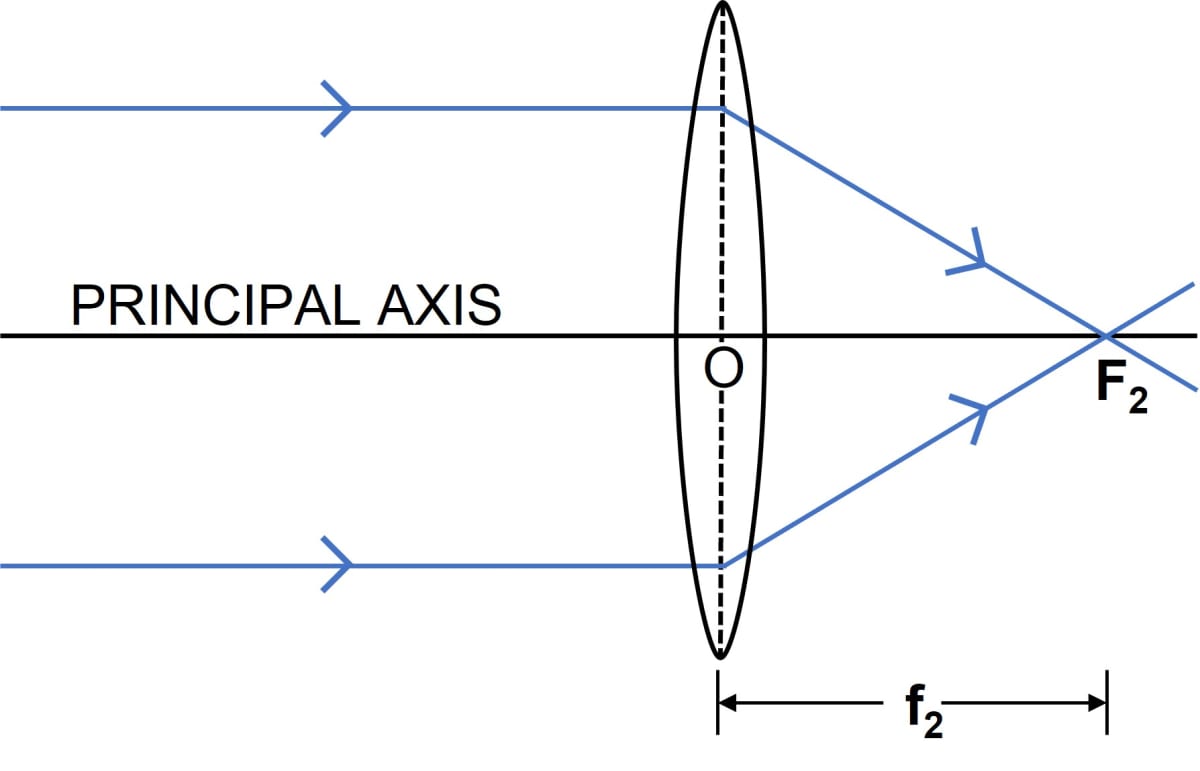
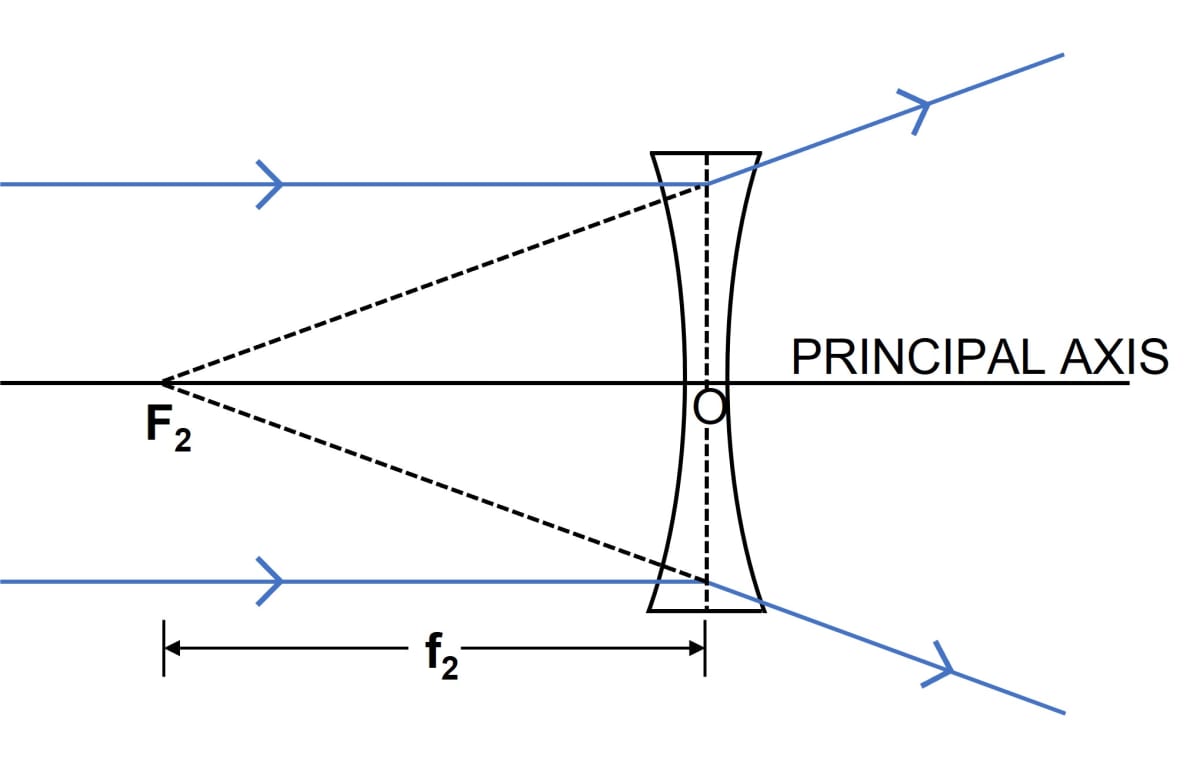
A ray of light incident on a lens parallel to its principal axis, after refraction passes through or appears to come from :
- its first focus
- its optical centre
- its second focus
- the centre of curvature of its second surface.
Refraction Lens
28 Likes
Answer
its second focus
Reason — A ray of light incident on a lens parallel to its principal axis, after refraction passes through or appears to come from its second focus. We can understand this better with the help of the diagrams given below —
Convex Lens
Concave Lens
Answered By
11 Likes
Related Questions
The correct differences between a convex and concave lens are :
(a) convex lens is thin in the middle and concave lens is thick in the middle.
(b) convex lens converges the incident rays towards the principal axis whereas concave lens diverges
(c) convex lens has a virtual focus and concave lens has a real focus.
- (a)
- (c)
- (a), (b) and (c)
- (b)
A ray of light after refraction through a lens emerges parallel to the principal axis of the lens. The incident ray passes through :
- its optical centre
- its first focus
- its second focus
- the centre of curvature of the first surface.
A lens is called equi-convex or equi-concave when :
- the radius of curvature of first surface of lens is greater than the radius of curvature of the second surface.
- the radius of curvature of the second surface of the lens is greater than the radius of curvature of the first surface.
- the radius of curvature of the two surfaces of the lens are equal.
- none of the above
The focal length of a lens depends upon :
- the refractive index of the material of lens relative to its surrounding medium
- the amount of light entering the lens
- the radius of curvature of the two surfaces of lens
- both (1) and (3)