Mathematics
ABCD is a quadrilateral. If AL ⊥ BD and CM ⊥ BD, prove that : ar (quad.ABCD) = × BD × (AL + CM).

Theorems on Area
1 Like
Answer
We know that,
Area of triangle = × Base × Height
Area of triangle ABD = × BD × AL
Area of triangle CBD = × BD × CM
We know that,
Area of quadrilateral ABCD = Area of △ ABD + Area of △ CBD
= × BD × AL + × BD × CM
= × BD × (AL + CM).
Hence, proved that ar (quad. ABCD) = × BD × (AL + CM).
Answered By
3 Likes
Related Questions
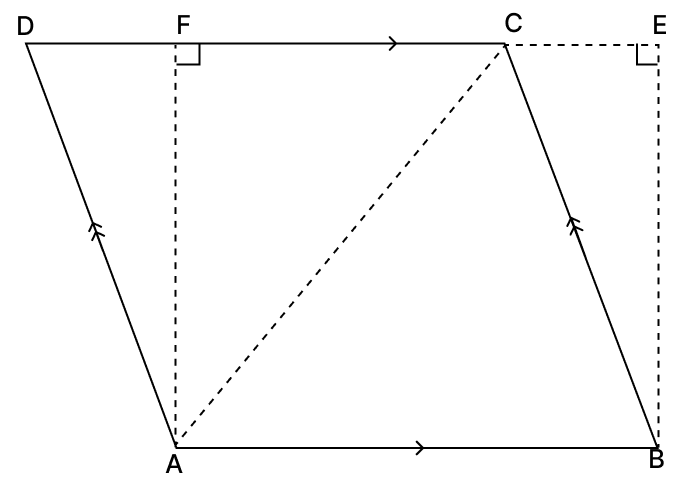
In the given figure, the area of △ABC is 64 cm2. State giving reasons:
(i) ar(||gm ABCD)
(ii) ar (rect. ABEF)
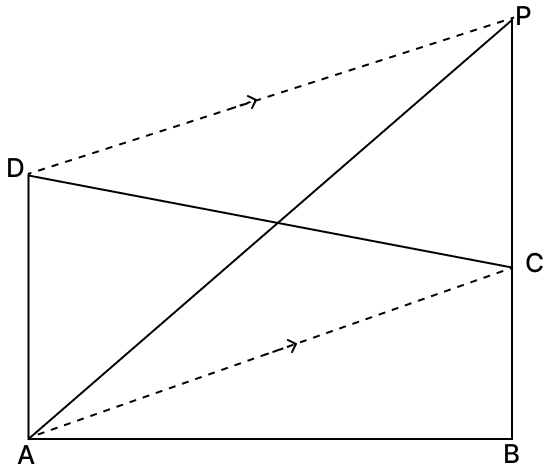
In the given figure, ABCD is a quadrilateral. A line through D, parallel to AC, meets BC produced in P. Prove that: ar (△ABP) = ar (quad.ABCD)
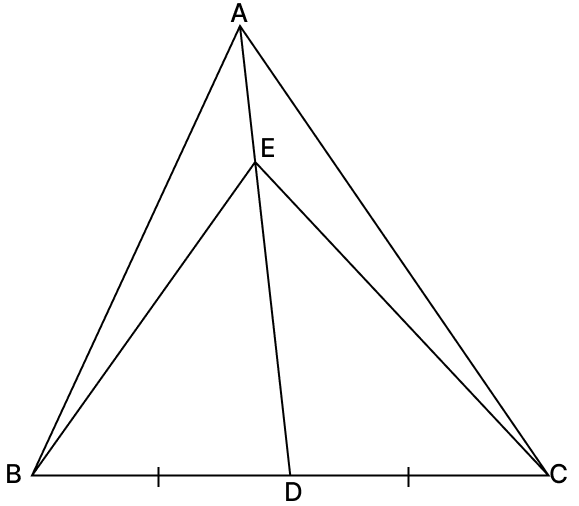
In the given figure, D is the mid-point of BC and E is any point on AD. Prove that :
(i) ar (△EBD) = ar (△EDC)
(ii) ar (△ABE) = ar (△ACE)
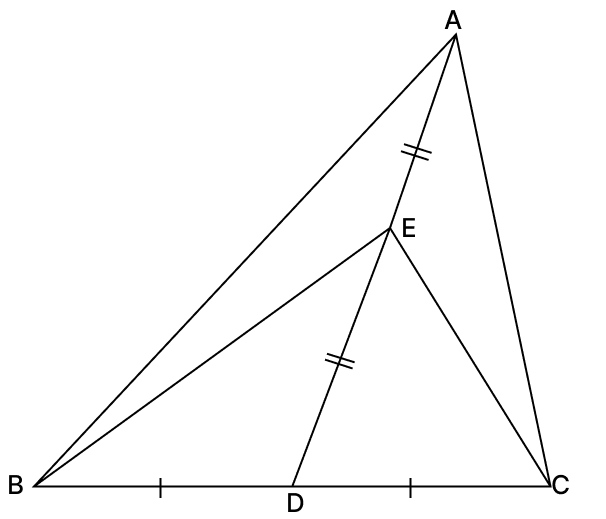
In the given figure, D is the mid-point of BC and E is the mid-point of AD. Prove that :
ar (ΔABE) = ar (ΔABC).