
Mathematics
In adjoining figure, AB = 9 cm, PA = 7.5 cm and PC = 5 cm. Chords AD and BC intersect at P.
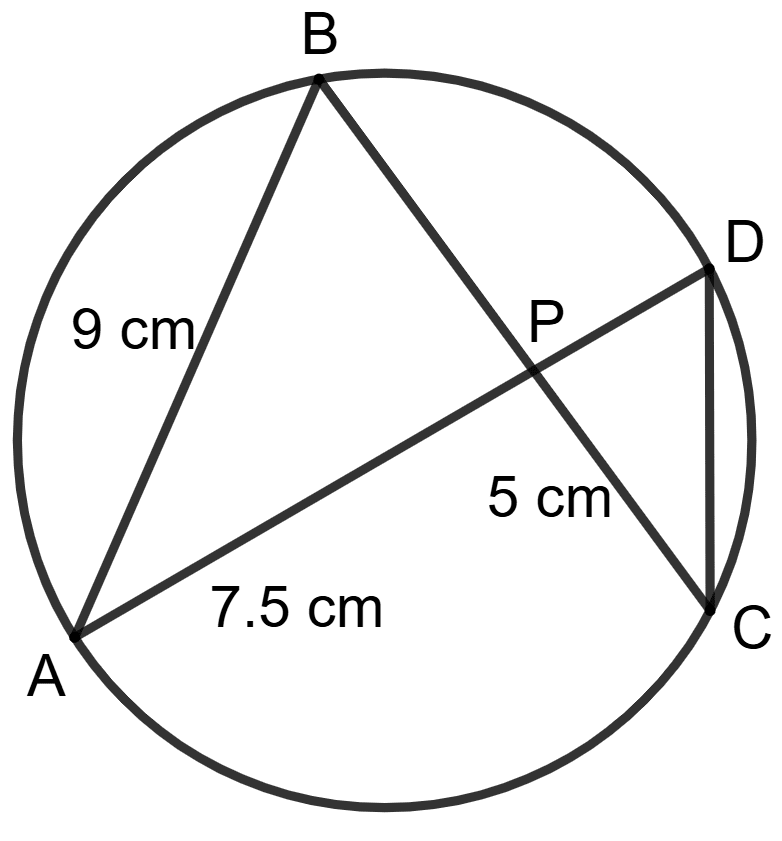
(i) Prove that Δ PAB ∼ Δ PCD.
(ii) Find the length of CD.
(iii) Find the area of Δ PAB : area of Δ PCD.
Circles
23 Likes
Answer
(i) As we know that,
If two chords of a circle intersect internally or externally, then the products of the lengths of segments are equal.
∴ PA.PD = PB.PC
⇒ ∠APB = ∠CPD (Vertically opposite angles)
If the corresponding sides of two triangles are proportional and one angle are equal, then the two triangles are similar.
Hence, proved that Δ PAB ∼ Δ PCD (By SAS rule of similarity).
(ii) Since, Δ PAB ∼ Δ PCD
Substituting the values, we get :
Hence, the length of CD = 6 cm.
(iii) As we know that,
The ratio of the areas of two similar triangles is equal to the ratio of the squares of their corresponding sides.
Hence, the area of ΔPAB : area of ΔPCD = 9 : 4.
Answered By
11 Likes
Related Questions
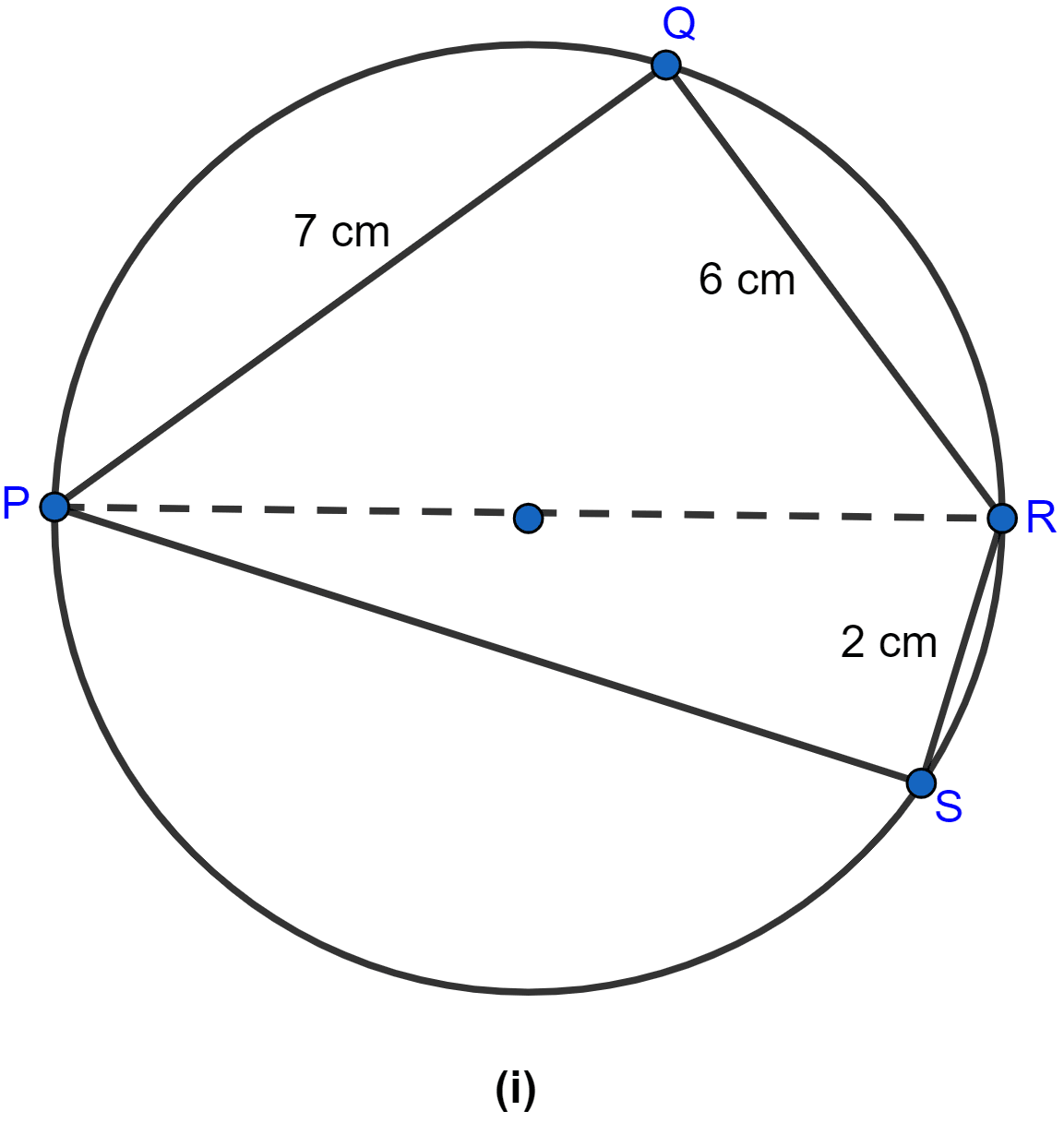
In the figure (i) given below, PR is a diameter of the circle, PQ = 7 cm, QR = 6 cm and RS = 2 cm. Calculate the perimeter of the cyclic quadrilateral PQRS.
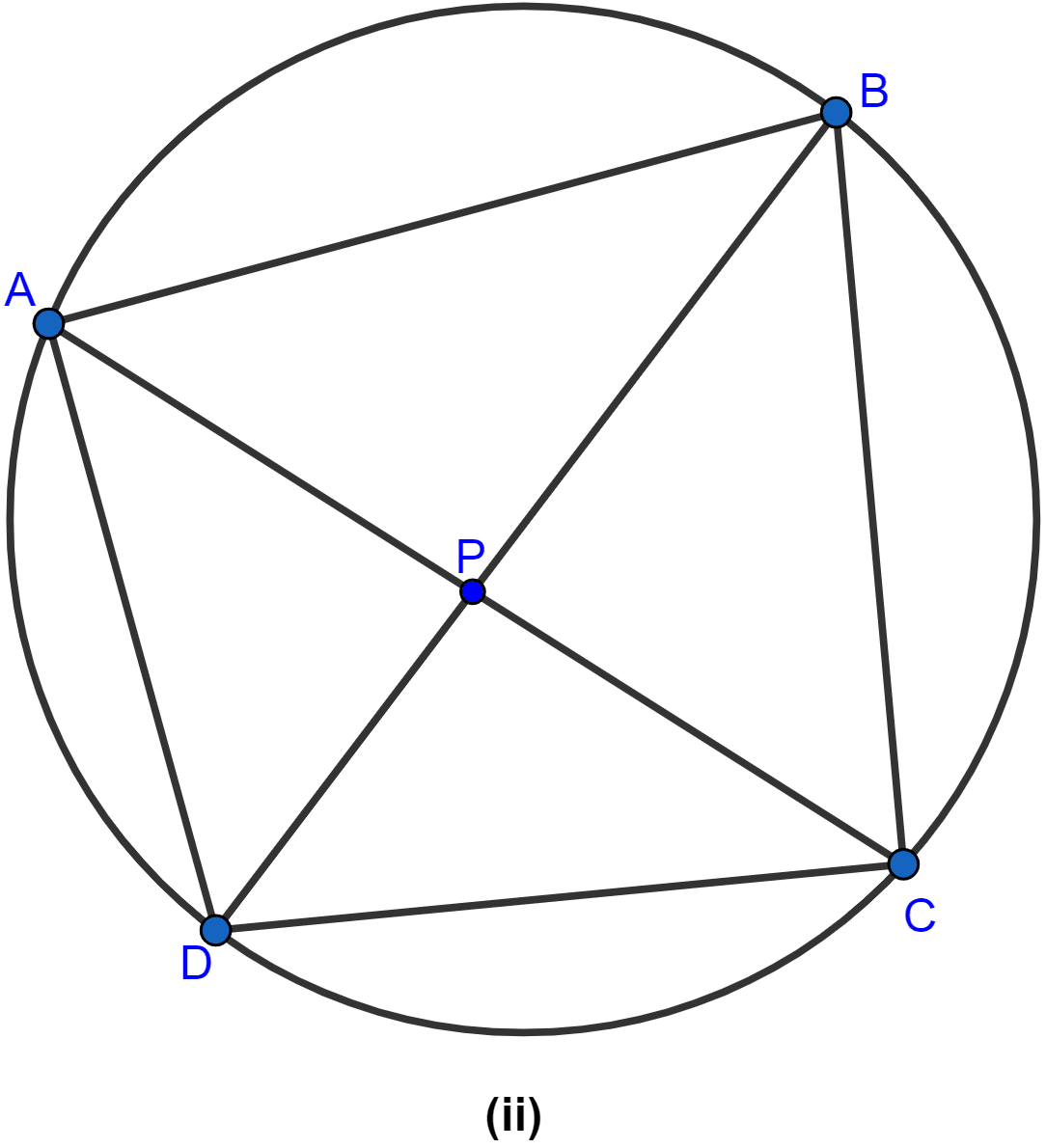
In the figure (ii) given below, the diagonals of a cyclic quadrilateral ABCD intersect in P and the area of the triangle APB is 24 cm2. If AB = 8 cm and CD = 5 cm, calculate the area of △DPC.
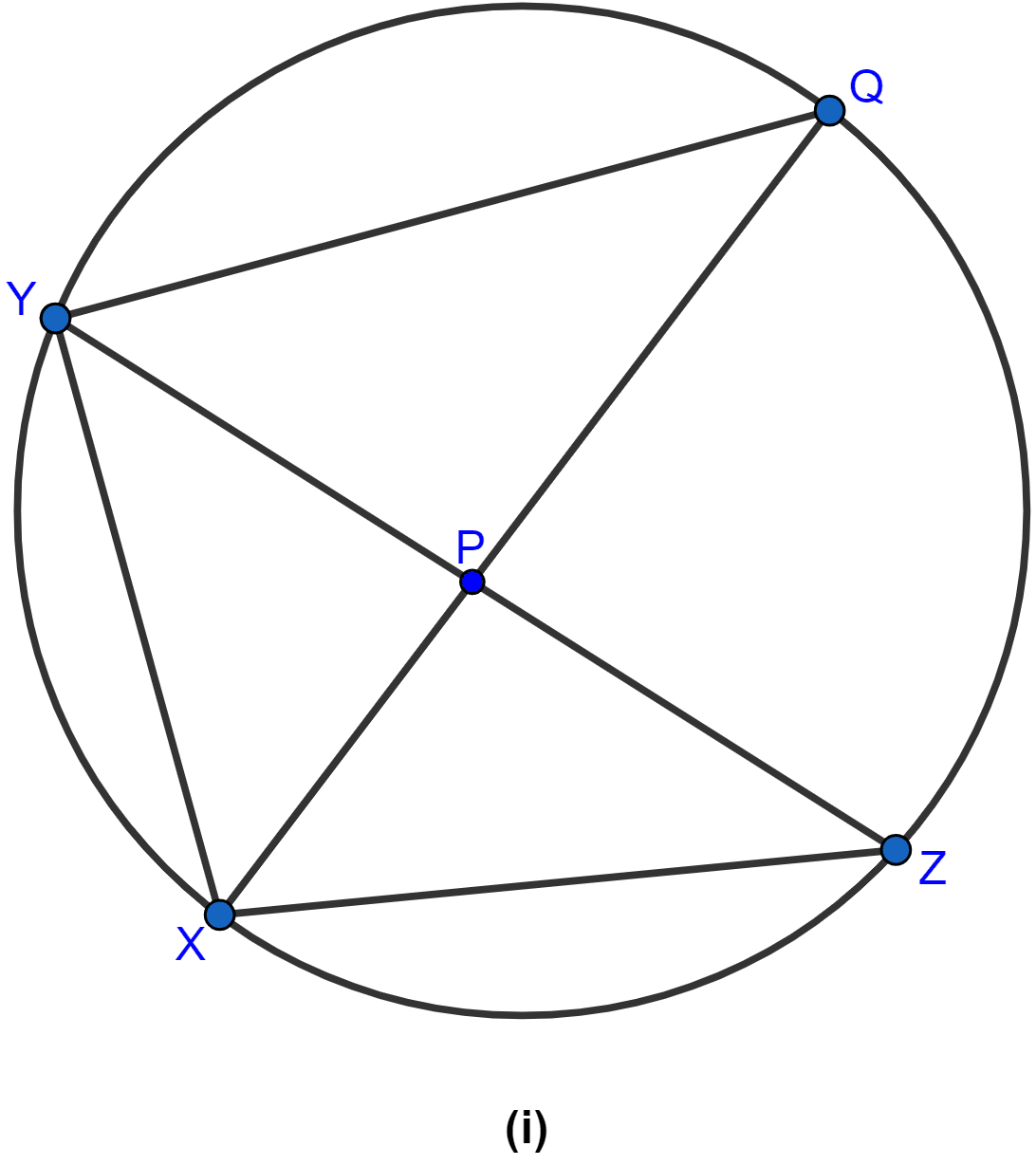
In the figure (i) given below, QPX is the bisector of ∠YXZ of the triangle XYZ. Prove that XY : XQ = XP : XZ.
In the figure (ii) given below, chords BA and DC of a circle meet at P. Prove that
(i) ∠PAD = ∠PCB
(ii) PA × PB = PC × PD.
