
Mathematics
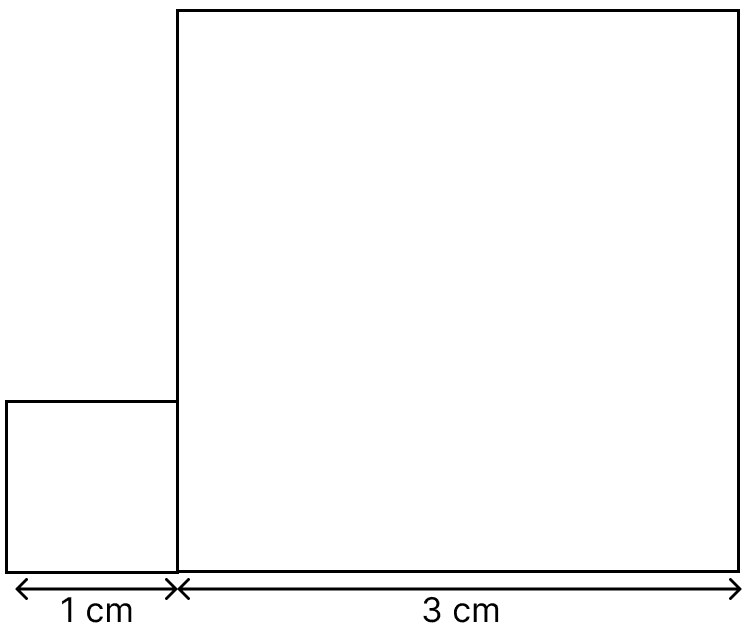
In the adjoining figure, a square of side 1 cm is joined to a square of side 3 cm. The perimeter of the new figure is
13 cm
14 cm
15 cm
16 cm
Mensuration
1 Like
Answer
When the square of side 1 cm is joined to the square of side 3 cm, one side of the smaller square (1 cm) coincides with a part of one side of the bigger square.
Perimeter of bigger square = 4 × 3 = 12 cm
Perimeter of smaller square = 4 × 1 = 4 cm
When joined, the side of the smaller square (1 cm) is no longer on the boundary, and 1 cm of the side of the bigger square is also no longer on the boundary.
Perimeter of new figure = (Perimeter of bigger square - 1) + (Perimeter of smaller square - 1)
= (12 - 1) + (4 - 1)
= 11 + 3
= 14 cm
Hence, option 2 is the correct option.
Answered By
2 Likes
Related Questions
If the length and the breadth of a rectangle are doubled then its area
remains same
becomes half
doubles
becomes four times
If the sides of a square are halved, then its area
remains same
becomes half
becomes one-fourth
doubles
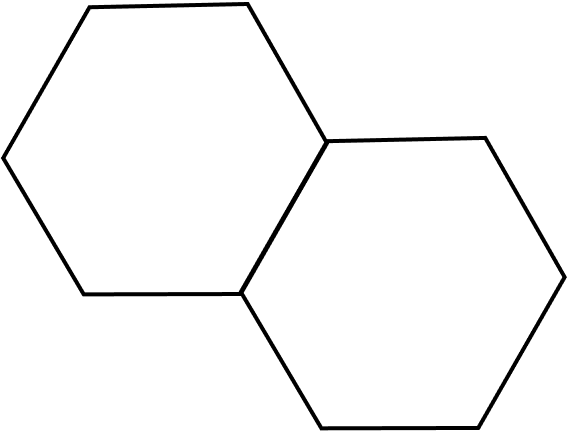
Two regular hexagons of perimeter 30 cm each are joined as shown in the adjoining figure. The perimeter of the new figure is
65 cm
60 cm
55 cm
50 cm
If the area of a square is numerically equal to its perimeter, then the length of each side is
1 unit
2 units
3 units
4 units