Biology
Answer the following questions:
(a) What is budding? Define it.
(b) Is it asexual or sexual mode of reproduction?
(c) Mention one example of a plant and one of an animal that reproduce by budding.
(d) Draw and label the diagram of an animal showing the process of budding.
(e) Write the specific locomotory structures of the animal drawn by you in part (d) above.
Answer
(a) Budding is a form of asexual reproduction in which a small outgrowth, called a bud, grows from the parent body and develops into a new individual.
(b) Budding is an asexual mode of reproduction.
(c) Budding is seen in Yeast and Hydra. Yeast is a fungus, Hydra is an animal.
(d) The labelled diagram below shows the process of budding in Hydra:

(e) The specific locomotory structures of Hydra, which reproduces by budding, are its tentacles.
Related Questions
Given below is a diagram of the male reproductive system in humans. Label the parts indicated by numbers 1 to 5, and state their functions.
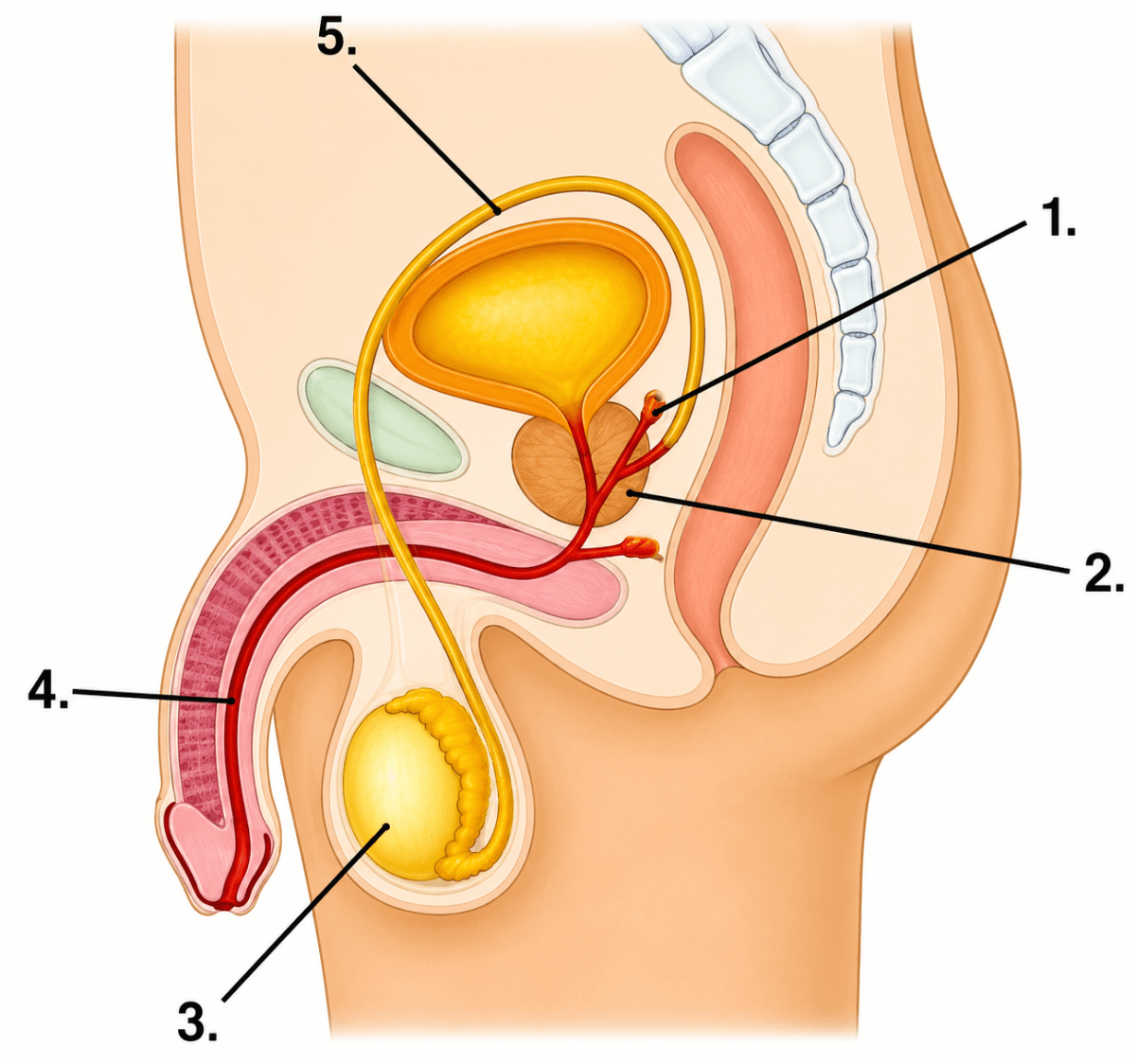
Draw a neat and labelled diagram showing the reproduction in amoeba. Answer the following questions :
(a) Is reproduction in amoeba of the sexual or asexual kind ?
(b) Name the specific kind of reproduction which occurs in amoeba.
(c) How many offsprings are produced from one division?
(d) What kind of cell division occurs during the reproduction in amoeba?
(e) Give one more example of an organism which reproduces by the same mode of reproduction as that of amoeba.
Draw a neat and labelled diagram of the human female reproductive system. From the diagram, name the following :
(a) The organ where ovum is produced.
(b) The muscular tube situated between the rectum and the urethra.
(c) A hollow, inverted pear-shaped muscular organ found in the pelvic cavity.
(d) A pair of narrow, muscular long ducts extending from each ovary to the upper part of the uterus.
(e) A small lower constricted part of the uterus.
One evening, Abdul spotted a lizard in his room. In an attempt to shoo it away with a broom, the lizard's tail suddenly broke off and kept wriggling on the floor. Abdul got sad, thinking he had hurt the lizard badly. His father explained that many lizards can regrow their tails if they lose them. This ability is called regeneration.
Abdul wondered if this meant a new lizard can grow from the broken tail in the same way some animals reproduce new individuals. However, his biology teacher clarified that regrowing a tail is not reproduction. It only replaces a lost body part. In some simple animals, regeneration can actually produce a whole new organism. But in lizards, regeneration only replaces the lost body part (or tail) and does not create a new lizard.(a) Name two animals that use regeneration for producing a new organism.
(b) What type of reproduction do the animals named by you above show?
(c) How is this type of reproduction different from how a dog gives birth to puppies?