
Mathematics
The area of given parallelogram is:
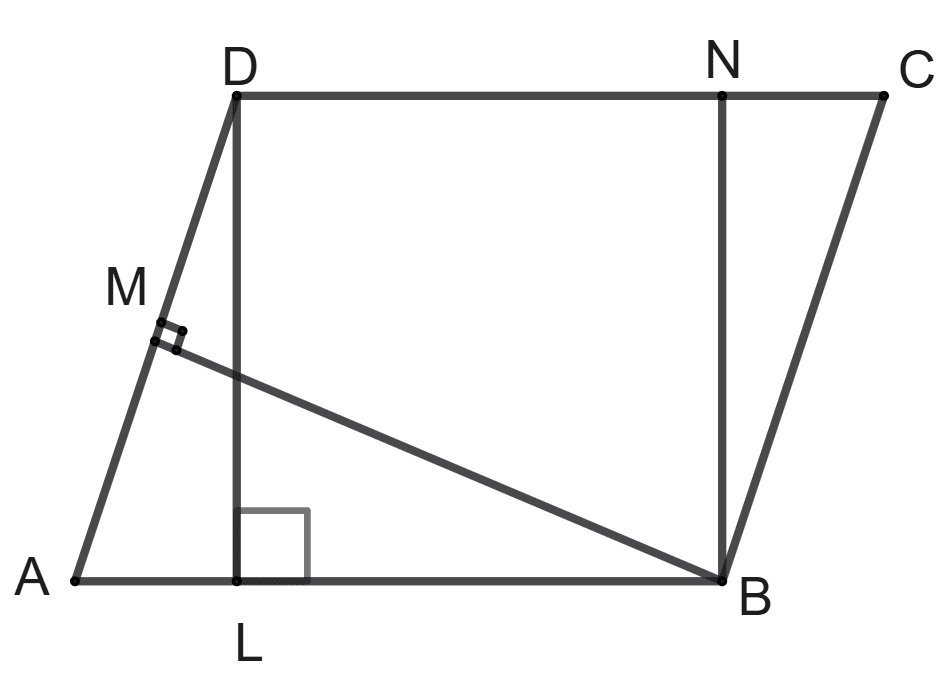
AB x BM
BC x BN
DC x DL
AD x DL
Theorems on Area
1 Like
Answer
Since the opposite sides of a parallelogram are parallel and equal to each other.
∴ AB ∥ DC and AD ∥ BC
∴ AB = DC and AD = BC
Area of parallelogram = base x height = AB x DL = DC x DL.
Hence, option 3 is the correct option.
Answered By
2 Likes
Related Questions
In a parallelogram ABCD, point P lies in DC such that DP : PC = 3 : 2. If area of Δ DPB = 30 sq.cm, find the area of the parallelogram ABCD.
The median of a triangle divides it into two:
triangles of equal area
congruent triangles
right triangles
isosceles triangles
ABCD is a quadrilateral whose diagonals intersect each other at point O. The diagonal AC bisects diagonal BD. Then area of quadrilateral ABCD is :
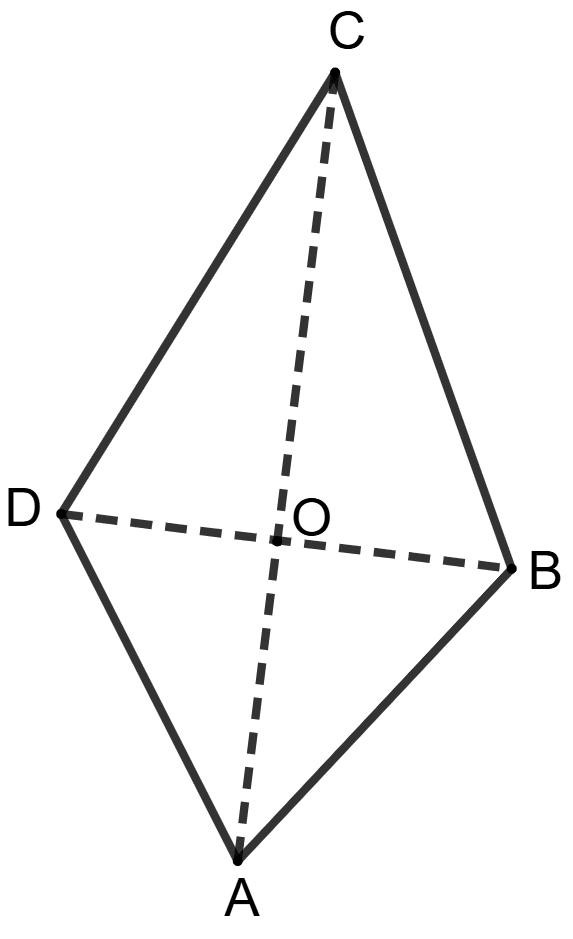
2 x area of ΔABD
2 x area of ΔBCD
4 x area of ΔAOB
2 x area of ΔABC
Two parallelogram ABCD and ABEF are equal in area, they lie between the same parallel lines:
Yes
No
Nothing can be said