
Mathematics
Assertion (A): From the information given in the figure, AP = 10 cm.
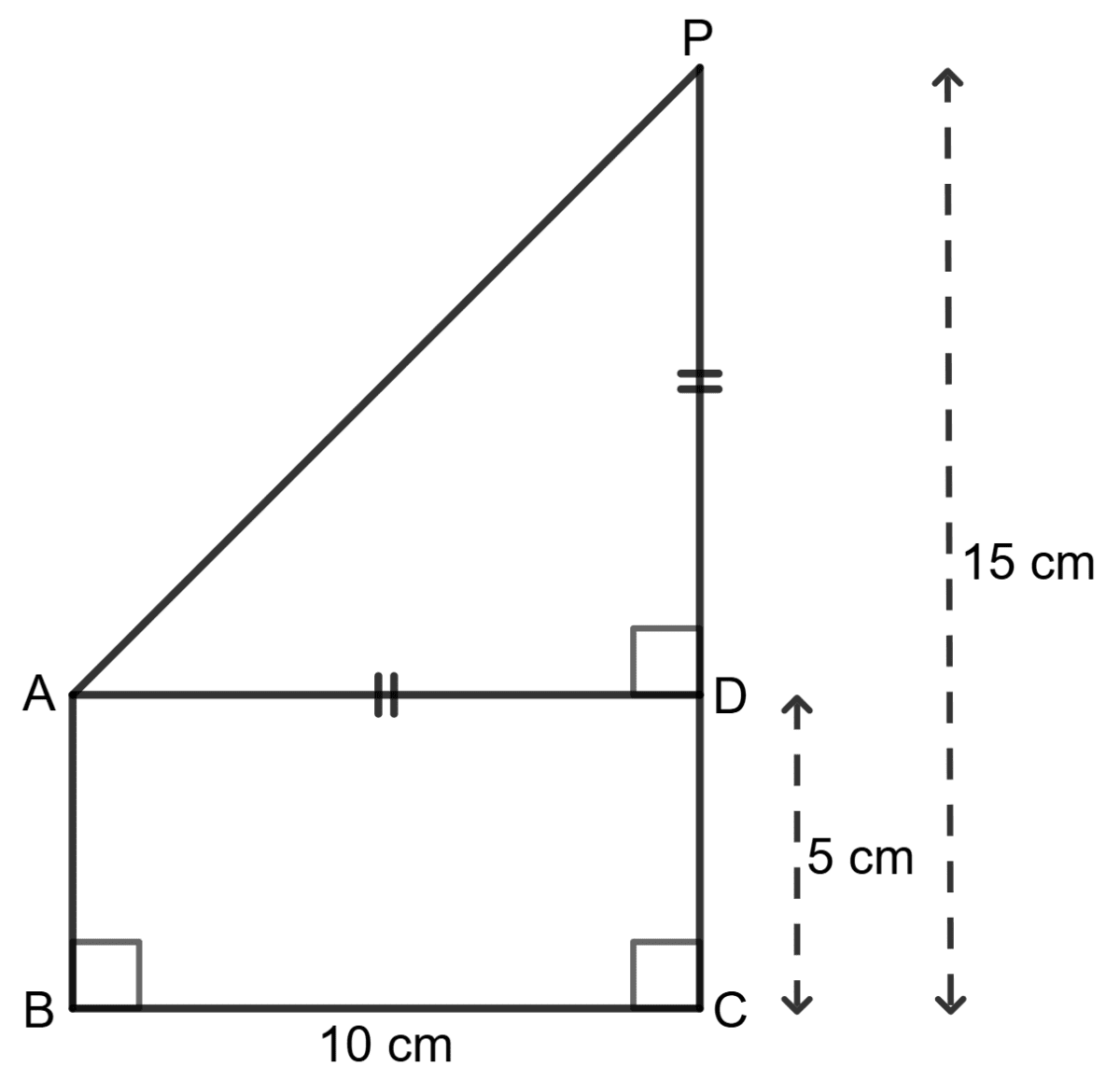
Reason (R):
⇒ AP2 = AD2 + DP2
⇒ AP2 = 102 + 102
AP =
- A is true, R is false.
- A is false, R is true.
- Both A and R are true.
- Both A and R are false.
Pythagoras Theorem
4 Likes
Answer
A is false, R is true.
Explanation
PD = PC - DC
= 15 - 5
= 10 cm
PD = AD = 10 cm
In Δ APD, using Pythagoras Theorem,
AP2 = AD2 + PD2
= 102 + 102
= 100 + 100
= 200
⇒ AP =
⇒ AP = 10 cm
According to Assertion, AP = 10 cm
∴ Assertion (A) is false.
From the above calculation, AP =
∴ Reason (R) is true.
Hence, Assertion (A) is false, Reason (R) is true.
Answered By
1 Like
Related Questions
Assertion (A): Using the information in the given figure, we get CE : EA = 5:3.
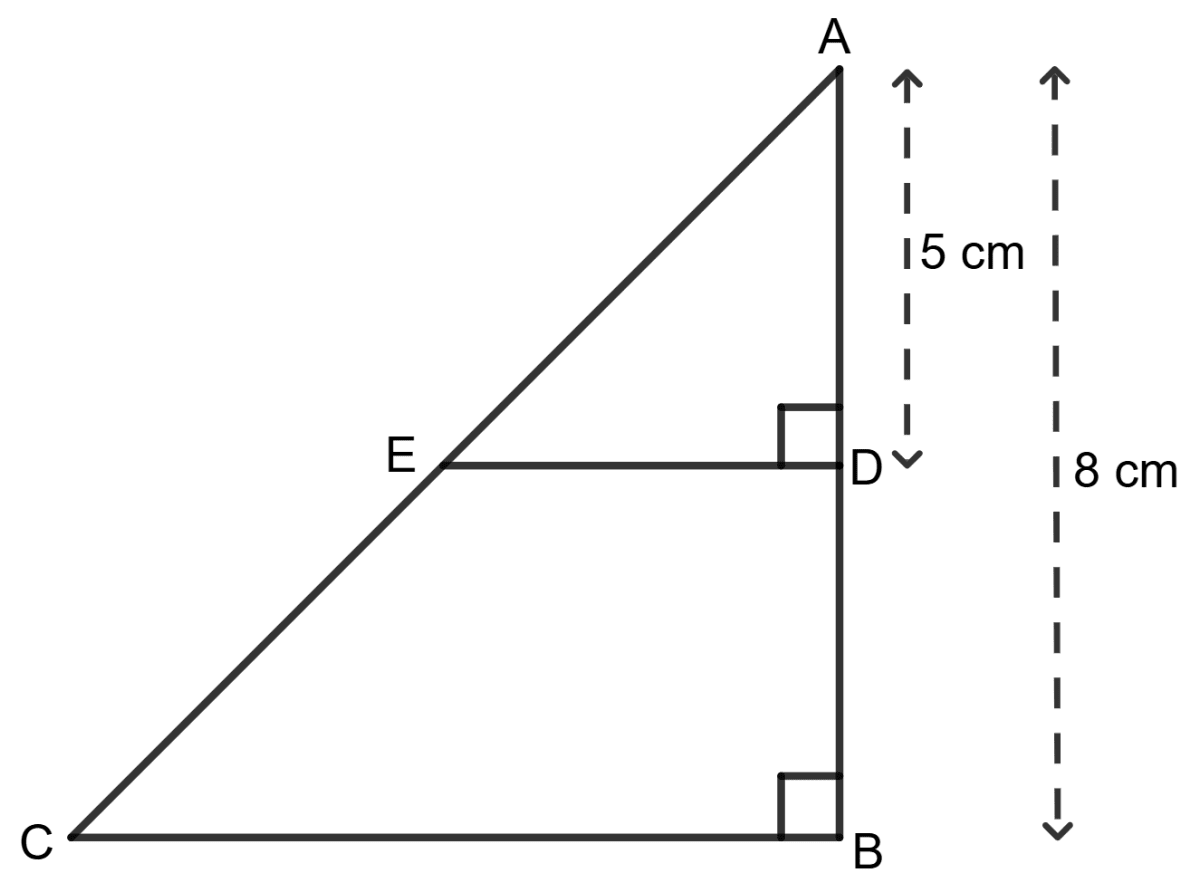
Reason (R): Since, ∠ADE = ∠ABC = 90°
so,
⇒ CE : EA = 3 : 5
- A is true, R is false.
- A is false, R is true.
- Both A and R are true.
- Both A and R are false.
Assertion (A): Using the information in the given figure, we have PQ = 10 cm.
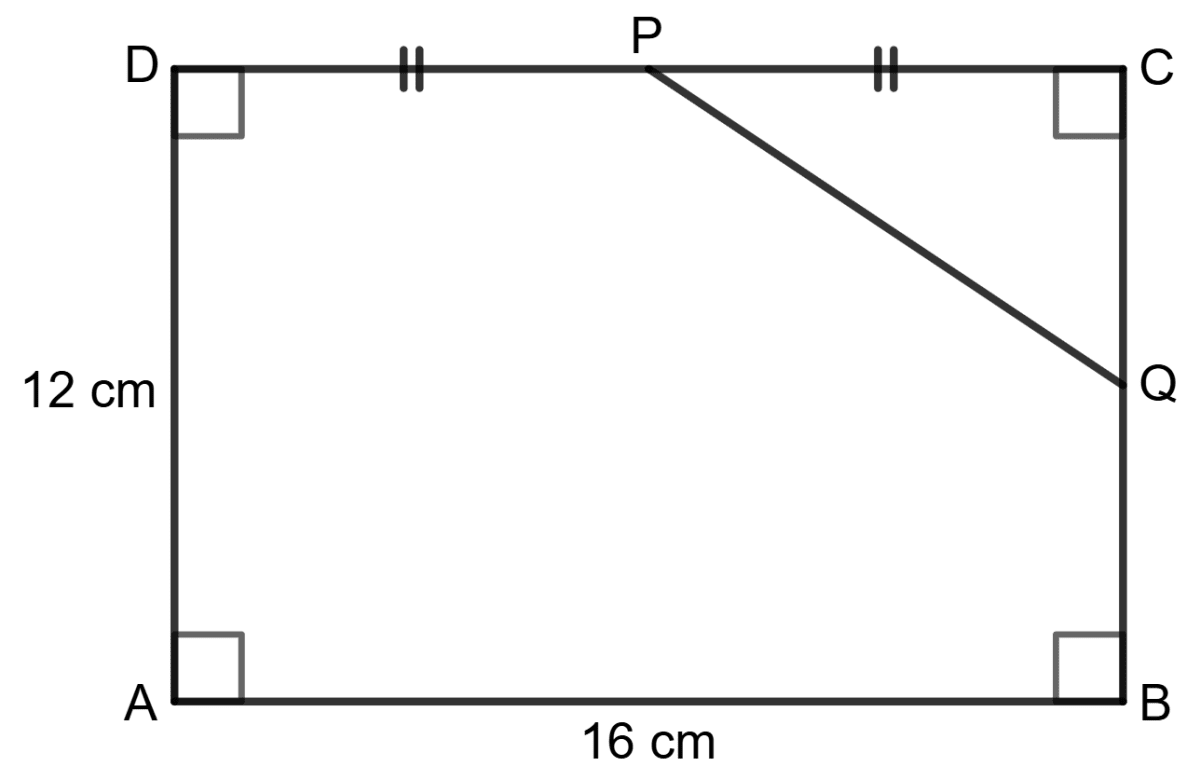
Reason (R): In right-triangle DAB, DB = 20 cm.

- A is true, R is false.
- A is false, R is true.
- Both A and R are true.
- Both A and R are false.
Assertion (A): According to the information in the given figure, the length of BC = 10 cm.

Reason (R):
∴ AB = AC - BC = 11 cm- A is true, R is false.
- A is false, R is true.
- Both A and R are true.
- Both A and R are false.
Assertion (A): In a regular polygon, sum of its interior angles : sum of its external angles is 3 : 1. The number of sides (n) in it is 8.
Reason (R):
⇒
- A is true, R is false.
- A is false, R is true.
- Both A and R are true.
- Both A and R are false.