
Physics
A body has a mass of 100 kg on earth. What will be its mass on moon, considering gravity of moon is 1/6th of earth ? What will be its weight on earth and moon ?
Motion in One Dimension
2 Likes
Answer
Given,
- Mass of the body on earth = 100 kg
- Gravity on moon = 1/6th times the gravity of earth
Since the mass of a body does not change with location, so its mass on the Moon will remain 100 kg.
However, weight depends on gravitational pull.
So, on Earth, the weight of the body is given by,
Weight = m x g
- g = 9.8 N kg-1 on earth
Then
Weight = 100 × 9.8 = 980 N
Since the Moon’s gravity is 1/6th of Earth’s, the weight on the Moon is given by,
Thus, the mass remains the same on both Earth and Moon, but the weight decreases on the Moon due to weaker gravity.
Hence, weight of the body on earth is 980 N and on moon it is approximately 163 N.
Answered By
2 Likes
Related Questions
On earth the weight of a body of mass 1.0 kg is 10 N. What will be the weight of a boy of mass 37 kg in
(a) kgf
(b) N
The weight of a body of mass 6.0 kg on moon is 10 N. If a boy of mass 30 kg goes from earth to the moon surface, what will be his
(a) mass,
(b) weight?
Read the clues across and clues downwards fill up the blank squares.
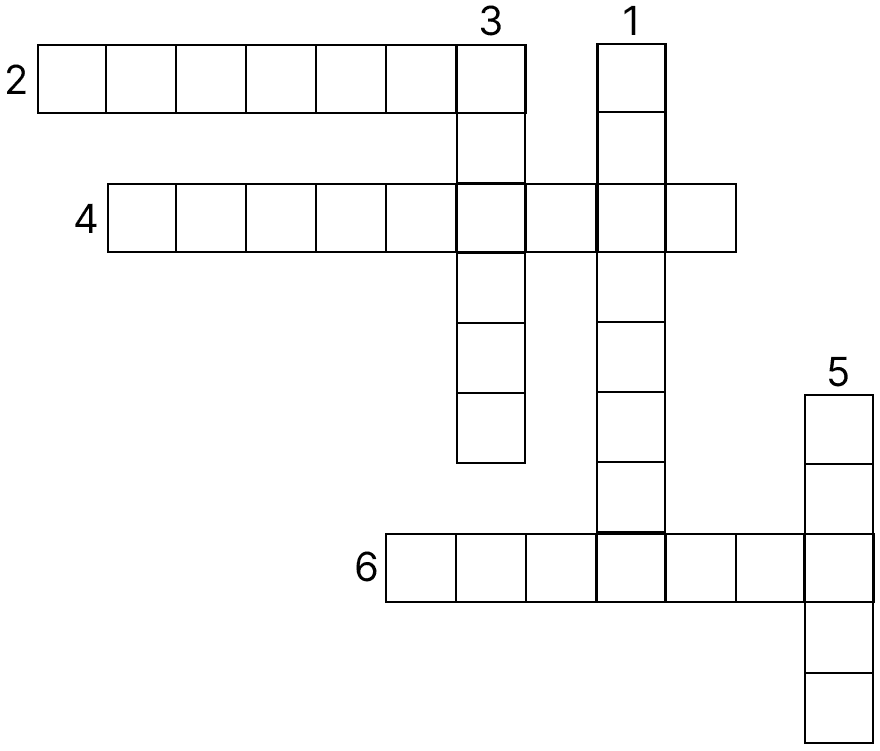
Across :
- Motion of a second's arm of a clock.
- The movement of a guitar's strings produces …………… motion.
- …………… speed = total distance travelled/total time taken.
Down :
- Motion of hands of a clock is …………… motion.
- An object is said to be in ……………, if its position changes with time.
- The distance covered by a body in unit time is called …………… of a body.
On the school sports ground, a student walks along a straight 200 m track. He covers every 20 m section in exactly the same time, from start to finish. On the same ground, a 400 m race was held late in the afternoon. During the race, another student starts very fast, then slows down in the middle, and finally sprints again near the finish line. The coach notes the times for both students.
Answer the following :
(i) Which student shows uniform motion? Explain.
(ii) If one student covers 100 m in 20 s, calculate his speed.
(iii) What kind of motion does the student who runs in the race show? Give a reason.
(iv) How is average speed different from speed at a particular moment?