
Mathematics
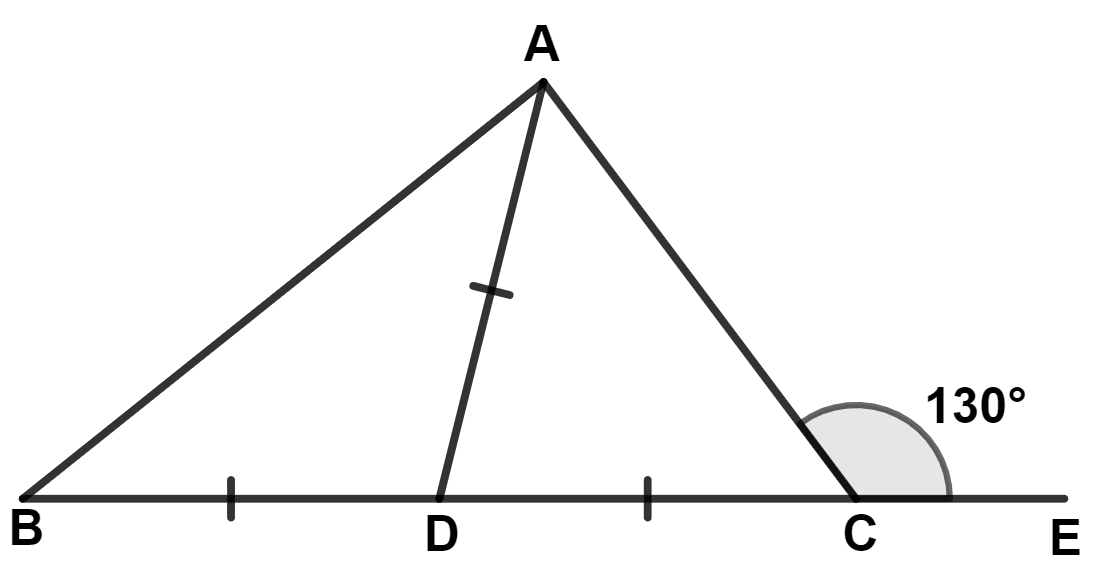
Calculate :
(i) ∠ADC
(ii) ∠ABC
(iii) ∠BAC
Triangles
61 Likes
Answer
(i) Since, DCE is a straight line.
∴ ∠ACD + ∠ACE = 180°
⇒ ∠ACD + 130° = 180°
⇒ ∠ACD = 180° - 130° = 50°.
In △ ADC,
⇒ AD = DC (Given)
⇒ ∠DAC = ∠ACD = 50° (Angles opposite to equal sides are equal.)
By angle sum property of triangle,
⇒ ∠ADC + ∠DAC + ∠ACD = 180°
⇒ ∠ADC + 50° + 50° = 180°
⇒ ∠ADC + 100° = 180°
⇒ ∠ADC = 180° - 100° = 80°.
Hence, ∠ADC = 80°.
(ii) Since, BDC is a straight line.
∴ ∠ADB + ∠ADC = 180°
⇒ ∠ADB + 80° = 180°
⇒ ∠ADB = 180° - 80° = 100°.
In △ ABD,
⇒ AD = BD (Given)
⇒ ∠DBA = ∠BAD = x (let).
By angle sum property of triangle,
⇒ ∠BAD + ∠ADB + ∠DBA = 180°
⇒ x + 100° + x = 180°
⇒ 2x + 100° = 180°
⇒ 2x = 180° - 100°
⇒ 2x = 80°
⇒ x = = 40°.
⇒ ∠DBA = ∠BAD = 40°.
From figure,
⇒ ∠ABC = ∠DBA = 40°.
Hence, ∠ABC = 40°.
(iii) From figure,
⇒ ∠BAC = ∠BAD + ∠DAC = 40° + 50° = 90°.
Hence, ∠BAC = 90°.
Answered By
36 Likes
Related Questions
In △ ABC and △ PQR, AB = AC, ∠C = ∠P and ∠B = ∠Q; then triangles are :
isosceles but not congruent
isosceles and congruent
congruent but not isosceles
neither isosceles nor congruent.
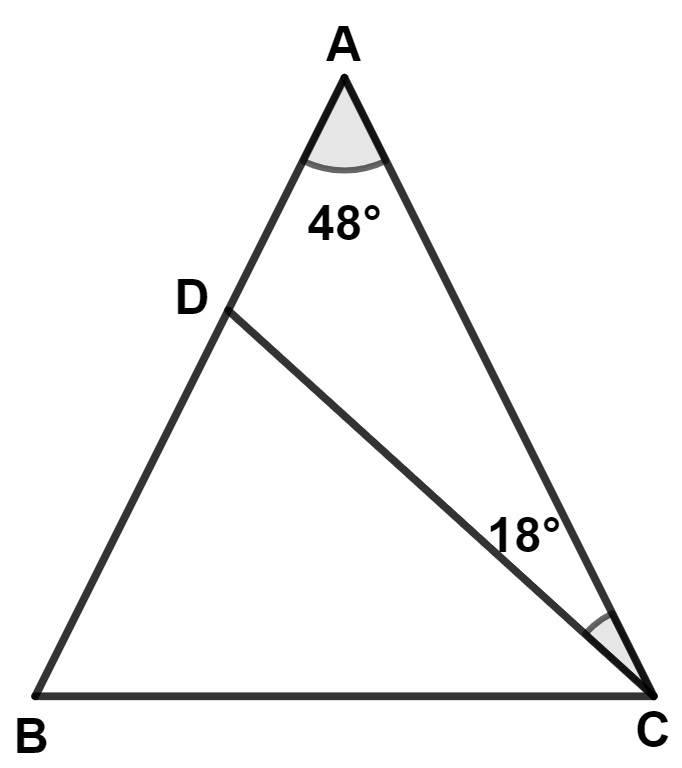
In the figure alongside,
AB = AC
∠A = 48° and
∠ACD = 18°.
Show that : BC = CD.
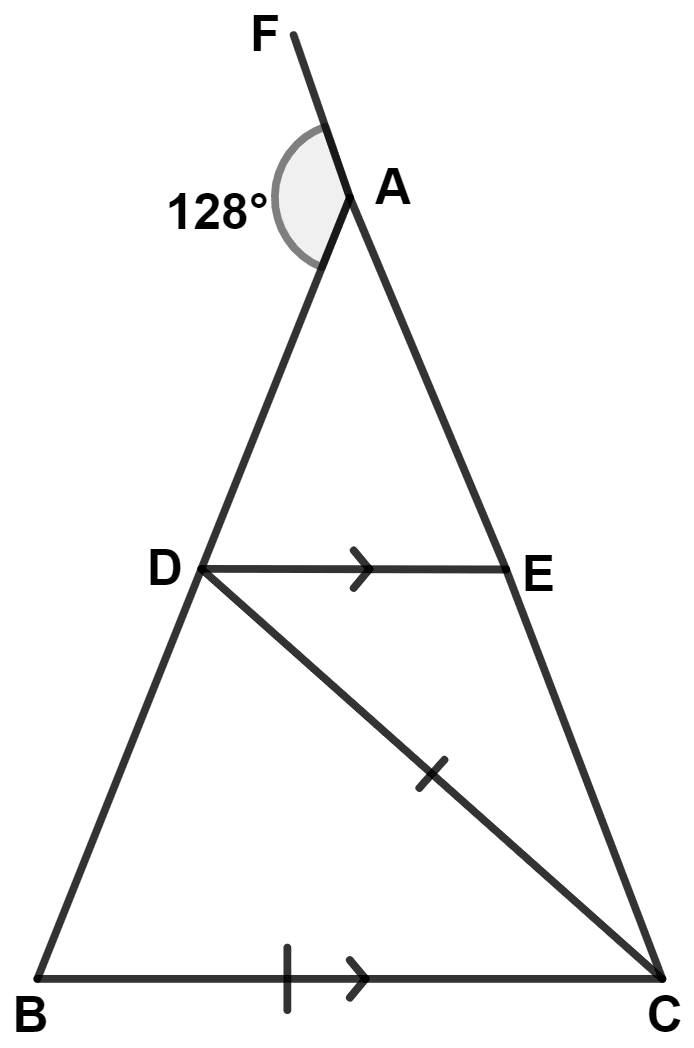
In the following figure, AB = AC; BC = CD and DE is parallel to BC. Calculate :
(i) ∠CDE
(ii) ∠DCE
Calculate x :
(i)
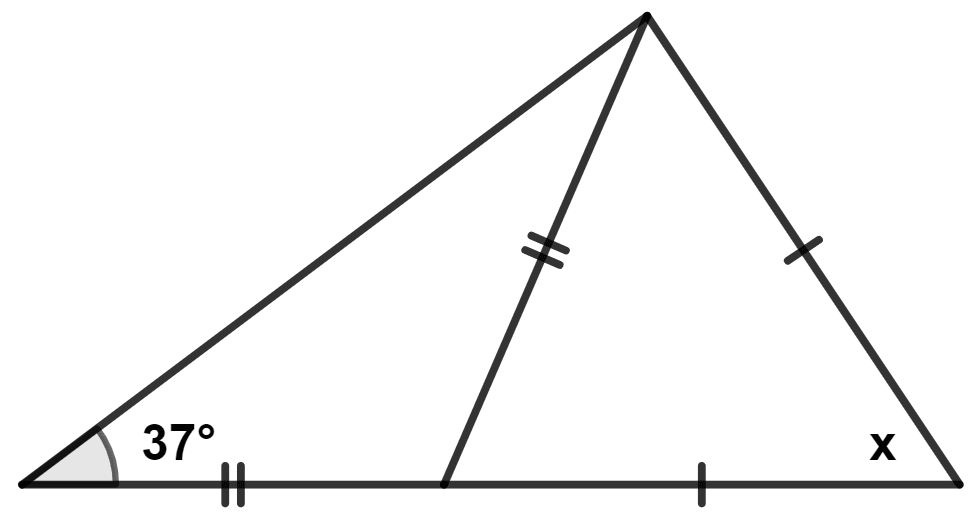
(ii)
