
Science
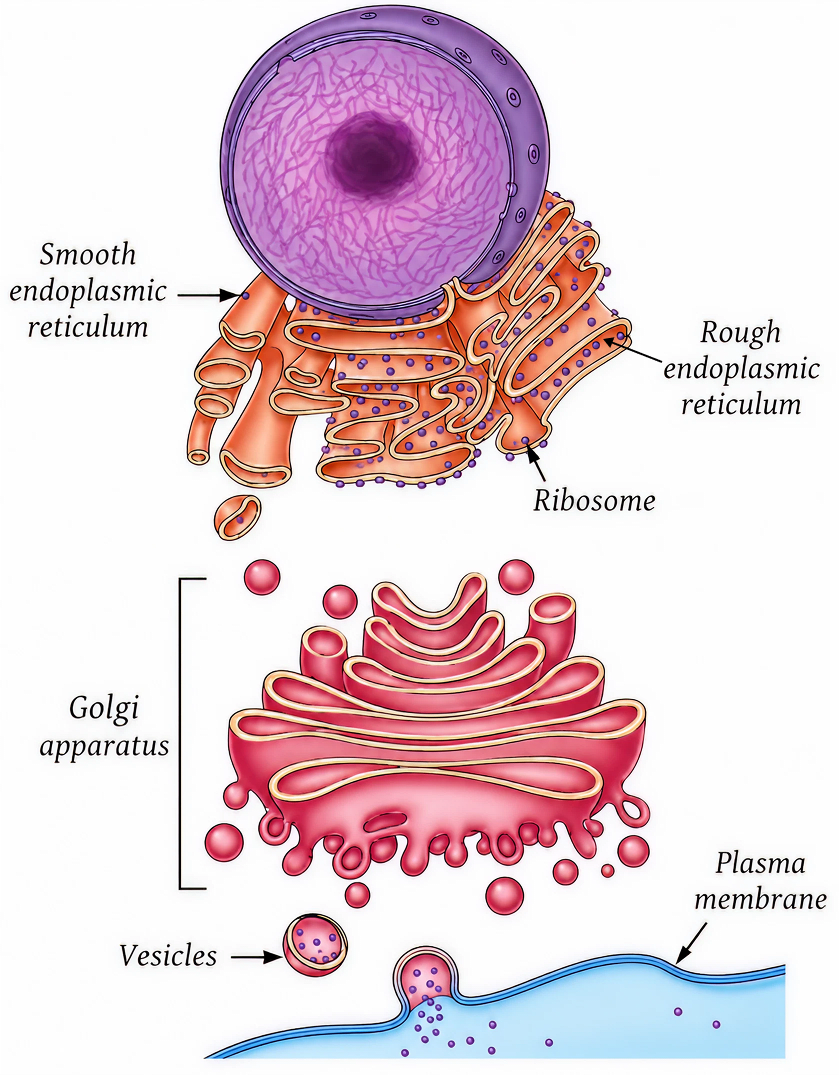
The cell membrane of a cell is made up of proteins and lipids. Which cell organelles help in the synthesis of cell membrane? Write the path of these compounds from their site of synthesis to the cell membrane and show this through a labelled diagram.
Cell
1 Like
Answer
The cell membrane is made up of proteins and lipids, and the following organelles help in their synthesis:
- Proteins are synthesised by ribosomes attached to the Rough Endoplasmic Reticulum (RER).
- Lipids are synthesised by the Smooth Endoplasmic Reticulum (SER).
Path of these compounds to the cell membrane:
- Proteins are synthesised by ribosomes on the RER, and lipids are synthesised by the SER.
- From the ER, these proteins and lipids are transported to the Golgi apparatus.
- The Golgi apparatus modifies, sorts and packages them into vesicles.
- These vesicles move towards the cell membrane and fuse with it, thereby contributing the proteins and lipids to the cell membrane.
So the path is: RER (proteins) and SER (lipids) → Golgi apparatus → vesicles → plasma membrane (cell membrane).
Answered By
1 Like
Related Questions
What outcome do you expect, if all the mitochondria are removed from a eukaryotic cell?
Which phenomenon inhibits the formation of tumors in the human body? Can plants also develop tumors? Explain.
What would happen if gametes are formed by mitotic divisions?
A farmer, Deepa, was very happy with the harvest of amla (Indian Gooseberry) and lemons on her farm. However, she could sell only one-fourth of the produce in the local market. Recognising that a significant amount of produce may be lost post-harvest, she employed a traditional yet scientifically sound method to extend the shelf life of amla and lemons. She turned perishable produce into profitable products, such as pickles and sharbat. She used the excess produce to prepare pickles, murabbas, and sharbat by adding appropriate amounts of salt, sugar, or jaggery to small pieces of fruit and their juices. These were then stored in small glass bottles for sale, helping her prevent the wastage of post-harvest produce. This shift from farming to agro-processing would strengthen food security and boost the local economy, creating a sustainable model that cuts waste while increasing her income. Based on the above passage answer the following questions:
(i) Which scientific concept has the farmer applied in the preservation of the farm produce?
(ii) How does the addition of high concentrations of salt and sugar create an environment that prevents the growth of spoilage-causing bacteria and fungi?
(iii) Suggest a healthy recipe of this kind for food preservation.
(iv) What are the scientific values addressed in this case?