
Commercial Applications
Classify cost according to its nature.
Cost
1 Like
Answer
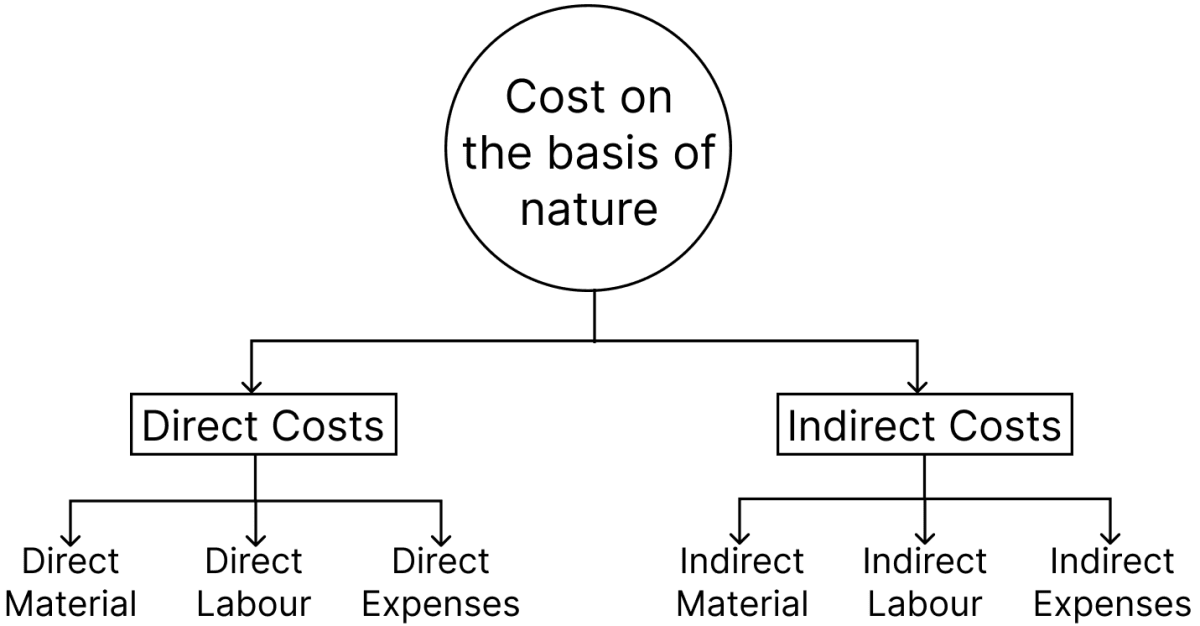
On the basis of nature, costs are classified into two broad categories — Direct Cost and Indirect Cost.
1. Direct Cost — These are those costs which can be easily, directly and wholly related to a particular cost unit or cost centre. Direct costs are also called the prime cost when totalled. They consist of three components:
- Direct Material — All materials which become an integral part of the finished product and can be easily measured and directly charged. Example: cloth used in dress making.
- Direct Labour — Wages of labour which can be wholly and directly identified with a particular product. Example: wages paid to a machine operator or carpenter.
- Direct Expenses — Expenses which can be wholly and directly identified with a particular product. Example: hire charges of a machine used for a specific job.
2. Indirect Cost — These are those costs which cannot be identified easily, directly and wholly with a particular cost unit or cost centre. They are also known as overheads or common costs. They consist of three components:
- Indirect Material — Materials that cannot be directly assigned to a specific product. Example: oil, grease, consumable stores.
- Indirect Labour — Labour that cannot be wholly identified with a particular product. Example: wages of storekeeper, foreman, timekeeper.
- Indirect Expenses — Expenses that cannot be directly identified with a specific product. Example: factory rent, office rent, advertising.
Answered By
3 Likes
Related Questions
Explain the following: (a) Material Cost (b) Semi-fixed costs.
"The term 'cost' must be qualified according to its context". Discuss this statement.
Name any two basic elements of cost. Give an example of each.
What are Overheads or Indirect expenses? Mention any three types of overheads with an example of each.