
Biology
Compare the hormonal response with the nervous response with respect to their speed, transmission and general nature of changes brought about.
Endocrine System
37 Likes
Answer
| Hormonal Response | Nervous Response |
|---|---|
| Usually slow. | Immediate/Rapid. |
| Transmitted chemically through blood. | Transmitted electro-chemically through the nerve fibres and chemically across synapses. |
| Affects different organs (widespread in body). | Affects only the particular muscles or the gland (local). |
| Effect is short term or long-lasting. | Effect only short-lived. |
| Can affect growth. | Cannot affect growth. |
| Can bring about specific chemical changes and regulates metabolism. | Does not influence chemical changes and cannot regulate metabolism. |
| Cannot be modified by learning from previous experience. | Can be modified to some extent by learning from previous experience. |
Answered By
22 Likes
Related Questions
The diagram given alongside shows an endocrine gland in the human body. Study the diagram and answer the following questions :

(a) Identify the gland. Write its specific location in the human body.
(b) Label the guidelines 1, 2 and 3 shown in the figure.
(c) Name any two secretions from part 1 and two from part 2.
(d) The deficiency of which hormone causes Diabetes insipidus? How is this condition different from Diabetes mellitus with respect to the abnormal substances present in the urine.
Human height is mainly controlled by genetic factors but hormonal secretion is also equally important in regulating the height. Study the figures given below and answer the questions that follow :
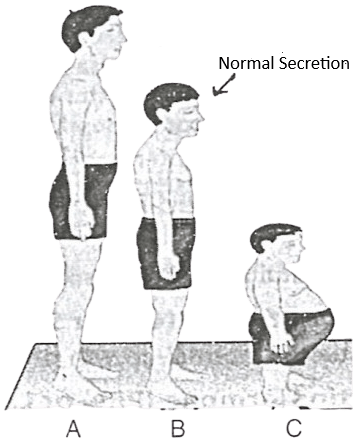
(a) Which of the above figures (A/B/C) is suffering from hyposecretion of the growth hormone?
(b) Name the disorder shown in figure A.
(c) Mention the gland which secretes 'Growth Hormone'.
The person shown below is suffering from a hormonal disorder which is caused due to an oversecretion of the growth hormone. He has developed a large nose and thick lips.

(a) Name the disorder and the gland which secretes the hormone somatotropin.
(b) What are the two types of disorders caused due to the oversecretion of GH ?
(c) How do the above mentioned disorders in (b) differ in terms of the age groups in which they typically occur?
Mention three important differences between the action of hormones and that of nerves in the regulatory mechanism of our body.