
Physics
A convex lens of power +5 D has an object placed at a distance of 50 cm in front of the lens.
(a) State the nature of the image formed.
(b) What is the definite distance, towards or away from the lens, the object should move so that the image is not seen?
Refraction Lens
12 Likes
Answer
Given, power (P) = +5 D
Object distance = u = -50 cm
Let, image distance = v
Focal length = f =
Focal length = f = +20 cm
Here, object is placed beyond 2F (twice the focal length) of a convex lens, the image will be formed between F and 2F on the opposite side of the lens. Hence, Image is real and diminished.
(b) The object is at 50 cm. If we move the object 30 cm towards the lens, it will be at the focal point (20 cm), so the rays will emerge parallel, and a real image will not be formed.
So, the new position of object = 50 - 30 = 20 cm
∴ The object should be moved 30 cm towards the lens.
Answered By
5 Likes
Related Questions
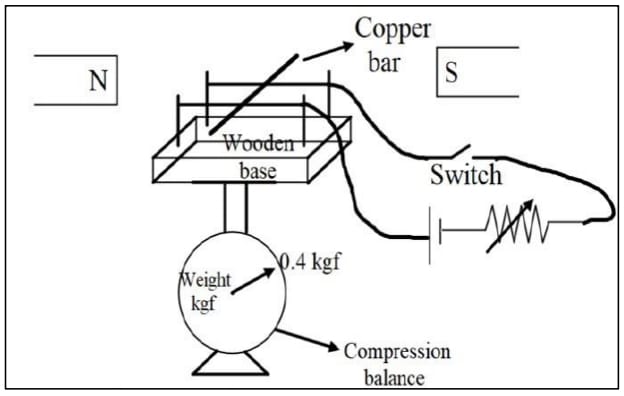
The above circuit diagram illustrates a copper bar placed on two copper wires stretched over a wooden base placed between two poles of magnets. This entire setup is placed on a compression balance, which shows a weight of 0.4 kgf.
(a) What will be the observation of the compression balance when we close the switch?
(b) How will this observation change, when we increase the current in the circuit?
(c) Name the rule used to come to the conclusion in (a).
Bandish and Parag, on a trek to Sandakpu, halted at a tea house in Tumbling. The picture above shows the entrance door of the tea house. They saw the tumbrel filled with water hanging from top rigid support passing through the door. On enquiring about the tumbrel, the owner of the tea house, he said that it acts as a pullback (door closure) after opening and releasing the door.
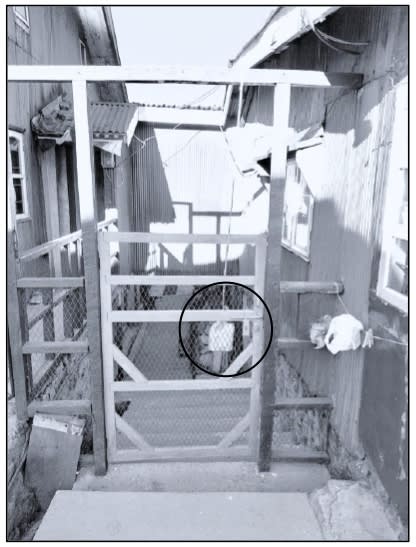
(a) Explain how the tumbrel helps to close the door on its own.
(b) Name the principle involved.
The diagram below shows a bulb connected by dual control switches. Observe the diagrams and answer the questions that follow.
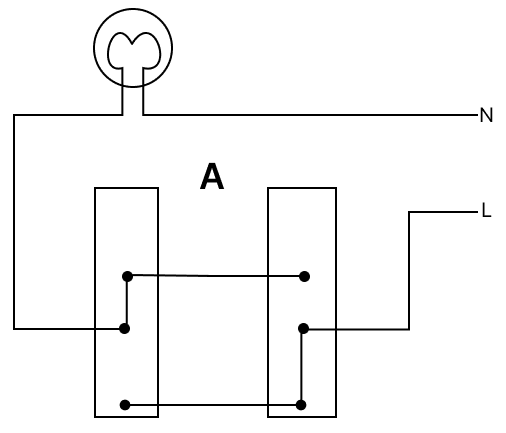
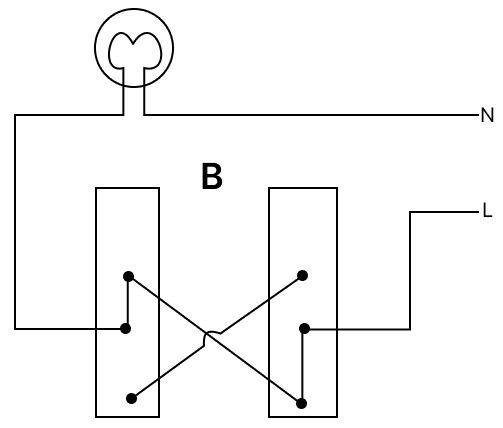
(a) Which of the above circuits will be able to switch ON or switch OFF the bulb using both switches?
(b) At present, in which circuit is the bulb glowing?
(c) If we interchange the L and N wires in circuit B, will the circuit work?
Observe the electric circuit below and answer the questions that follow.
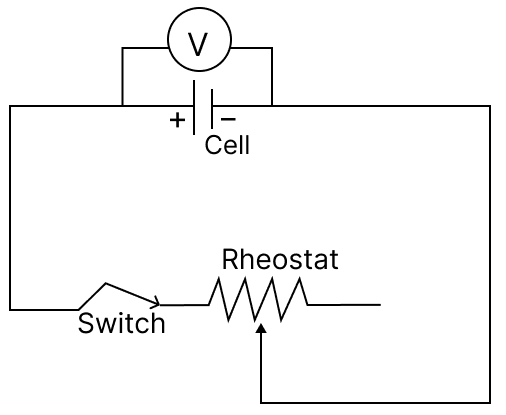
(a) If we increase the current in the above circuit using a rheostat, will the reading of the voltmeter decrease or increase?
(b) Give a reason for your answer in ‘a’.
(c) The present reading of the voltmeter is 2 V, and the current in the circuit is 0.8 A. Calculate the potential drop when the current in the circuit becomes 1 A. Given E = 3 V.