
History & Civics
Define nationalism. State the difference between nationalism and aggressive nationalism.
1ˢᵗ World War
216 Likes
Answer
Nationalism refers to the sense of unity felt by the people, who share a common history, language and culture. This feeling of unity soon turned into extreme pride, which made the people of many countries believe that their country is superior to the other countries. This led to the development of aggressive nationalism in Europe. Therefore, aggressive nationalism meant love for one’s own country and hatred of other countries.
Answered By
145 Likes
Related Questions
(I) The end of the First World War also led to the end of European supremacy in the world.
(II) The United States of America surpassed Europe both economically and militarily to emerge as a world power.
- (II) contradicts (I)
- (I) is the reason for (II)
- (I) is true but (II) is false
- (I) and (II) are independent of each other.
(I) The League of Nations was established in 1920 for the preservation of peace and to prevent wars.
(II) The League of Nations failed to check the rise of dictatorships in Italy and Germany.
- (II) contradicts (I)
- (II) is the reason for (I)
- (I) is true but (II) is false
- (I) and (II) are independent of each other.
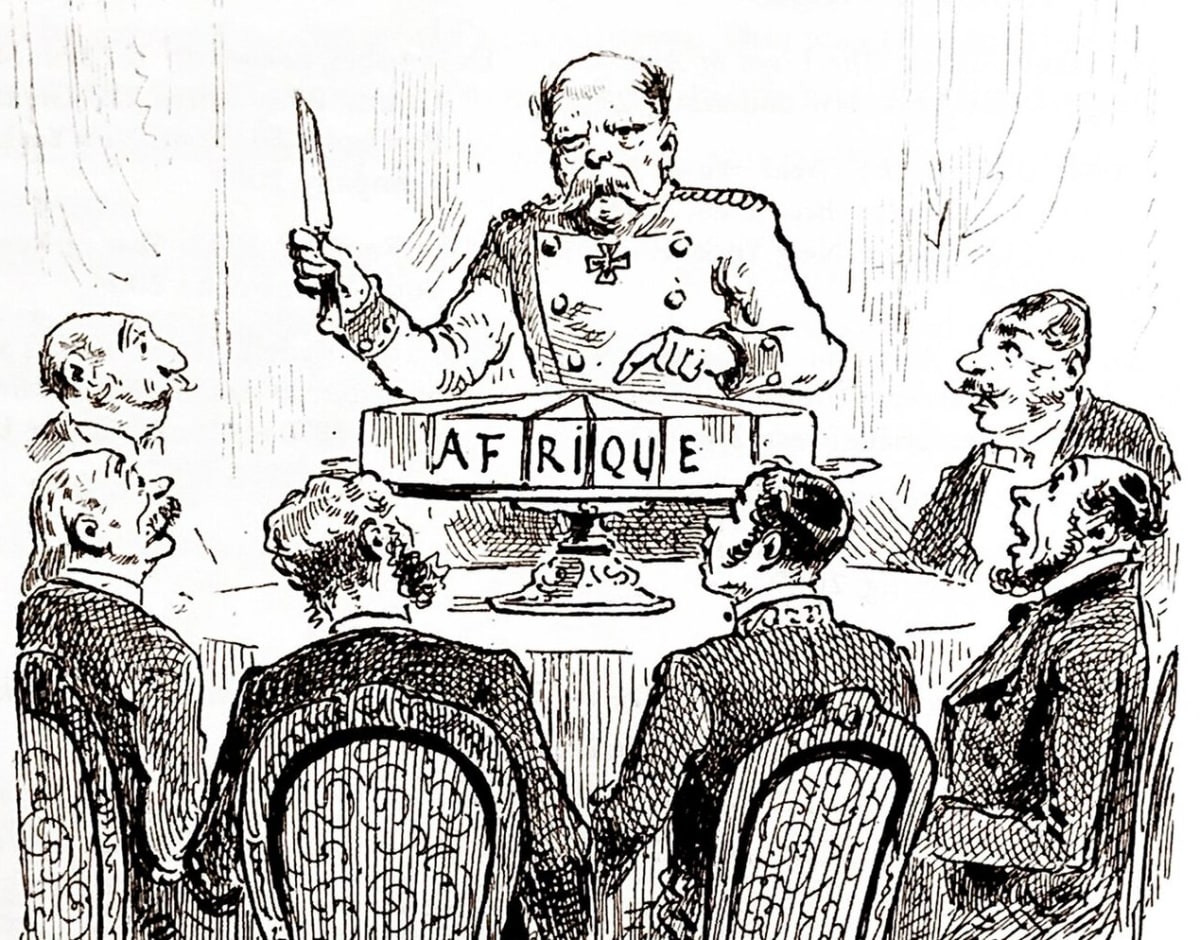
The cartoon titled, "The cutting of Africa at the Berlin Conference' shows the imperialistic ambitions of European nations. State two features of Imperialism.
What was the cause of Franco-German rivalry?