Chemistry
To explain the difference between hard water and soft water, a chemistry teacher took tap water in two beakers labelled A and B. A pinch of magnesium sulphate was dissolved in beaker A, while beaker B contained only tap water. Soap solution was then added to both the beakers and stirred. The students noticed a difference in the lather formed.
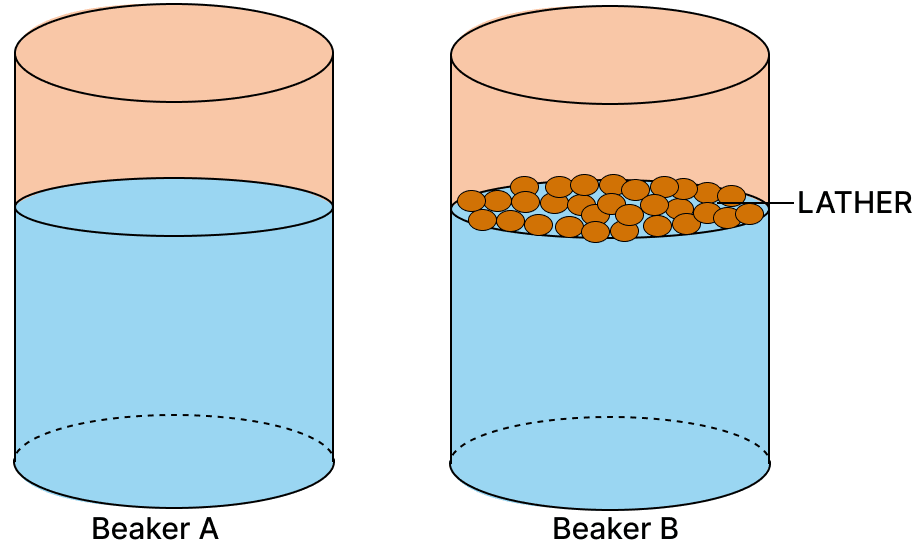
(a) What difference is observed by the students when soap solution is added to beakers A and B ?
(b) What conclusion can be drawn from their observations ?
(c) What substances cause (i) temporary hardness and (ii) permanent hardness ?
(d) Name a simple method that can be used to remove the temporary hardness of tap water in homes.
(e) Why is washing soda added to hard water ?
Answer
(a) When soap solution is added to beaker A, no or very little lather is formed; instead, scum appears.
When soap solution is added to beaker B, a good amount of lather is formed easily.
(b) Beaker A contains hard water due to magnesium sulphate.
Beaker B contains comparatively soft water, as it forms lather easily with soap.
(c) Temporary hardness is caused by calcium bicarbonate and magnesium bicarbonate.
Permanent hardness is caused by calcium sulphate, magnesium sulphate, calcium chloride, and magnesium chloride.
(d) A simple method to remove temporary hardness at home is boiling water.
(e) Washing soda is used with hard water because washing soda reacts with calcium and magnesium ions and forms insoluble carbonates, which get precipitated and removed. This helps in softening hard water and increasing lather formation.
Related Questions
Name the compounds responsible for:
(i) temporary hardness
(ii) permanent hardness of water.
Suggest one method for the removal along with the reactions for
(i) temporary hardness
(ii) permanent hardness of water
What are the main causes of water pollution? State three ways to control water pollution.
We all know that common salt (NaCl) adds taste and some nutrition to our food. One rainy day, Amaira wanted to add some salt to her meal. When she opened the jar and scooped a spoonful of salt out, she noticed that the salt had become moist and sticky.
(a) Why did the salt become moist ? Explain.
(b) Define deliquescence.
(c) How can we keep the salt dry in our homes during monsoon ?