
Biology
The figure given below represents a process in plants. Study the same and answer the following questions :
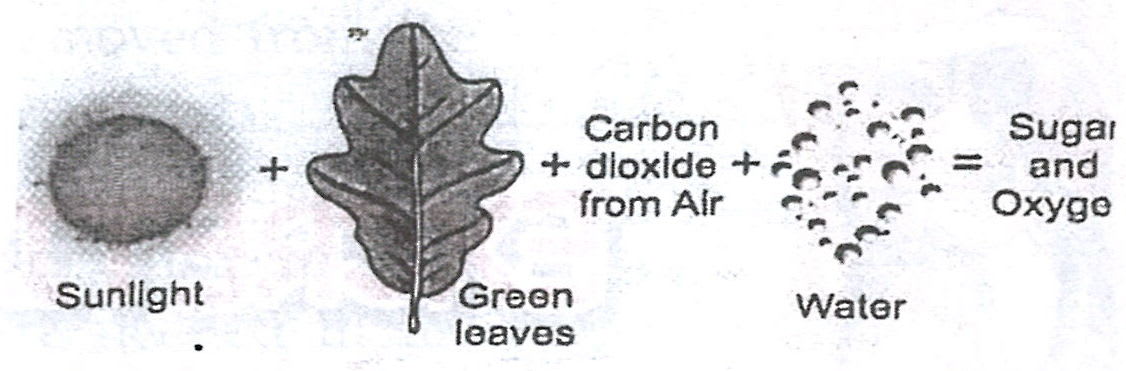
- Identify the process and define it.
- Write balanced equation depicting the entire process.
- Name the organelle and pigment responsible for the process.
- Mention two by-products of the process.
- What is the significance of the process ? State two points.
Photosynthesis
30 Likes
Answer
The given figure shows the process of Photosynthesis.
Photosynthesis is the process by which green plants capture solar energy and use it to convert carbon dioxide and water into simple sugars and oxygen.The balanced equation depicting Photosynthesis is given below:
Carbon dioxide + Water Glucose + Oxygen
The chloroplast is the organelle, and chlorophyll is the pigment, responsible for photosynthesis in plant cells. Chloroplasts contain chlorophyll, which captures light energy to convert carbon dioxide and water into glucose and oxygen.
Two by-products of Photosynthesis are Glucose (C6 H12 O6) and Oxygen.
Photosynthesis is significant due to following reasons:
- Food for all — Plants prepare their own food by photosynthesis, and the plants in turn are eaten by the animals.
- Oxygen for respiration — All the free oxygen in the atmospheric air is the result of photosynthesis.
Answered By
19 Likes
Related Questions
Distinguish between the following pairs on the basis of the words indicated in the brackets []:
Glucose and Starch [Solubility in water]
Draw a neat diagram of "opened and closed stomata" and answer the following questions :
- Label the following in the diagram : Guard cells, Stoma, Nucleus, Inner wall, Outer wall and Chloroplast.
- Mention the condition of guard cells during open and closed stomata.
- Write the specific location of these structures in the plant body.
- Name three important processes of plants in which the stomata are involved.
- Are the stomata open or closed during the day and night respectively ?
The experimental set-up shown alongside represents a process in plants. Study the same and answer the following questions :
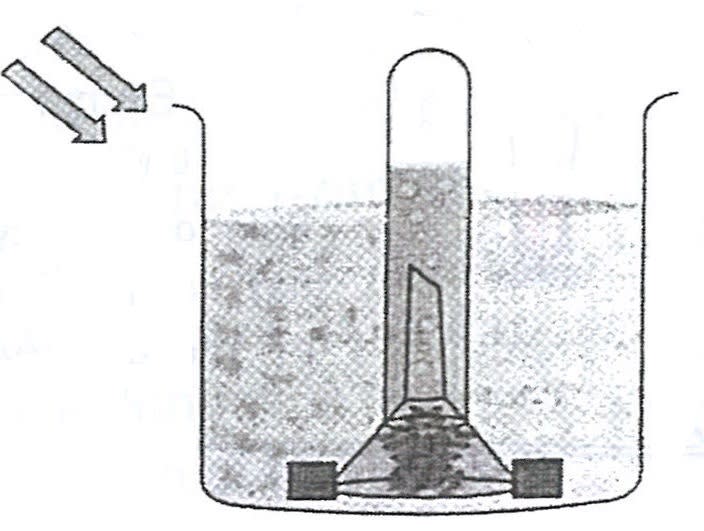
- What is the aim of this experiment ?
- Name a suitable plant which can be used for the experiment. What is the habitat of this plant mentioned by you ?
- What is importance of the gas formed, shown by the bubbles, for us ?
- How would you confirm the presence of the gas in the test tube ?
- Draw a neat and labelled diagram of the same experiment in its 'initial stage.'
Write balanced equations for each of the following :
Photosynthesis.