
Biology
The figures given below represent three kinds of supporting tissues in plants.
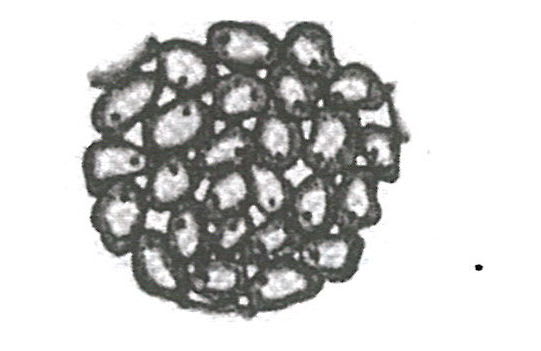
A
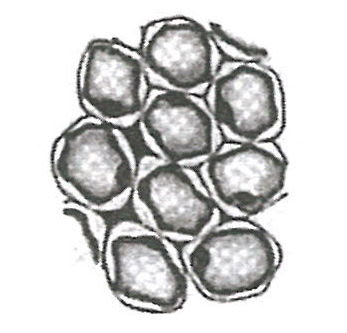
B
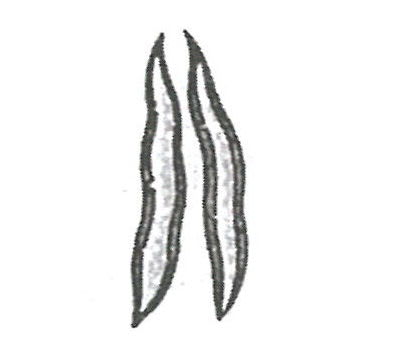
C
(i) Mention the name of tissues (A), (B) and (C).
(ii) Write one structural difference between the tissues A and B.
(iii) Which of these tissues is located in the petiole of a leaf ?
(iv) Write one functional difference between the tissues A and C.
(v) Name the tissue in which the cells are long, narrow, thick-walled and dead.
Tissues
19 Likes
Answer
(i) The name of tissues (A), (B) and (C) are:
A → Parenchyma
B → Collenchyma
C → Sclerenchyma
(ii) One structural difference between Parenchyma and Collenchyma:
| Parenchyma | Collenchyma |
|---|---|
| Parenchyma is composed of large thin walled cells, usually with intercellular spaces. | Collenchyma is made up of living cells which are elongated and are thick at the corners or edges. |
(iii) Collenchyma is located in the petiole of a leaf.
(iv) One functional difference between Parenchyma and Sclerenchyma:
| Parenchyma | Sclerenchyma |
|---|---|
| Parenchyma stores food material. | Sclerenchyma provides a rigid mechanical and structural support to the plant. |
(v) Sclerenchyma is composed of cells that are long, narrow, thick-walled and dead.
Answered By
11 Likes
Related Questions
Distinguish between the following pairs on the basis of the words indicated in the brackets [].
Blood and lymph [blood corpuscles]
Draw a neat and labelled diagram of the "basic structural and functional unit of Nervous tissue".
Study the figures given below and answer the following questions :
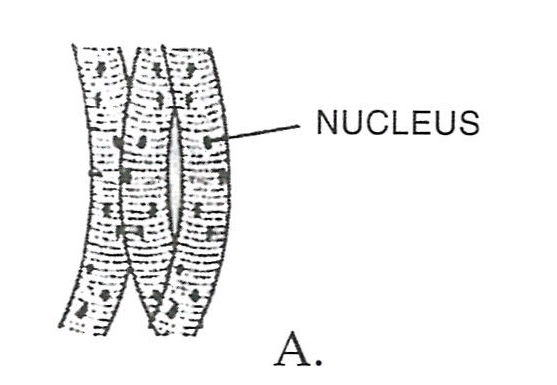
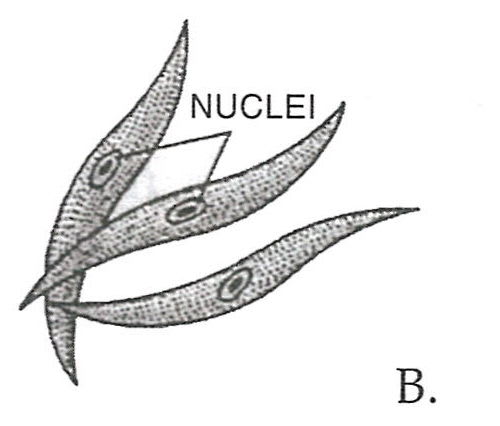
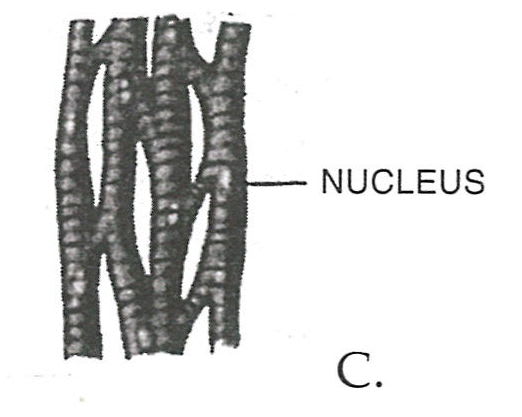
(i) Identify the kind of tissues shown as A, B and C.
(ii) Write one specific location of each in the human body.
(iii) Mention one common function of all.
(iv) Write one structural difference between the tissues A and B.
(v) Which of these two tissues are not under the control of our will ?
Leesha fell from her bicycle and fractured one bone in her forearm. The X-ray confirmed a crack, so the doctor placed her arm in a plaster cast to keep the bone steady until it healed. While explaining the treatment, the doctor told her that bones are strong because of certain minerals stored in them.
(i) Bones are classified under which type of animal tissue?
(ii) Name two minerals that make bones strong.
(iii) State one important role of bones in vertebrates apart from movement.
(iv) Mention one other tissue in vertebrates that provides support and has a structure similar to bone.
(v) Name one location in the human body where the tissue mentioned in (iv) is found.