
Biology
The figures given below show three insectivorous plants. Study the same and answer the following questions :
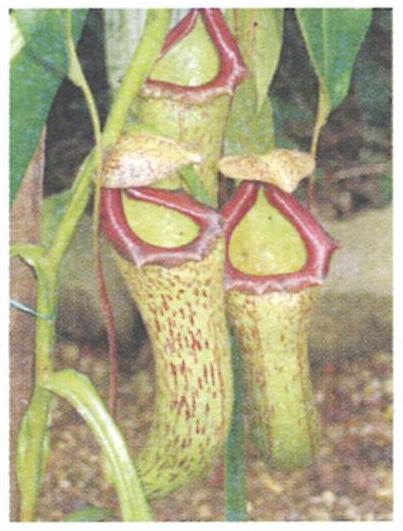
A
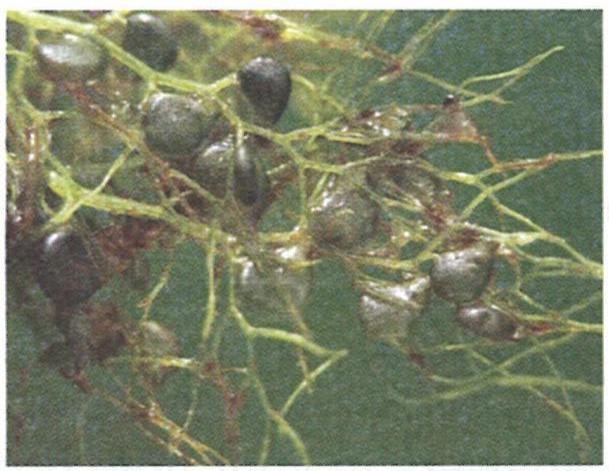
B
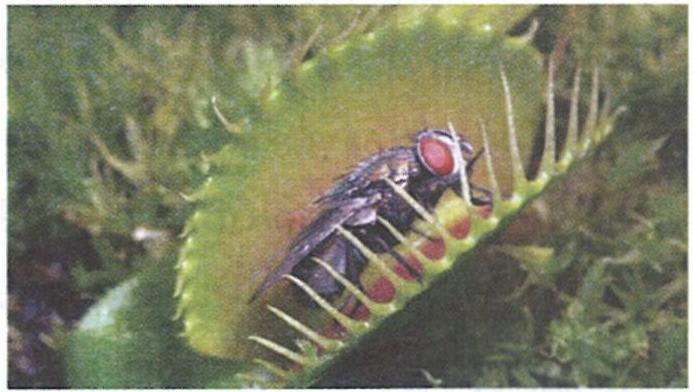
C
(i) Name the plants shown as A, B and C.
(ii) For which specific nutritional element do these plants trap insects ?
(iii) In which Indian state is plant A found abundantly ?
(iv) Which part of the leaf is modified into a pitcher in plant A ?
(v) Write one specific feature of the soil in which these plants usually grow.
Leaf
13 Likes
Answer
(i)
Plant A — Pitcher Plant
Plant B — Bladderwort
Plant C — Venus Flytrap
(ii) These plants trap insects to meet their nitrogen demands.
(iii) Pitcher plant is found abundantly in Meghalaya.
(iv) In a Pitcher plant, the lamina is modified into a pitcher.
(v) The soil where these plants usually grow is deficient in nitrates.
Answered By
9 Likes
Related Questions
Distinguish between the following pairs on the basis of the words indicated in the brackets []:
Reticulate and parallel venation [2 examples of each].
Draw a neat diagram of a simple, petiolate leaf showing reticulate venation and label its seven important parts. Answer the following questions:
(i) Write one important function of axillary buds.
(ii) What are the two main function of leaves ?
(iii) Name two plants which have leaves with serrated margins.
(iv) Why do some plants have tendrils (modified leaflets) ?
(v) Name a plant in which the leaves are modified into spines.
The figures given alongside represent the different kinds of leaf arrangements on the stem. Study the figures and answer the following :
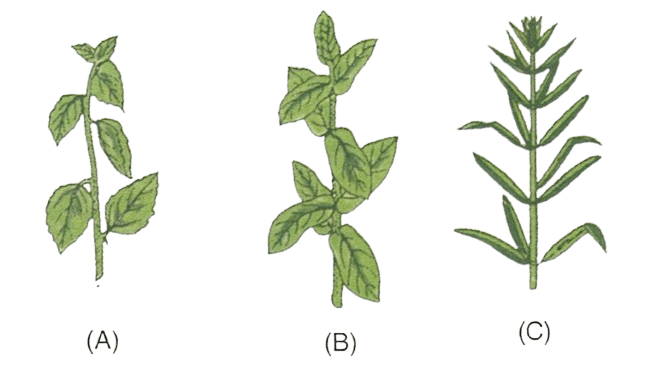
(i) a technical term for the arrangement of leaves on the stem.
(ii) Name the three kinds of arrangements shown in the figure A, B and C respectively.
(iii) Give one example of each kind of arrangement.
Draw neat diagrams of the following and give an example of each :
(i) A simple leaf.
(ii) A compound leaf with incision upto midrib.
(iii) A compound leaf with incision upto petiole.
(iv) A simple leaf with reticulate venation.
(v) A simple leaf with parallel venation.