Mathematics
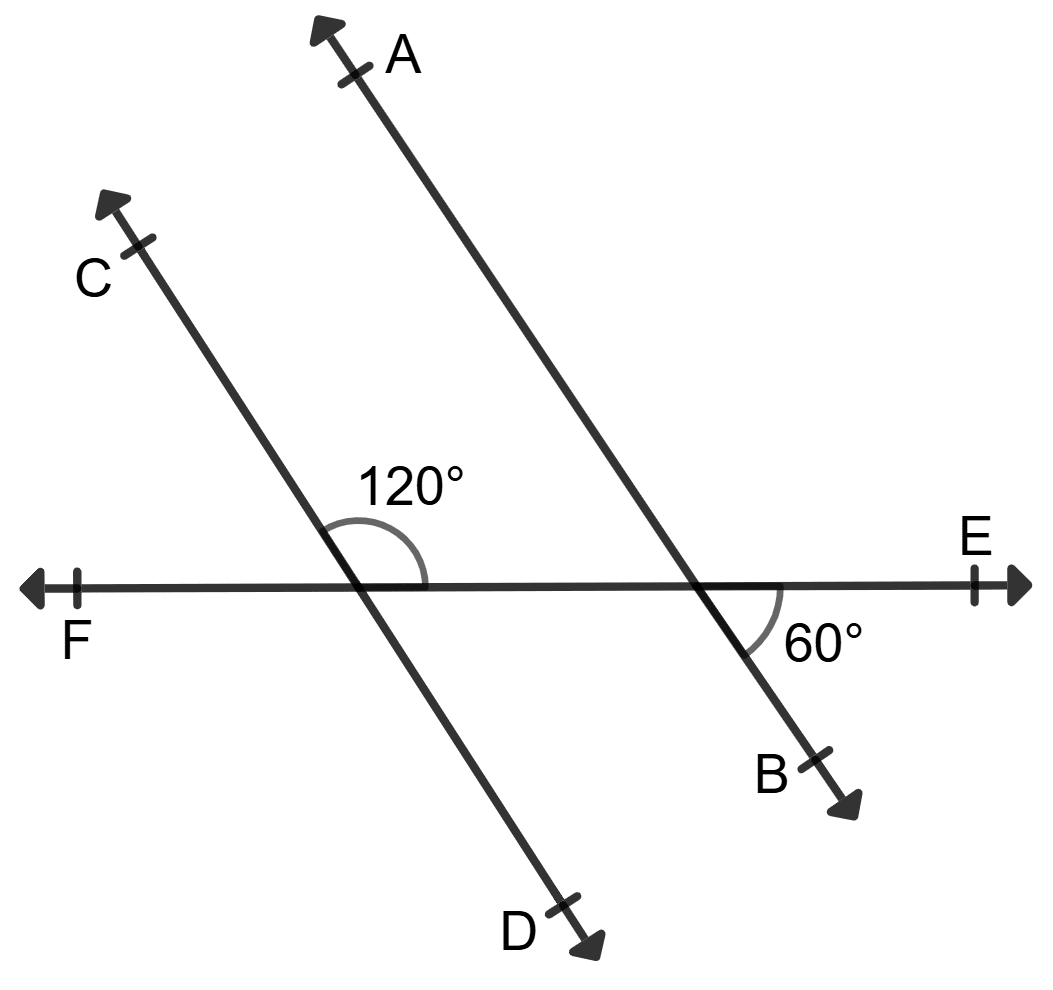
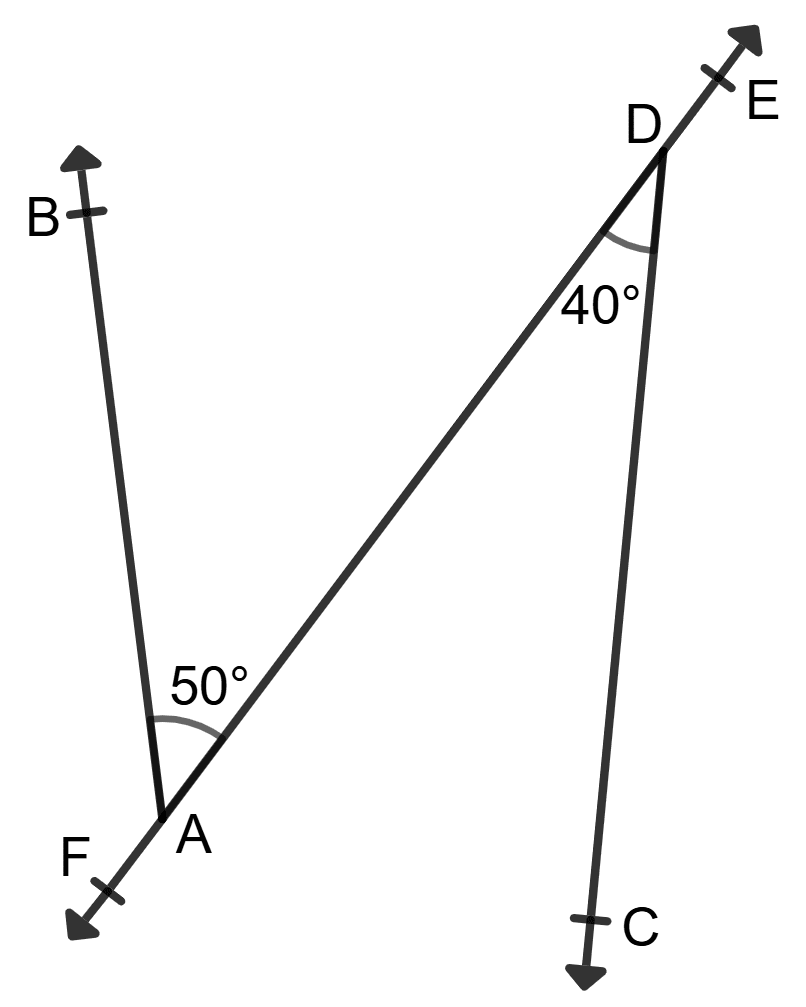
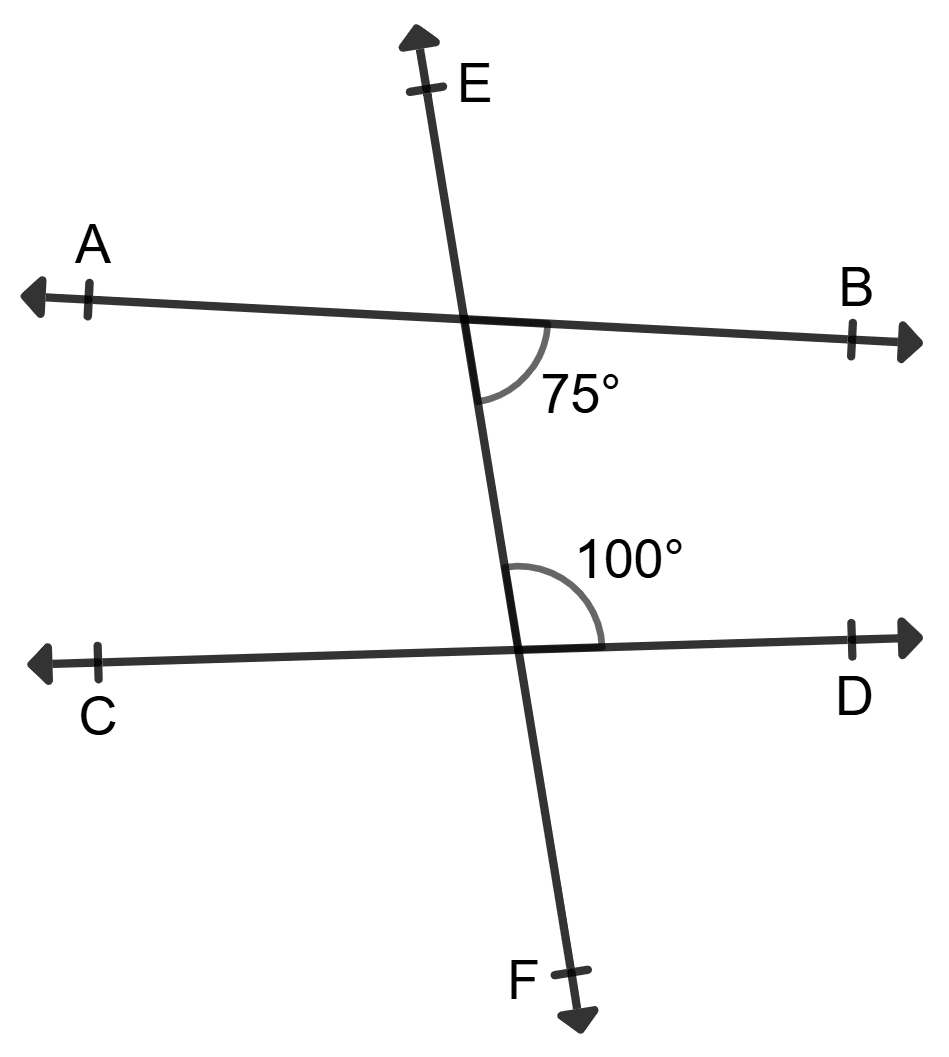
In each of the following figures, two lines AB and CD are cut by a transversal EF. In each case, find whether AB || CD or not. Give reasons in support of your answer.
(i)
(ii)
(iii)
(iv)
(v)
Lines & Angles
2 Likes
Answer
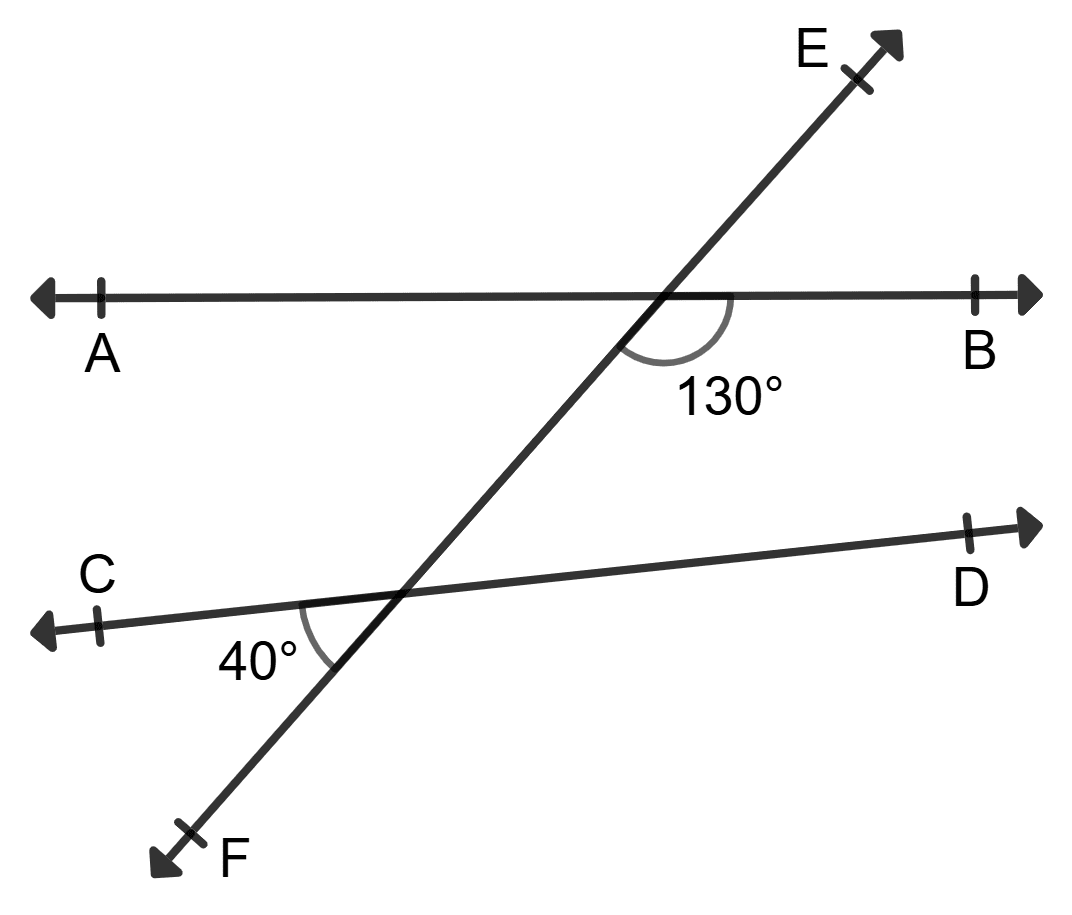
(i)
In the given figure,
The angle vertically opposite to 40° is 40°.
Now, consider the pair of co-interior angles: 130° and 40°.
Sum = 130° + 40° = 170°
Since the sum of co-interior angles is not 180°.
AB and CD are not parallel.
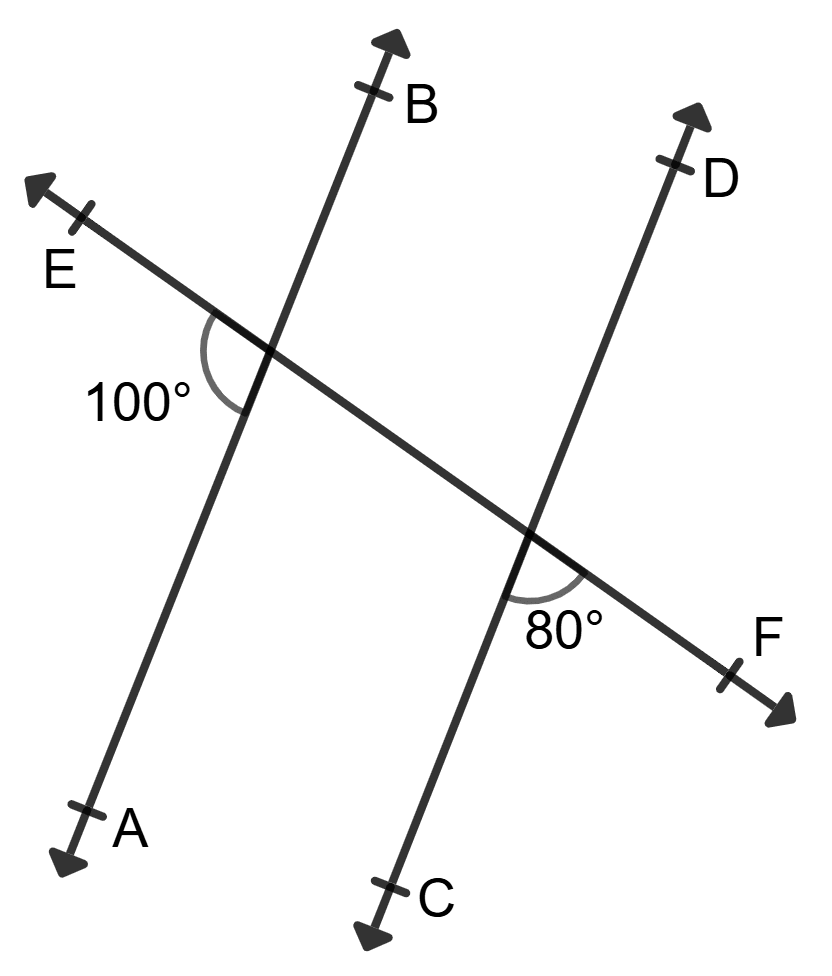
(ii)
At the first intersection, the interior angle adjacent to 100° is 180° - 100° = 80° (Linear pair).
This 80° angle and the given 80° angle at the second intersection are corresponding angles.
Since 80° = 80°, the corresponding angles are equal.
AB and CD are parallel.
(iii)
The sum of angle adjacent to 120° and 120° is 180° because they form linear pair.
So,
Adjacent angle = 180° - 120° = 60°
This 60° angle and the given 60° angle are exterior alternate angles.
Since 60° = 60°, the external alternate angles are equal.
AB and CD are parallel.
(iv)
From the figure we have,
AD is a transversal
∠BAD = 50° and ∠ADC = 40°
These form a pair of interior alternate angles.
But 50° 40°
Since alternate angles are not equal,
AB and CD are not parallel.
(v)
The angles 75° and 100° are a pair of co-interior angles.
Co-interior angles are supplementary.
Sum = 75° + 100° = 175°
Since the sum of co-interior angles is not 180°,
AB and CD are not parallel.
Answered By
1 Like