
History & Civics
In 1939, Subhas Chandra Bose formed the Forward Bloc. In this context, answer the following questions:
(a) Why did Subhas Chandra Bose decide to form a new party?
(b) What were the aims and objectives of the new party formed by Subhas Chandra Bose?
(c) Mention two main objectives of the Provisional Government of Free India. Name any two countries that recognised the Provisional Government of India formed in Singapore in 1943.
Forward Bloc & INA
183 Likes
Answer
(a) Bose felt the urgent need for an organised left-wing party in the Congress. After resigning from the Presidentship of the Congress in 1939, he laid the foundation of a new party within the Congress, to bring the entire left wing under one banner. This party, known as Forward Bloc, was formed on May 3, 1939
(b) Forward Bloc's immediate objective was the liberation of India with the support of workers, peasants, youth and other organisations.
After attaining independence, Forward Bloc would work for the establishment of a Socialist State through:
- Reorganisation of agriculture and industry on socialist lines
- Abolition of the Zamindari system
- Introduction of a new monetary and credit system
(c) Two main objectives of the Provisional Government of Free India were:
- The major task of the Provisional Government was to launch and conduct the struggle that would bring about the expulsion of the British and their allies from Indian soil.
- Another important task assigned to the Provisional government was to establish a permanent national government of Azad Hind.
Two countries that recognised the Provisional Government of India formed in Singapore in 1943 were Japan and Germany.
Answered By
114 Likes
Related Questions
Mention two contributions of Subhas Chandra Bose to India's freedom struggle.
How can you say that the INA was a unique army?
Read the excerpt given below and answer the questions that follow:
“Friends, one year ago, when I made certain demands of you, I told you that if you give me ‘total mobilization’, I would give you a ‘second front’. I have redeemed that pledge. The first phase of our campaign is over. Our victorious troops, fighting side by side with Nipponese troops, have pushed back the enemy and are now fighting bravely on the sacred soil of our dear motherland. I had asked you for men, money and materials. I have got them in generous measure. Now I demand more of you. A long fight is still in front of us. We should have but one desire today - the desire to die so that India may live - the desire to face a martyr’s death, so that the path to freedom may be paved with the martyr’s blood.
Friends! My comrades in the War of Liberation! Today I demand of you one thing, above all. I demand of you blood. It is blood alone that can avenge the blood that the enemy has spilt. It is blood alone that can pay the price of freedom.”
—Netaji Subhas Chandra Bose.(a) Whom is Netaji Subhas Chandra Bose addressing? Who are the victorious troops referred to in the excerpt? Who were the Nipponese?
(b) Which war of liberation is Subhas Chandra Bose talking about? From where did he start his campaign? Name the two areas of Indian territory his troops acquired?
(c) What did he demand from his troops? Did the troops fulfill the mission of their leader.
Study the picture and answer the following questions:
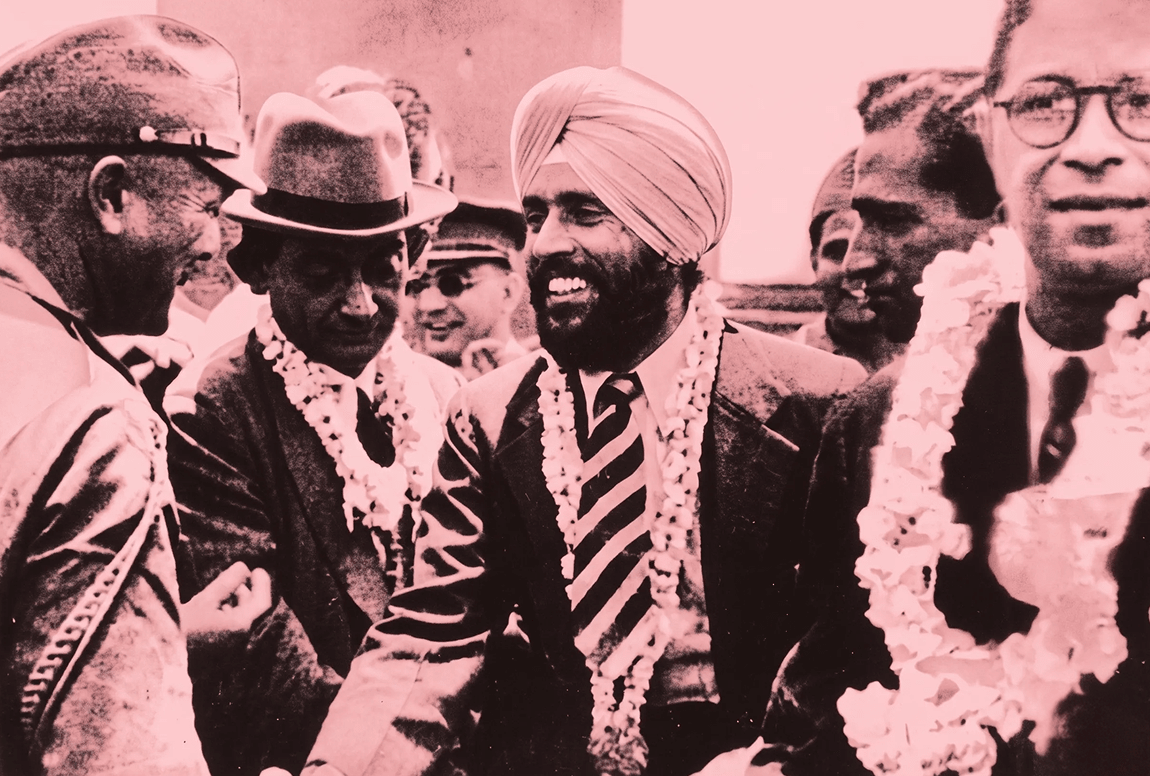
(a) Identify the person in the picture and name the army organised by him. How was this army formed and where?
(b) What were the objectives of this army? Did it achieve its objectives?
(c) Mention this army's contribution to the India's freedom struggle.