Mathematics
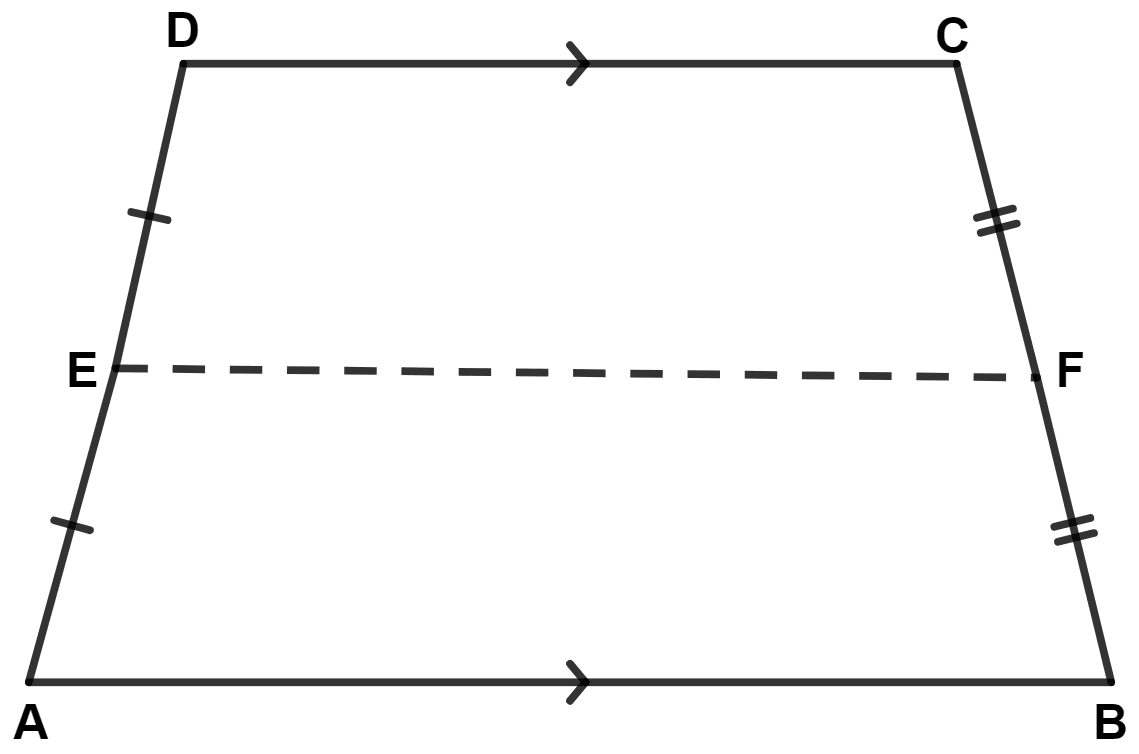
In the quadrilateral ABCD, if AB // CD, E is mid-point of side AD and F is mid-point of BC. If AB = 20 cm and EF = 16 cm, the length of side DC is :
18 cm
12 cm
24 cm
32 cm
Mid-point Theorem
9 Likes
Answer
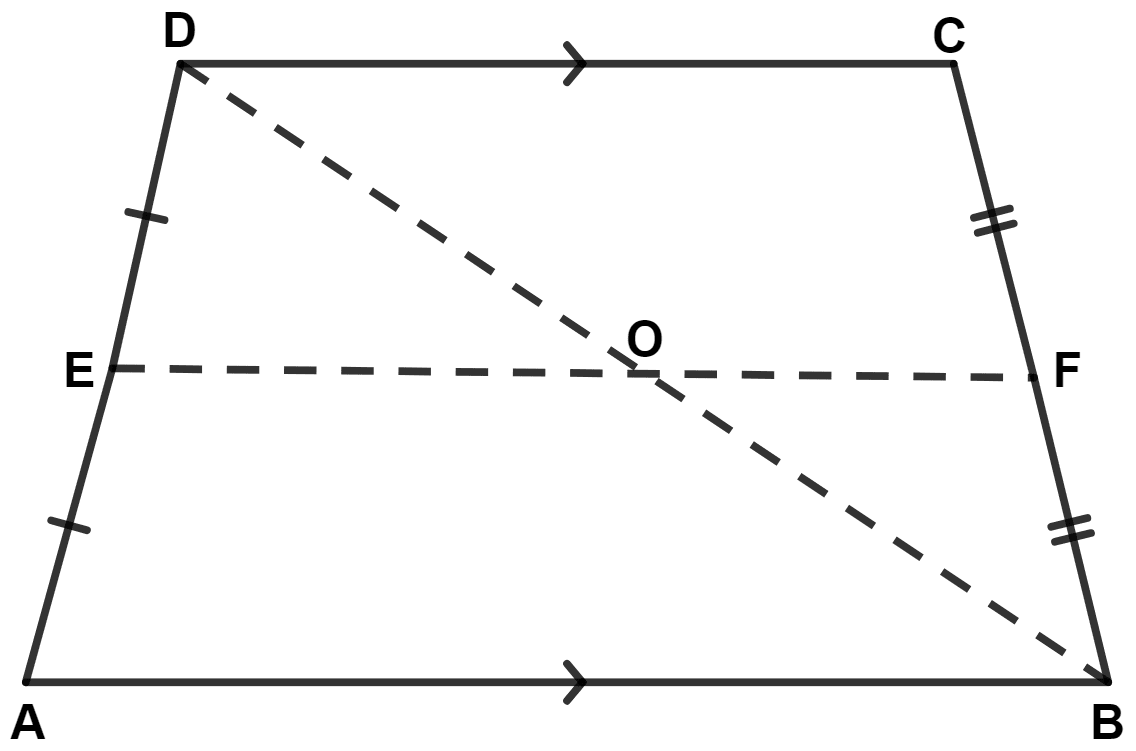
Join BD. Let BD intersect EF at point O.
We know that,
In trapezium the line joining the mid-points of non-parallel sides are parallel to the parallel sides of trapezium.
∴ AB || EF || DC.
By mid-point theorem,
The line segment joining the mid-points of any two sides of a triangle is parallel to the third side and is equal to half of it.
By converse of mid-point theorem,
The straight line drawn through the mid-point of one side of a triangle parallel to another, bisects the third side.
Given,
⇒ EF || AB
⇒ EO || AB
In △ ABD,
E is mid-point of AD and EO || AB.
∴ O is mid-point of BD. (By converse of mid-point theorem)
∴ EO = (By mid-point theorem) ……….(1)
Given,
⇒ EF || DC
⇒ OF || DC
In △ BCD,
O is mid-point of BD and F is mid-point of BC.
∴ OF = (By mid-point theorem) ……….(2)
Adding equations (1) and (2), we get :
⇒ EO + OF =
⇒ EF =
Substituting values we get :
Hence, Option 2 is the correct option.
Answered By
5 Likes
Related Questions
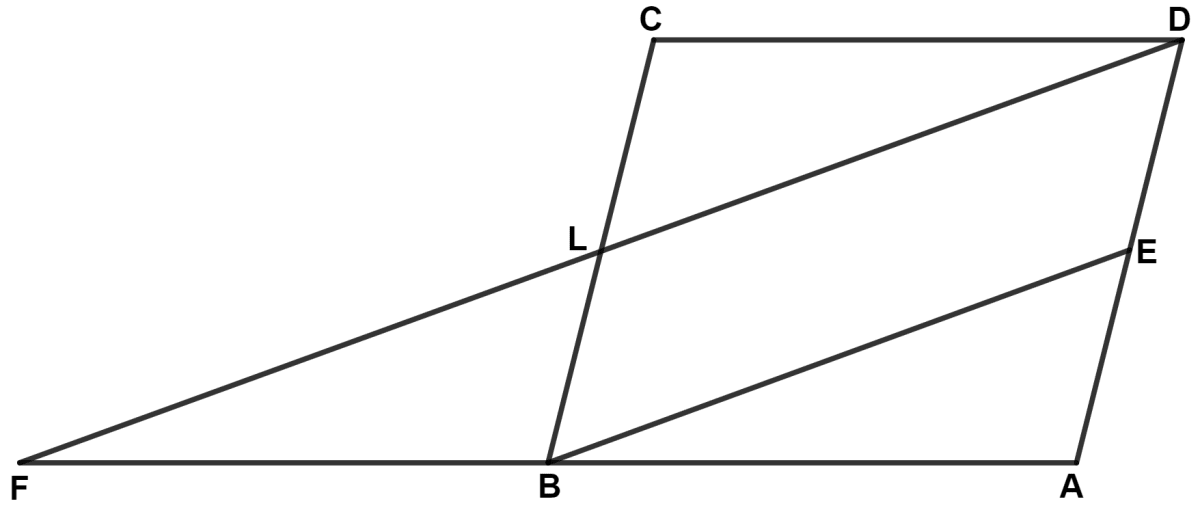
The given figure shows a parallelogram ABCD in which E is mid-point of AD and DL // EB. Then, BF is equal to :
AD
BE
AE
AB
In the given figure AD and BE are medians, then ED is equal to :
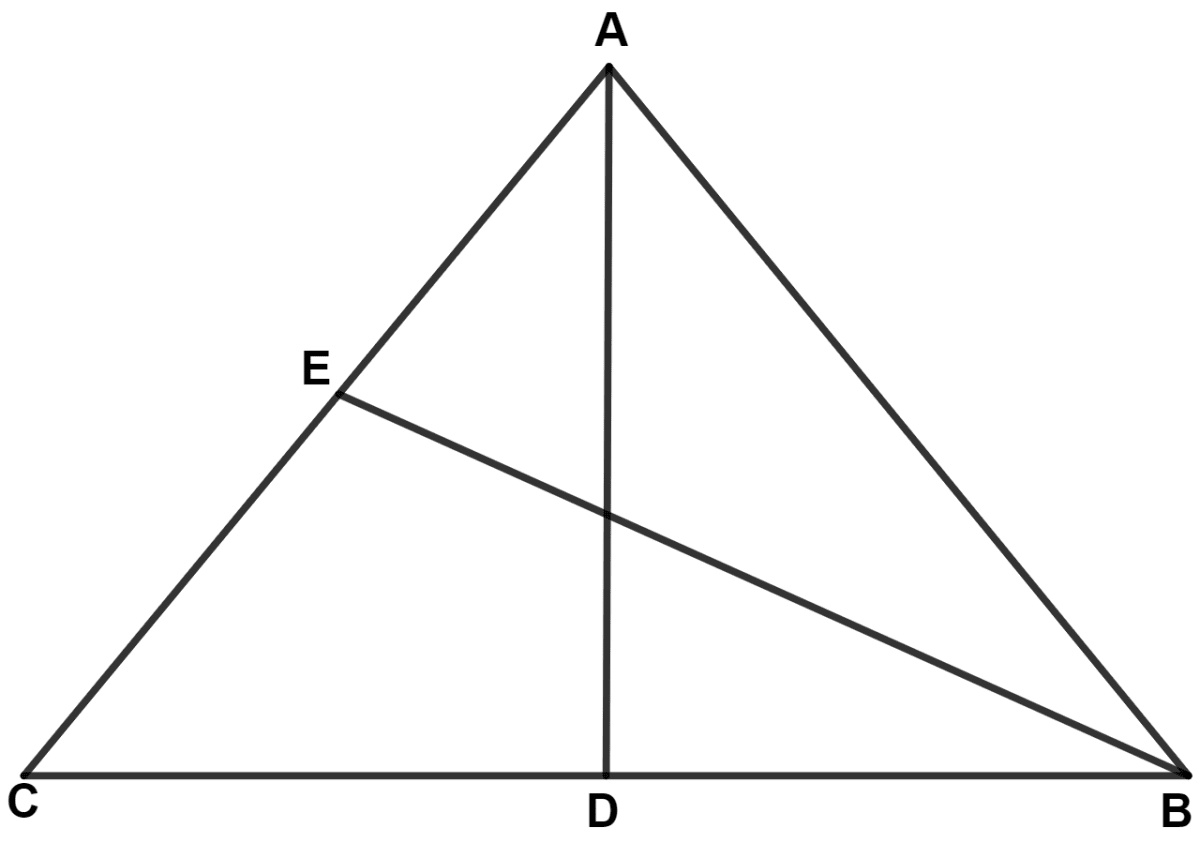
2AB
Use the following figure to find :
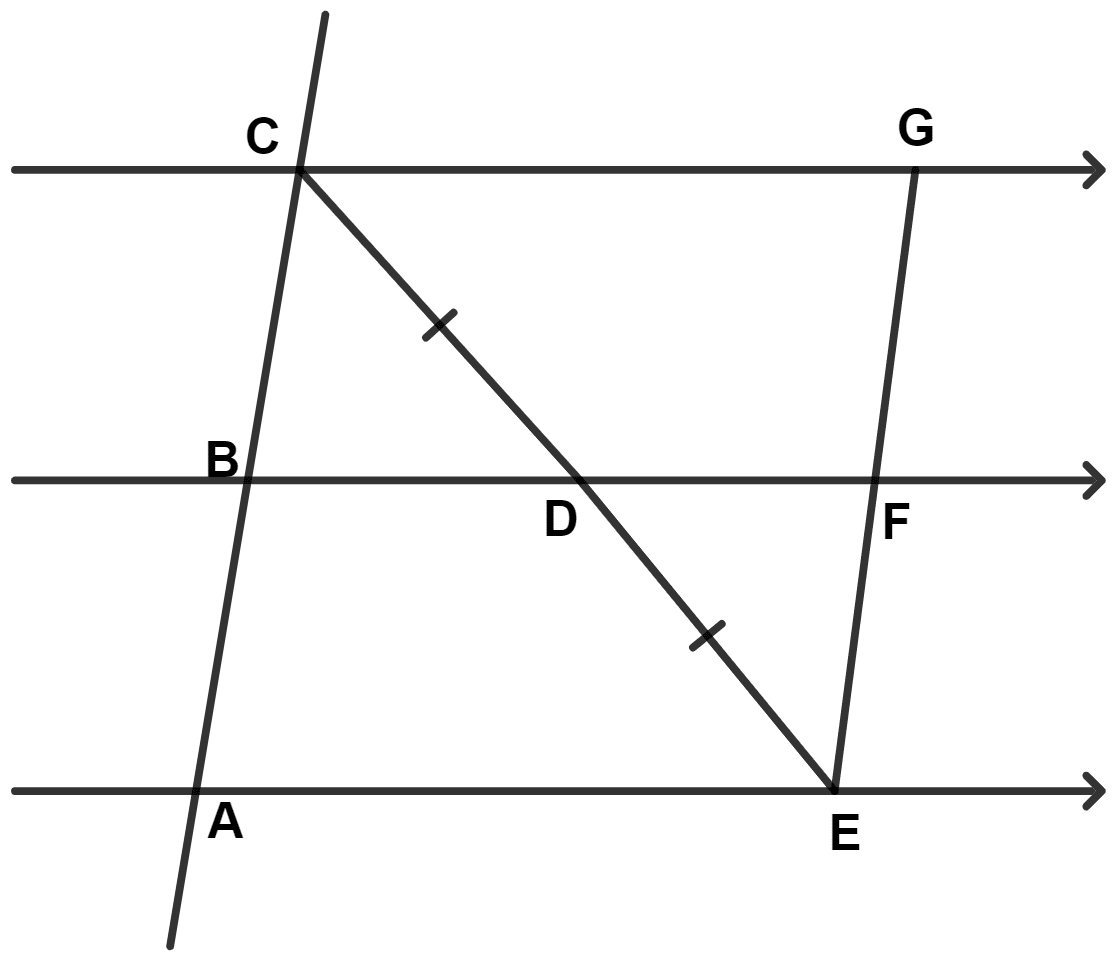
(i) BC, if AB = 7.2 cm.
(ii) GE, if FE = 4 cm.
(iii) AE, if BD = 4.1 cm.
(iv) DF, if CG = 11 cm.
In the figure, given below, 2AD = AB, P is mid-point of AB, Q is mid-point of DR and PR // BS. Prove that :
(i) AQ // BS
(ii) DS = 3RS