
History & Civics
Like the Rajya Sabha at the Centre, the Legislative Council in the State is merely an advisory chamber. In this context answer the following questions:
(a) How is Legislative Council constituted?
(b) What are the qualifications for its membership?
(c) What powers does the Legislative Council have with regard to a Money Bill and a non-money bill?
State Legislatures
24 Likes
Answer
(a) The numerical strength in the Legislative Council of a State shall not exceed one-third of the total number of members in the Legislative Assembly of that State. However, the total number of members in the Legislative Council of a State shall not normally be less than 40.
Of the total number of members of the Legislative Council the composition would be as follows:
- One-third of the members are elected by the members of municipalities, district boards and other local bodies in the State.
- About one-third of the members are elected by members of the Legislative Assembly from amongst persons who are not members of the Assembly.
- One-twelfth of the members are elected by persons who have been, for at least three years, engaged in teaching in educational institutions not lower than secondary schools.
- One-twelfth of the members are elected by registered graduates of more than three years' standing.
- The remaining one-sixth members are nominated by the Governor from people having special knowledge or practical experience in the fields of literature, science, art, cooperative movement and social service.
(b) In order to be a member of the Legislative Council a person:
- must be a citizen of India.
- must be not less than 30 years of age.
- must have his/her name on the voters' list in the State concerned.
- must not hold any office of profit under the Government of India or the Government of any State other than an office declared by law not to disqualify its holder.
- must not be of unsound mind which is declared by a competent court.
- must not be an undischarged insolvent.
(c) The Legislative Council or Vidhan Parishad acts as an advisory body, with limited powers over Money bills and only a delaying power over Non-money bills.
Money Bills
- A Money Bill cannot be introduced in the Vidhan Parishad.
- The Vidhan Parishad must return the bill within 14 days, with or without suggestions. However, the Vidhan Sabha is not obliged to accept them.
- Like the Rajya Sabha, the Vidhan Parishad can delay it for 14 days. After the lapse of that period, a Money Bill is deemed to have been passed by it and sent for the Governor's assent.
- Hence, the Vidhan Parishad cannot amend or reject a money bill. Its role is purely advisory.
Non-Money Bills
- Non-Money bills can be originated in the Vidhan Parishad as well and are then sent to Vidhan Sabha for consideration. However, the will of the Vidhan Sabha prevails.
- If a Bill originates in the Vidhan Sabha (Assembly) it is sent to the Vidhan Parishad (Council) for its approval. The Vidhan Parishad can delay the passage of a Bill for three months.
- The House can propose amendments within three months in the first instance.
- If the Vidhan Parishad disagrees with a Bill, the Bill must have second journey from the Assembly to the Council.
- In the second journey, the Council cannot withhold the Bill for more than one month. After the expiry of the said period the Bill is deemed to have been passed by the Vidhan Parishad.
Answered By
16 Likes
Related Questions
What purpose does the Upper House' delay of a bill serve?
Study the picture given below and answer the following questions:
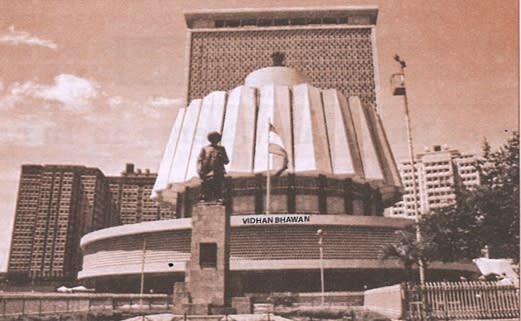
(a) How is the Legislative Assembly composed?
(b) What are the qualifications for being a member of the Legislative Assembly?
(c) What is the term of the House? Under what conditions the term of the Assembly extended or reduced?
Describe the relationship between the Legislative Assembly and the Legislative Council under these heads:
(a) Finance.
(b) Control over non-money bills.
(c) Control over the Executive.
Recently elections to the Legislative Assembly of your State were held. Find out the number of seats for which elections were held. What were the issues which were debated during the election campaign? Were these issues local or national? Which issue you wanted to be addressed at the earliest?