History & Civics
The monument shown in the picture is most closely associated with which of the following historical and religious developments?
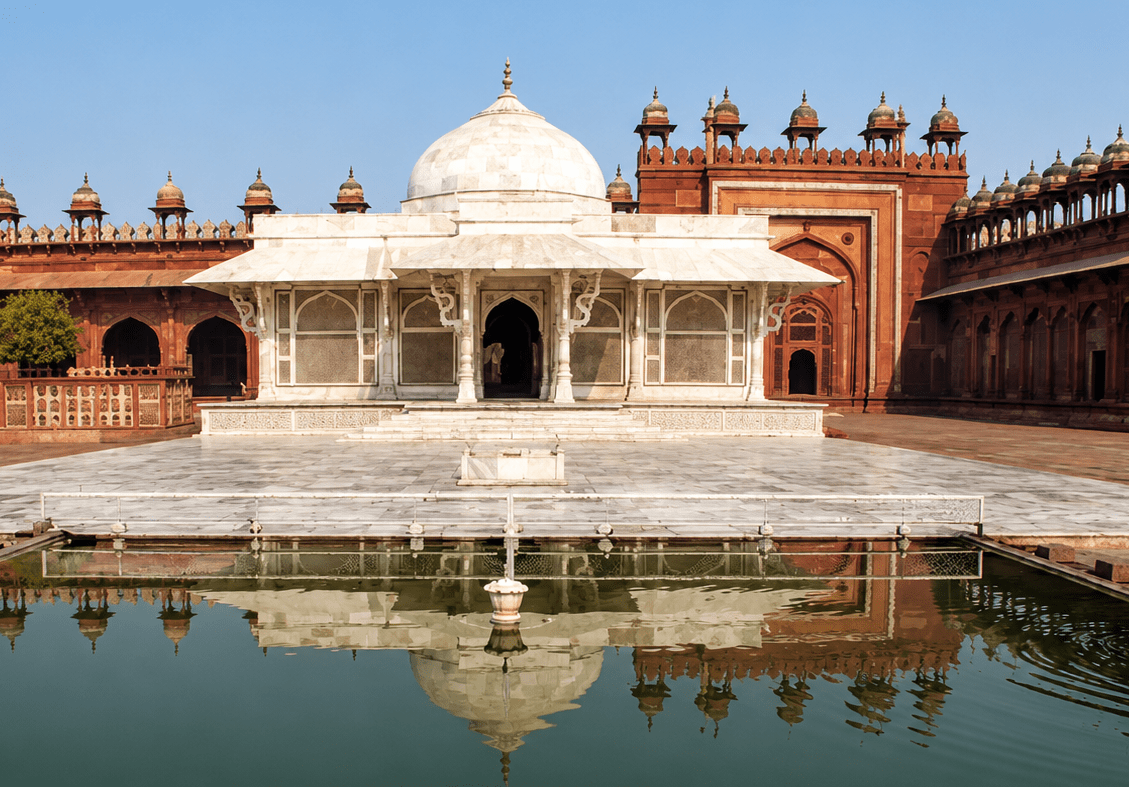
- Growth of Bhakti Movement in South India
- Sufi tradition of revering saints and spiritual intercession
- Mughal Emperor Akbar's promotion of Hindu temple architecture
- Teachings of Guru Nanak
Answer
Sufi tradition of revering saints and spiritual intercession
Reason — The monument is a Sufi dargah (the tomb of a Sufi saint). When the head of a khankah died, his grave or dargah became a pilgrimage centre where common people, regardless of their backgrounds, came to offer prayers and seek the saint's blessings. This reflects the Sufi tradition of revering saints and spiritual intercession.
Related Questions
'Kirtan' is described as a form of congregational worship which primarily involves:
- Silent meditation and fasting
- Choral singing of hymns and the name of God
- Individual offerings at the temple
- Recitation of ancient Sanskrit mantras by priests
The Bhakti Movement challenged many existing dogmas and rituals of Hindu society. Identify the reason for its strong opposition to the caste system:
- The movement was primarily started by foreign invaders.
- The caste system promoted equality and justice, which the Bhakti saints opposed.
- The caste system caused social inequality, oppression of the underprivileged and alienation from religion.
- The caste system mandated expensive rituals that only the rich could afford.
Assertion (A): The Bhakti Movement helped in the growth of regional languages in India.
Reason (R): Bhakti saints composed their devotional songs and poetry in Sanskrit.
- A is true, but R is false.
- R is the reason for A.
- Both A and R are false.
- Only R is true, and A is false.
Assertion (A): The Sufi mystics detached themselves from the ruling classes and orthodox elements.
Reason (R): They disapproved of the vulgar display of wealth and the degeneration of morals following the establishment of the Islamic empire.
- A is true, but R is false.
- R is the reason for A.
- A is false, but R is true.
- Both A and R are false.