Biology
Name:
(a) Three main constituents of the human skeleton.
(b) Two main divisions of the human skeleton.
(c) Four parts of Axial skeleton.
(d) Five regions of vertebral column.
(e) Four kinds of freely movable joints.
Related Questions
Name the parts of the skeleton where the following are located: Transverse process, glenoid cavity, shoulder-blade, acetabulum.
Name any two parts of your body where the supporting skeleton is made of cartilage instead of bone.
Given below is the structure of the forelimb of humans. Read the information below the diagram and fill in the blanks:
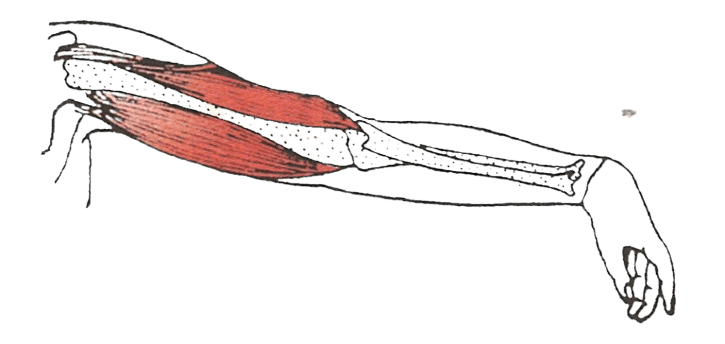
Limbs are a part of the appendicular skeleton system. Humans have one pair of forelimbs which are used for many purposes like - holding, writing, eating and grasping, etc. Each arm consists of a total of thirty bones.
The upper arm consists of a single long bone, called (a) …………… . Two long bones are found in the lower arm, (b) …………… found on the side of the thumb and (c) …………… . Forelimbs have eight (d) …………… in the wrist and five (e) …………… in the palm. Remaining fourteen bones are found in the fingers as phalanges.
Name the following :
(a) A joint which allows movements in all directions.
(b) The first vertebra of the vertebral column.
(c) A large hole at the back of cranium through which the spinal cord emerges out.
(d) The muscles which cause opposing movements.
(e) The fluid found between the two bones of freely movable joints.