
Chemistry
Name some physical and chemical processes used to make river water potable.
Water
3 Likes
Answer
Some physical and chemical processes used to make river water potable are:
Coagulation and settling
Raw untreated water is mixed with chemicals called coagulants, such as alum. Alum forms tiny sticky particles called flocs. Mud, bacteria and other suspended impurities stick to these flocs and settle at the bottom.Filtration
The water is passed through filters made of layers of sand, gravel and coal. These layers remove the remaining suspended impurities from water.Chlorination
Chlorine is added to water to kill harmful microorganisms and make the water germ-free.Defluoridation
Excess fluoride is removed from drinking water to bring fluoride to safe levels and make the water fit for consumption.
Answered By
2 Likes
Related Questions
Water acts as a universal solvent because it has a unique property to dissolve various organic and inorganic compounds. Its dielectric constant is high, which is about 80 at 20°C. All this is due to its polar nature.
(a) What properties of water make it an exceptional solvent compared to other solvents like ethanol, carbon tetrachloride, benzene, etc.
(b) Explain the environmental consequences of water's "universal solvent" property, particularly regarding pollution.
A group of students took an old shoe box and covered it with a black paper from all sides. They fixed a source of light (a torch) at one end of the box by making a hole in it and made another hole on the other side to view the light. They placed a milk sample contained in a beaker/tumbler in the box as shown in the figure. They were amazed to see that milk taken in the tumbler was illuminated. They tried the same activity by taking a salt solution but found that light simply passed through it.
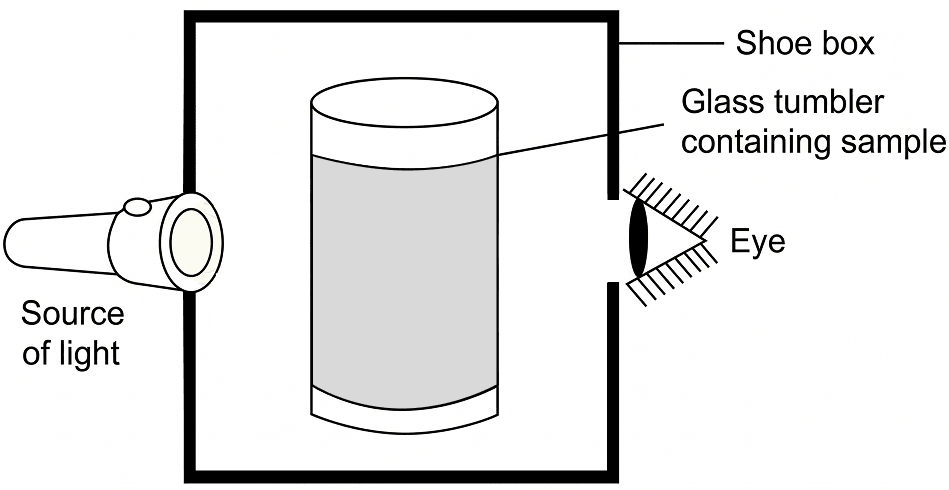
(a) Explain why the milk sample was illuminated. Name the phenomenon involved.
(b) Same results were not observed with a salt why ?
(c) Can you suggest two more solutions which would show the same effect as shown by the milk solution ?
Which steps are most effective at removing solid impurities from water ? Explain the role of alum.
Which of the following is a primary indicator for sustainable development goal regarding drinking water?
(a) Number of dams built.
(b) Percentage of population with access to safe affordable drinking water.
(c) Average amount of water used per person per day.
(d) Total quantity of bottled water sold by government and private companies.