
Biology
Name the mineral element that is needed for the following respectively:
(i) Strong teeth
(ii) Proper working of thyroid
(iii) Synthesis of haemoglobin
(iv) Production of chemical energy (ATP)
(v) Cell permeability, especially in nerve cells
Nutrition
194 Likes
Answer
The mineral element that are needed for the following are:
(i) Strong teeth — Fluorine.
(ii) Proper working of thyroid — Iodine.
(iii) Synthesis of haemoglobin — Iron.
(iv) Production of chemical energy (ATP) — Phosphorous.
(v) Cell permeability, especially in nerve cells — Potassium and Sodium.
Answered By
134 Likes
Related Questions
Given below is a photo of a child suffering from a deficiency disease. Read the information below and fill in the blanks.
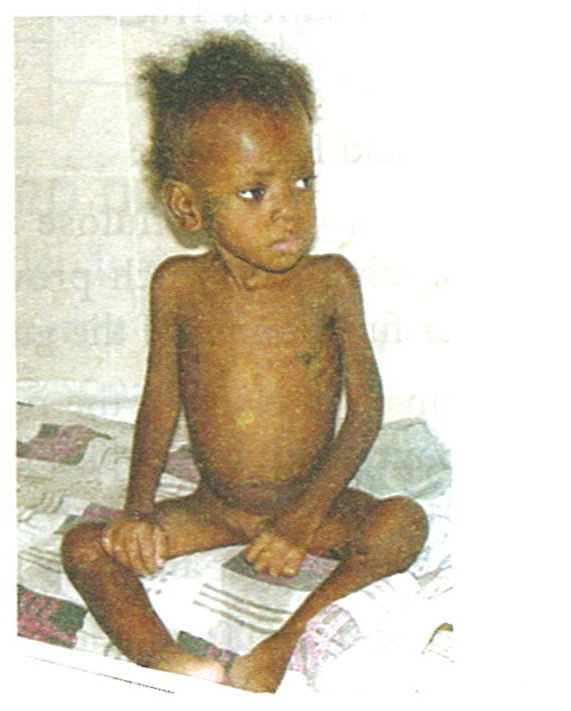
Proteins are large chemical molecules which contain carbon, hydrogen, oxygen and nitrogen. Proteins provide the chemical materials for the growth and repair of body cells and tissues. Its deficiency leads to some severe diseases.
(a) …………… is a disease caused due to the deficiency of (b) …………… , (c) …………… and proteins in the diet. This disease usually affects infants below the age of (d) …………… year(s). In this disease, the skin becomes loosely folded and (e) …………… appear prominent.
Mention whether the following statements are true (T) or false (F)
(a) Cellulose in our food passes out undigested
(b) Kwashiorkor is a severe vitamin deficiency disease
(c) Iron is required for the proper working of thyroid
(d) Foods protect us from disease and therefore antibiotics which protect us from disease are also foods.
(e) Mineral salts contribute in regulating body processes.
Name the nutrients whose deficiencies cause the following diseases in humans:
- Pernicious anemia
- Pellagra
- Night blindness
- Goiter
- kwashiorkor
Mark the odd one out in each of the following cases and name the category to which the others belong:
(i) Xerophthalmia, Marasmus, Pellagra, Scurvy.
(ii) Riboflavin, Thiamine, Folic acid, Iodine.
(iii) Glucose, Fructose, Galactose, Lactose.
(iv) Cellulose, Glycogen, Fructose, Starch.
(v) Calcium, Sodium, Iron, Potassium.