
History & Civics
Netaji Subhas Chandra Bose played a great part in the National Movement. In this context, explain the following :
(a) Political aims of Netaji.
(b) Part played by him in liberating India from the British yoke.
Forward Bloc & INA
4 Likes
Answer
(a) The political aims of Netaji Subhas Chandra Bose are given below:
- To organise all the progressive and radical elements in the Congress under one head.
- To establish a socialist society after Independence.
- To abolish the Zamindari system.
- To reduce land revenue and make proper arrangements for rural loans.
- The State should encourage the formation of trade unions.
(b) Netaji played a significant role in liberating India from the British yoke.
- S.C. Bose laid the foundation of a radical and progressive party within the Congress in 1939, with a view to bringing the entire left wing under one banner. This party was known as the Forward Bloc.
- In Singapore, he organised the Azad Hind Fauj (the Indian National Army or INA) for the freedom of his country.
- He set up Recruitment and Training Departments as well. Training Camps were opened for men and women.
- He also founded the Provisional Government of Free India at Singapore in October 1943.
- He gave the call to his soldiers, "Give me blood and I shall give you freedom." His battle-cry was, "Dilli Chalo."
Answered By
2 Likes
Related Questions
‘The Quit India Movement made Independence of India as the only agenda of the National Movement. It proved that there could be no retreat and future negotiations could only be on the manner of the transfer of power.’
With reference to the above statement, enlist the impact of the Quit India Movement.
With reference to the Cripps Mission, explain :
(a) Why was the Cripps Mission sent to India?
(b) Mention four causes of their proposals.
(c) Why did both Congress and Muslim League reject it?
The All India Congress Committee which met at Bombay on 8th August, 1942 passed the famous Quit India Resolution.
In this context, answer the following questions :
(a) Mention the reasons that led to the passing of the Resolution.
(b) Explain the spread of the Quit India Movement.
(c) State the repressive measures practised by the British Government.
(d) State the importance of the Movement.
Study the picture given and answer the following questions:
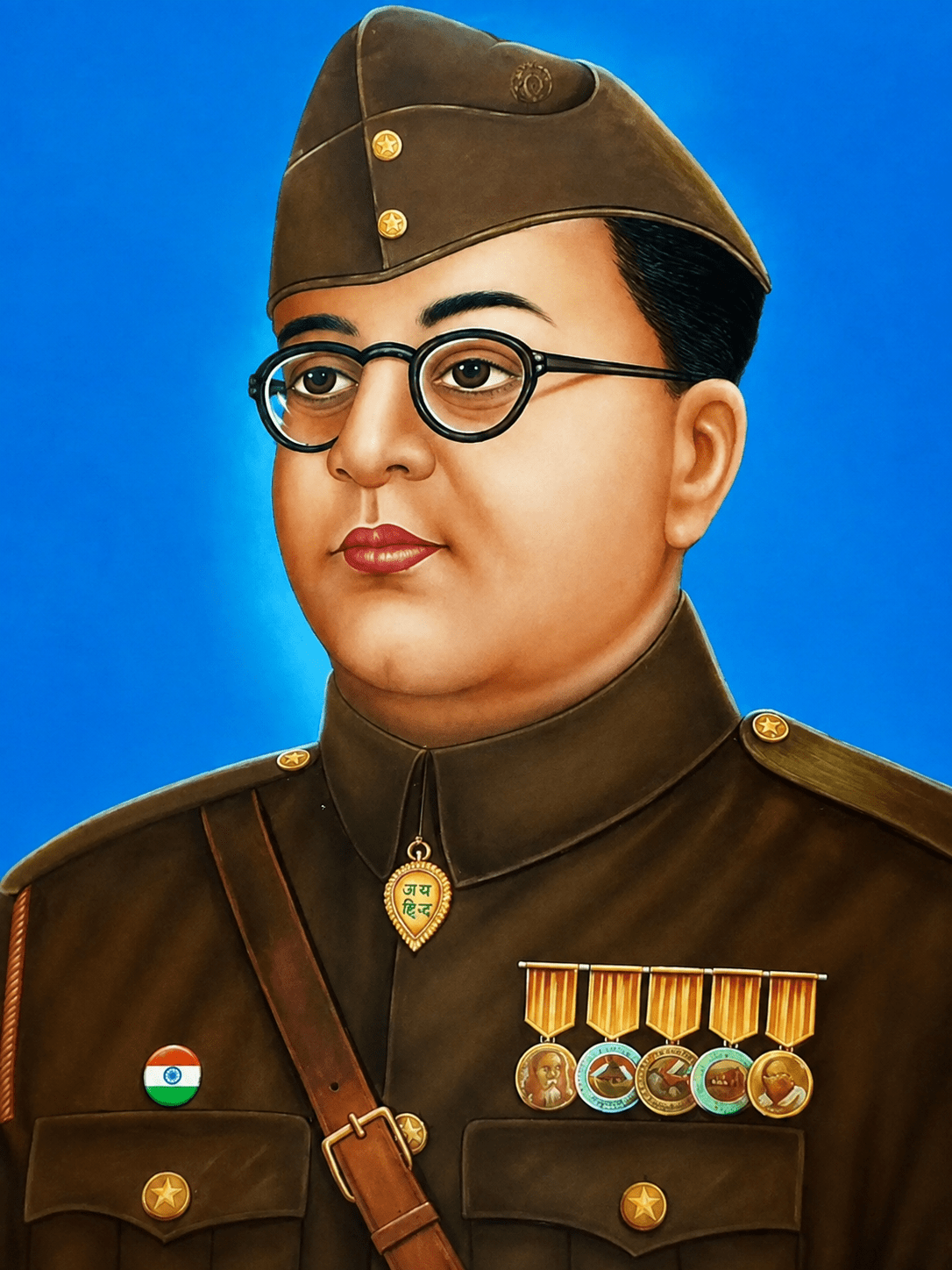
(a) Identify the leader given in the picture. Name the Political party and the Military Organisation that he formed.
(b) State any three objectives of the Political party that he founded.
(c) Mention any four objectives of the Military Organisation that he formed.