
Commercial Applications
With reference to cost, on the basis of behaviour explain:
(a) Variable Cost
(b) Semi-variable Cost
Cost
2 Likes
Answer
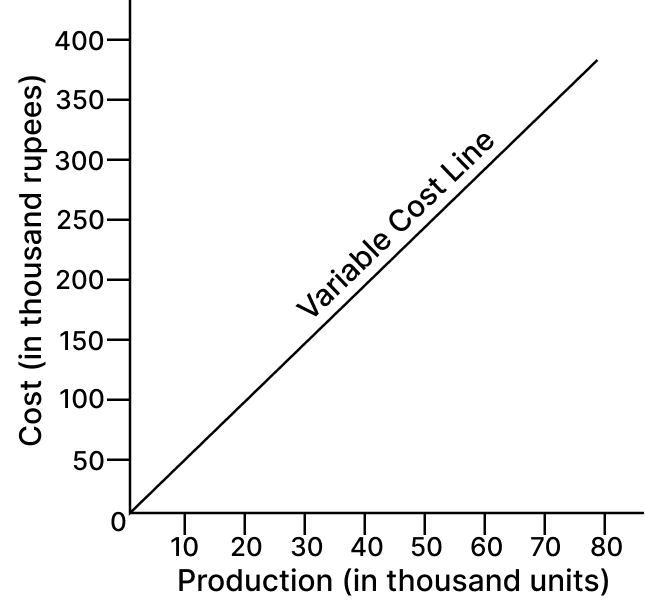
(a) Variable Cost
Variable costs are those costs which vary in amount with changes in the level of output or activity. They increase or decrease in the same proportion as the volume of production rises or falls.
Key features:
- They vary in total but remain constant per unit of output.
- There is a linear relationship between total variable cost and the volume of production.
- They are activity-based.
- They are controllable in the short run.
Examples: Cost of raw material, power and fuel consumed in production, direct wages on piece-rate basis, wear and tear on machines.
For instance, if total variable cost is ₹25,000 at 5,000 units (₹5 per unit), then at 6,000 units it becomes ₹30,000 — total has increased proportionately while per-unit cost remains ₹5.
(b) Semi-variable Cost
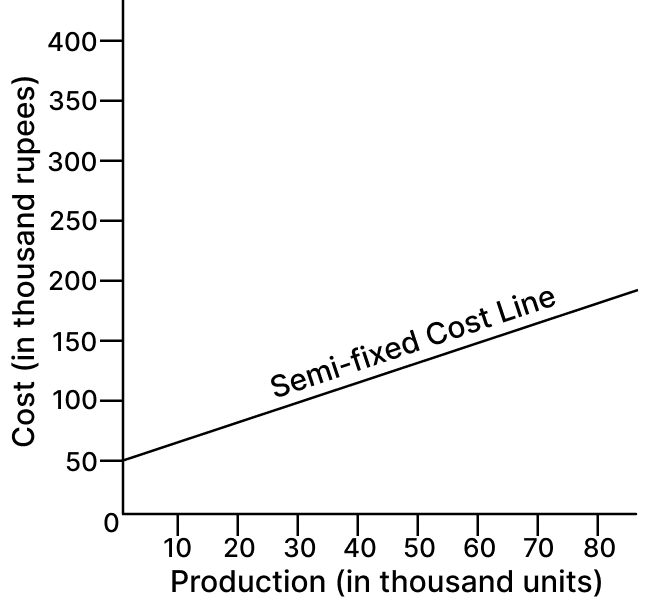
Semi-variable costs (also called semi-fixed or mixed costs) are those costs which vary, but not in direct proportion, with changes in the volume of production. They are a combination of fixed and variable elements — partly fixed and partly variable.
Key features:
- The fixed component represents the cost of providing capacity (must be incurred even at zero activity).
- The variable component represents the cost of using capacity.
- They are neither perfectly fixed nor purely variable.
Examples:
- Telephone bill — Fixed monthly rent + Variable call charges.
- Electricity bill — Fixed minimum charge + Variable consumption charges.
Answered By
3 Likes