History & Civics
With reference to the given picture, answer the following questions :
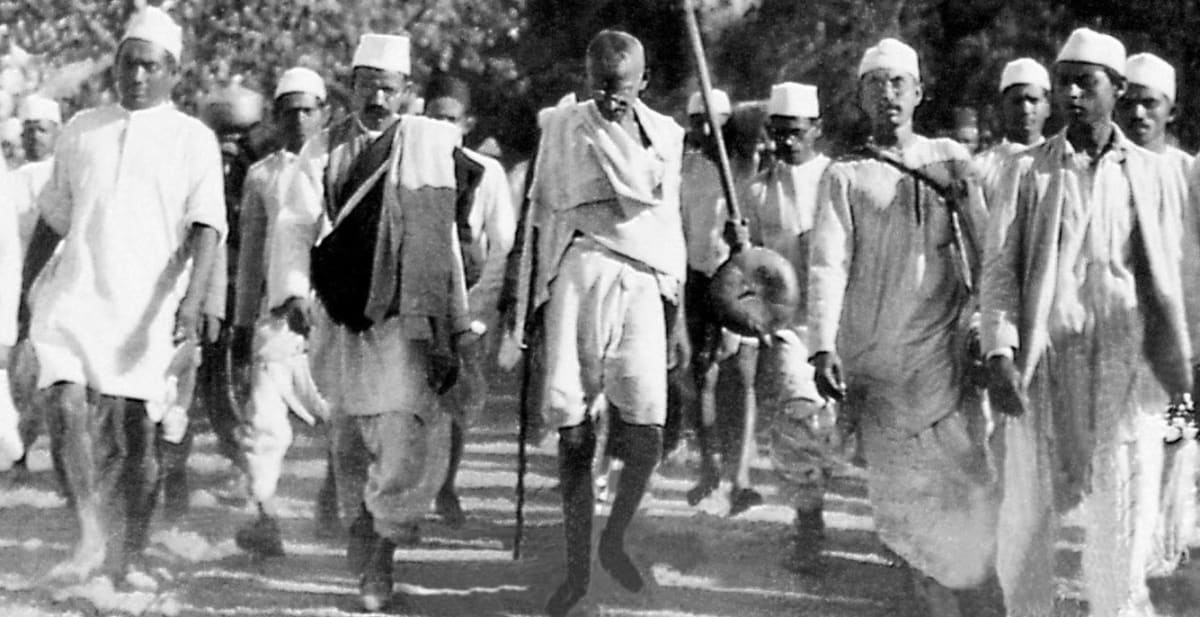
(a) Identify the leader and the event.
(b) Name the national movement sparked off by this event.
(c) Explain the main points of the Gandhi-Irwin Pact.
Answer
(a) The given picture depicts Mahatma Gandhi leading the Dandi March on March 12, 1930.
(b) Mahatma Gandhi started the Civil Disobedience Movement on March 12, 1930 with the famous Dandi March.
(c) The main points of the Gandhi-Irwin Pact are given below:
According to the Pact the government agreed to —
- Withdraw all ordinances and end prosecutions.
- Release all political prisoners, except those guilty of violence.
- Permit peaceful picketing of liquor.
- Not to press for investigation into police atrocities.
Related Questions
With reference to the following points, describe the events that led to the launching of the Non-Cooperation Movement by the Congress :
(a) The Rowlatt Act.
(b) The Jallianwala Bagh Tragedy.
(c) The Khilafat Movement.
Read the passage given below and answer the following questions.
Gandhiji came back and resumed the Civil Disobedience Movement. In January, 1932, Gandhiji and other leaders were arrested. The Government again adopted stern measures to crush this movement. The Congress was declared an illegal organisation. Press censorship was imposed. The administration began to be carried through special ordinances. More than a lakh of Satyagrahis were put in jails. Innocent people were tortured cruelly. Land, houses and property of the people were confiscated. Thousands of nationalist leaders were sent to jail while the communalists were given a wide scope to inflame communalism.
(a) From which city did Gandhiji come back and restart Civil Disobedience Movement? Why had you gone there?
(b) Why did Gandhiji resume the Civil Disobedience Movement?
(c) Describe the impact of the movement after resumption.
Read the excerpt given below and answer the questions that follow -
In the words of Dr. Rajendra Prasad, "Never before in the History of India, since its connection with Britain, had popular indignation and popular enthusiasm been greater. Never before during this period had the country seen the loving and ungrudging services of so many of her sons. Never before had the faith of the people in themselves and the country's ability to solve its even difficulties seemed bright."
(a) Which national movement is being referred to? Name any two objectives of the movement being discussed above.
(b) Mention any three impacts of this movement.
(c) Why was the movement suddenly withdrawn? What was the reaction?
With reference to the given picture, answer the following questions :
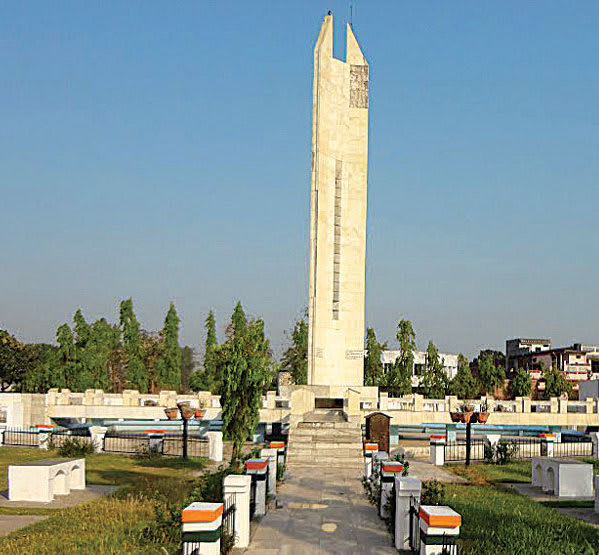
(a) Where is the memorial located?
(b) This memorial reminds people of which event?
(c) Name the leader connected with this event.
(d) Why was this Movement withdrawn?