Mathematics
On a squared paper, sketch the following:
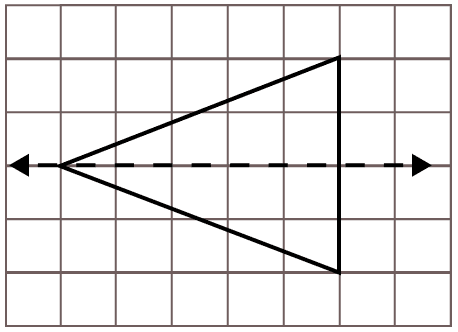
(i) A triangle with a horizontal line of symmetry but no vertical line of symmetry.
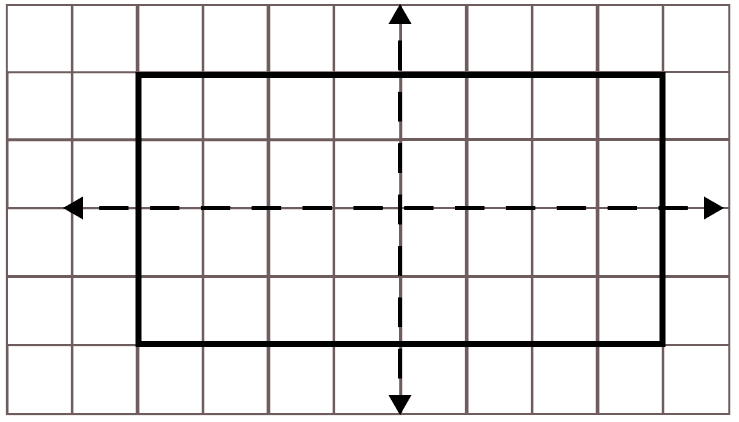
(ii) A quadrilateral with both horizontal and vertical lines of symmetry.
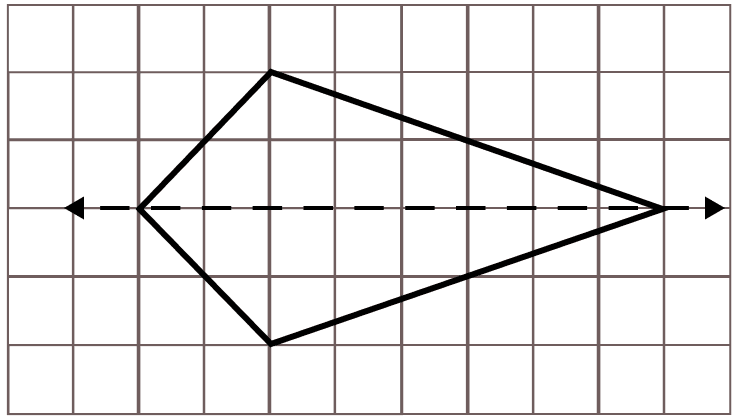
(iii) A quadrilateral with a horizontal line of symmetry but no vertical line of symmetry.
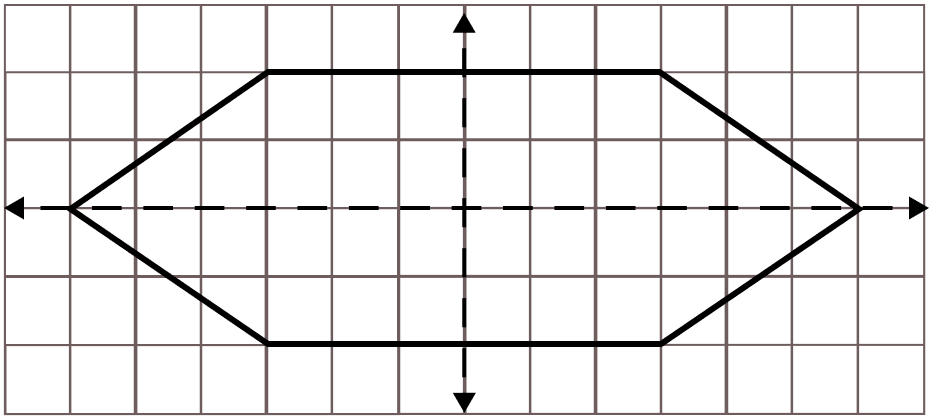
(iv) A hexagon with exactly two lines of symmetry.
Symmetry
1 Like
Answer
(i) An isosceles triangle drawn 'sideways' (with its axis of symmetry horizontal) is a triangle with a horizontal line of symmetry but no vertical line of symmetry.
(ii) A rectangle is a quadrilateral with both horizontal and vertical lines of symmetry.
(iii) A sideways kite can be drawn with a horizontal line of symmetry but no vertical line of symmetry. The horizontal line divides the kite into two equal mirror-image halves, but a vertical line does not divide it into two equal halves because the left and right parts are unequal.
(iv) An elongated (non-regular) hexagon is a hexagon with exactly two lines of symmetry — the horizontal line and the vertical line through its centre.
Answered By
1 Like
Related Questions
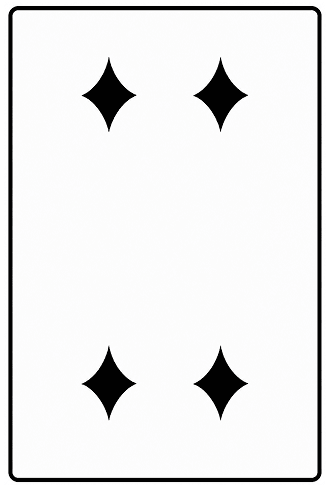
Draw the line (or lines) of symmetry, if any, of the following picture of playing cards and count their number:
Write the letters of the word 'ALGEBRA' which have no line of symmetry.
Copy the following figure on a squared paper and complete each figure such that the resultant figure is symmetrical about the dotted line (or lines):
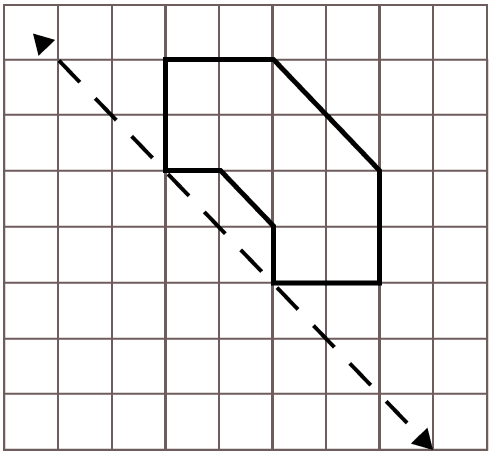
Copy the following figure on a squared paper and complete each figure such that the resultant figure is symmetrical about the dotted line (or lines):