Mathematics
State whether the following statement is true or false. Justify your answer:
"A straight line dividing a figure into two identical parts is necessarily a line of symmetry."
Symmetry
1 Like
Answer
False.
Justification — A line of symmetry must divide a figure into two coincident parts that are mirror images of each other. Two parts of a figure may be identical (congruent — same shape and size) without being mirror images of each other.
For example, the diagonal of a parallelogram divides it into two congruent (identical) triangles, but if we fold the parallelogram along this diagonal, the two triangles do not coincide. So the diagonal is not a line of symmetry of the parallelogram.
∴ A straight line dividing a figure into two identical parts is not necessarily a line of symmetry.
Answered By
3 Likes
Related Questions
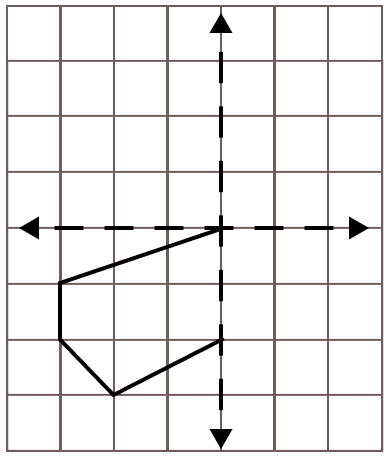
Copy the following figure on a squared paper and complete each figure such that the resultant figure is symmetrical about the dotted line (or lines):
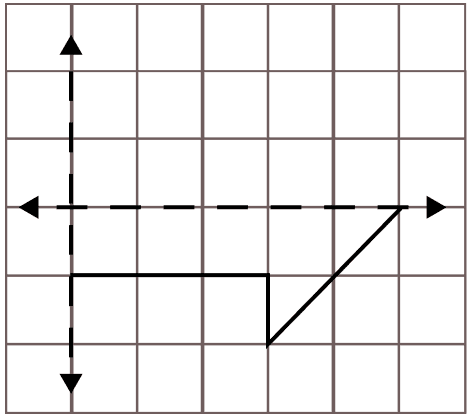
Copy the following figure on a squared paper and complete each figure such that the resultant figure is symmetrical about the dotted line (or lines):
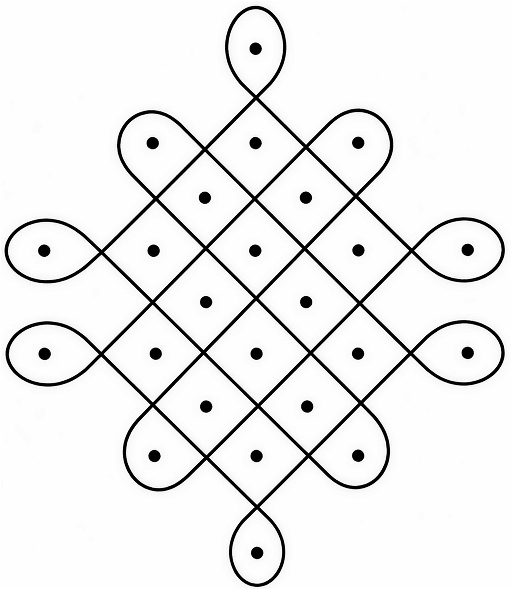
Kolam patterns often have beautiful bilateral symmetry (i.e., vertical or horizontal symmetric). How many lines of (reflection) symmetry can you draw for the adjoining Kolam design?
How many lines of symmetry does Ashoka Chakra have?