Mathematics
State whether the following statements are true (T) or false (F):
(i) Two fractions with same numerator are called like fractions.
(ii) A fraction in which the numerator is greater than its denominator is called an improper fraction.
(iii) Every improper fraction can be converted into a mixed fraction.
(iv) Every fraction can be represented by a point on a number line.
(v) In two unlike fractions with same numerator, the fraction having greater denominator is greater.
(vi) and are like fractions.
Fractions
3 Likes
Answer
(i) False.
Reason: Two fractions with same denominator are called like fractions, not same numerator.
(ii) True.
Reason: A fraction in which the numerator is greater than (or equal to) its denominator is called an improper fraction.
(iii) True.
Reason: Every improper fraction can be converted into a mixed fraction by dividing the numerator by the denominator.
(iv) True.
Reason: Every fraction has a unique position on the number line.
(v) False.
Reason: In two unlike fractions with same numerator, the fraction having smaller denominator is greater (not greater denominator).
(vi) False.
Reason: and have different denominators (2, 3, 4), so they are unlike fractions, not like fractions.
Answered By
2 Likes
Related Questions
Ajay exercised for of an hour, while Vijay exercised for of an hour. Who exercised for a longer time and by what fraction of an hour?
Fill in the following blanks:
(i) A fraction is a number which represent a ….. of whole.
(ii) A proper fraction lies between 0 and …..
(iii) A mixed fraction can be converted into ….. fraction.
(iv) Fractions having different denominators are called …..
(v) and are proper, unlike and …… fractions.
(vi) In two like fractions, the fraction having smaller numerator is …..
(vii) reduced to simplest form is …..
(viii) + …. = 12
(ix)
In the adjoining figure, the shaded part is represented by the fraction:
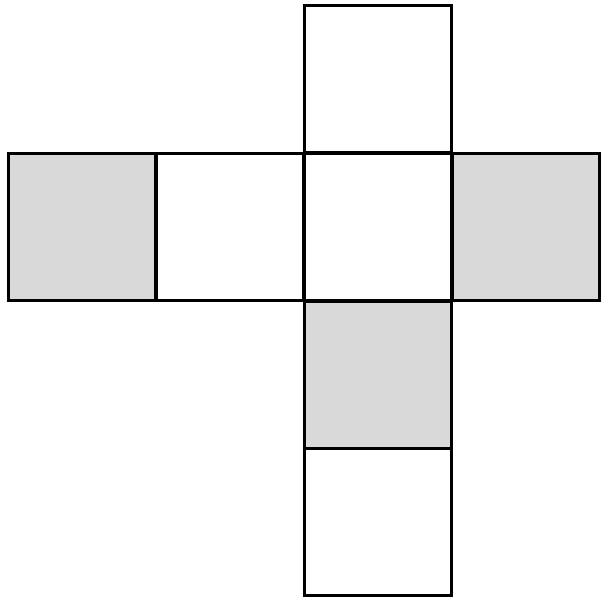
In the adjoining figure, the shaded region is represented by the fraction: