
Geography
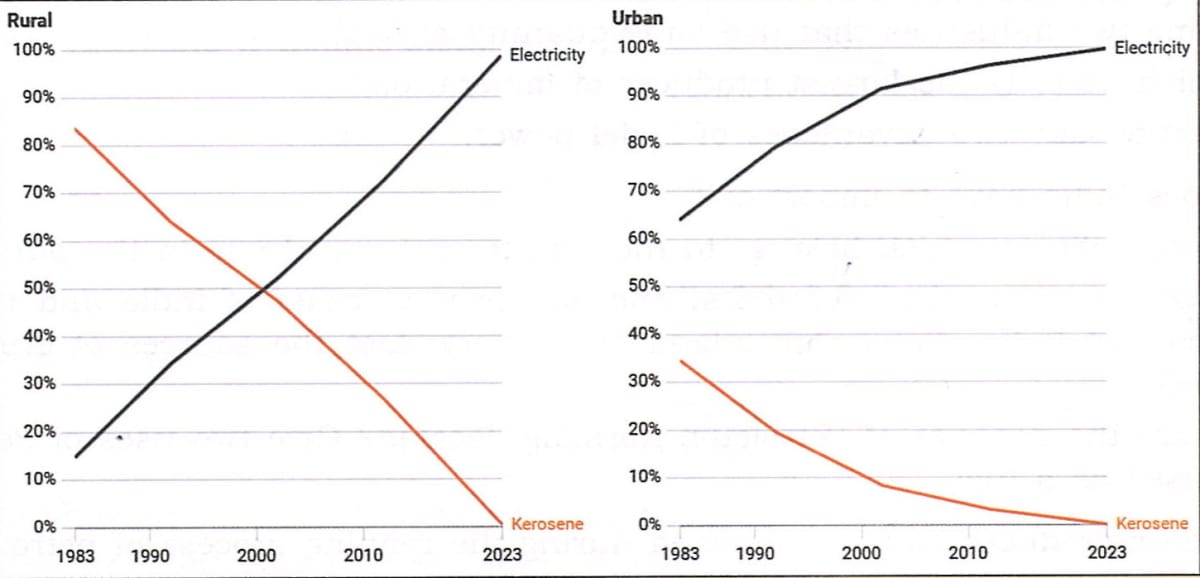
Study the graphs given below showing primary source of energy for lighting in both rural and urban areas. What do you infer?
Conventional Energy Sources
8 Likes
Answer
From the given graph, I infer the following points:
- In rural areas, electricity consumption increased from 15% (1983) to almost 100% (2023), while kerosene use dropped from near 85% (1983) to near zero in 2023.
- In urban areas, electricity use rose from 65% (1983) to 100% (2023), and kerosene fell from 35% (1983) to zero in 2023.
- This suggests better energy access, affordability, and a move towards cleaner energy sources by complete transition from kerosene to electricity as the primary source of lighting by 2023 in both rural and urban areas.
Answered By
1 Like
Related Questions
State three disadvantages of constructing a big dam.
Suppose you are involved in the printing industry. Which conventional source of energy you would be using and for what? How is this resource affecting the lives of people in India?
Name one fuel which has been developed as an alternative to petrol and diesel for use in vehicles. Name the fossil fuel from which it is derived and is preferred than the conventional source of energy from which it is derived?
Imagine that you live in an area where a dam is being constructed. What advantages and disadvantages do you foresee once this hydro-project is completed?