History & Civics
The Congress Working Committee passed the famous Quit India Resolution at Wardha in July 1942. With reference to this answer the following questions:
(a) What were the reasons for the passing of this resolution?
(b) What was the British Government's reaction to the Quit India Movement.
(c) What was the impact and significance of this movement?
Answer
(a) Reasons for the passing of Quit India resolution:
- In 1942, the failure of the Cripps' Mission left no further meeting ground between the British Government and the Congress.
- The War situation was discouraging in 1942.
- The Japanese Army had attacked Burma (Myanmar) and was marching towards Assam.
- Gandhiji observed, 'The presence of British in India is an invitation to Japan to invade India. Their withdrawal removes the bait'.
- The Indian leaders were anxious to save their country from the Japanese invasion but their slavery was a hindrance.
- Gandhiji and other leaders were convinced that this situation called for complete independence from the British immediately.
- Gandhiji said, 'India's safety, and Britain's too, lies in the orderly and timely British withdrawal from India'.
So they decided to launch Quit India Movement, calling upon the British to quit India.
(b) British Government's reaction to the Quit India Movement:
- Before the Congress could start the movement, the Government struck hard.
- Early in the morning of August 9, Gandhiji and other Congress leaders were arrested and taken to unknown destinations and the Congress was once again declared illegal.
- The Government resorted to severe measures to crush the 1942 Movement.
- The Press was completely muzzled.
- The demonstrating crowds were machine-gunned and even bombed from the air.
- Prisoners were tortured.
- The police and secret police reigned supreme.
- Nearly ten thousand people were killed and 60,000 people were arrested by the end of 1942.
- The military took over many towns and cities.
- Rebellious villages had to pay huge sums as punitive fines and the villagers had to undergo mass floggings.
- Gandhiji was detained at the Agha Khan Palace in Pune while the other leaders were sent to jail in Ahmednagar Fort.
In the end, the government succeeded in crushing the movement.
(c) Impact and significance of Quit India movement:
- The Quit India Movement's importance lay in the fact that it demonstrated the depth of the nationalist feeling in India and the capacity of Indians for struggle and sacrifice.
- It made it clear that the British would no longer find it possible to rule India against the wishes of its people.
- It was the mass uprising before attaining independence. People of all sections of society participated in this movement.
- The Quit India Movement strengthened the Congress Socialist Party because of its heroic role in the movement. Its leader Jai Prakash Narayan became a legendary figure.
Related Questions
The …………… did not accept the August Offer (1940), as it did not give a clear assurance for the establishment of Pakistan.
- Muslim League
- Communist Party of India
- Indian National Congress
- Congress Socialist Party
In 1942, the threat of …………… invasion of India convinced the Indian leaders that for India's safety, the British should withdraw from India immediately.
- German
- French
- Japanese
- Italian
With reference to the given picture, answer the following:
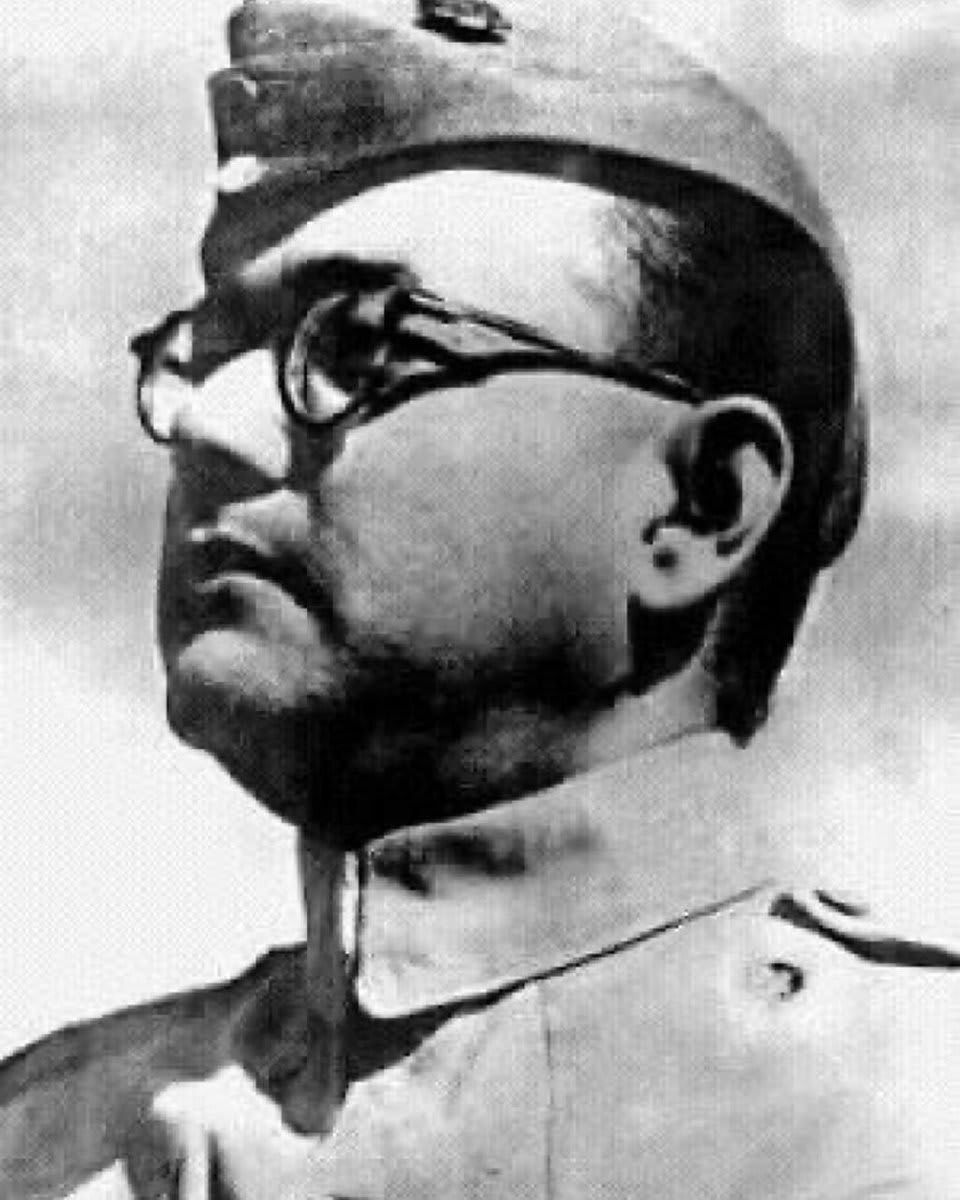
He was elected Congress President in the year
- 1938
- 1939
- Both of these
- None of these
What is meant by the Quit India Movement? Give one reason for passing the Quit India Resolution in 1942.