Chemistry
The ultimate source of all water on the earth is
- oceans and seas
- springs and wells
- rivers and lakes
- rain
Related Questions
Suggest one method for the removal along with the reactions for
(i) temporary hardness
(ii) permanent hardness of water
What are the main causes of water pollution? State three ways to control water pollution.
We all know that common salt (NaCl) adds taste and some nutrition to our food. One rainy day, Amaira wanted to add some salt to her meal. When she opened the jar and scooped a spoonful of salt out, she noticed that the salt had become moist and sticky.
(a) Why did the salt become moist ? Explain.
(b) Define deliquescence.
(c) How can we keep the salt dry in our homes during monsoon ?
To explain the difference between hard water and soft water, a chemistry teacher took tap water in two beakers labelled A and B. A pinch of magnesium sulphate was dissolved in beaker A, while beaker B contained only tap water. Soap solution was then added to both the beakers and stirred. The students noticed a difference in the lather formed.
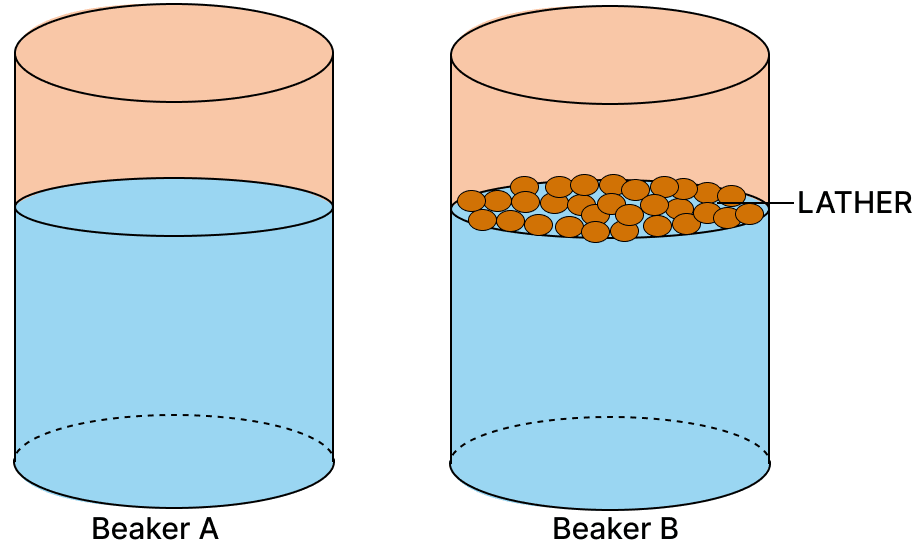
(a) What difference is observed by the students when soap solution is added to beakers A and B ?
(b) What conclusion can be drawn from their observations ?
(c) What substances cause (i) temporary hardness and (ii) permanent hardness ?
(d) Name a simple method that can be used to remove the temporary hardness of tap water in homes.
(e) Why is washing soda added to hard water ?