Mathematics
In triangle ABC, ∠A = 35° and ∠C = 55°.
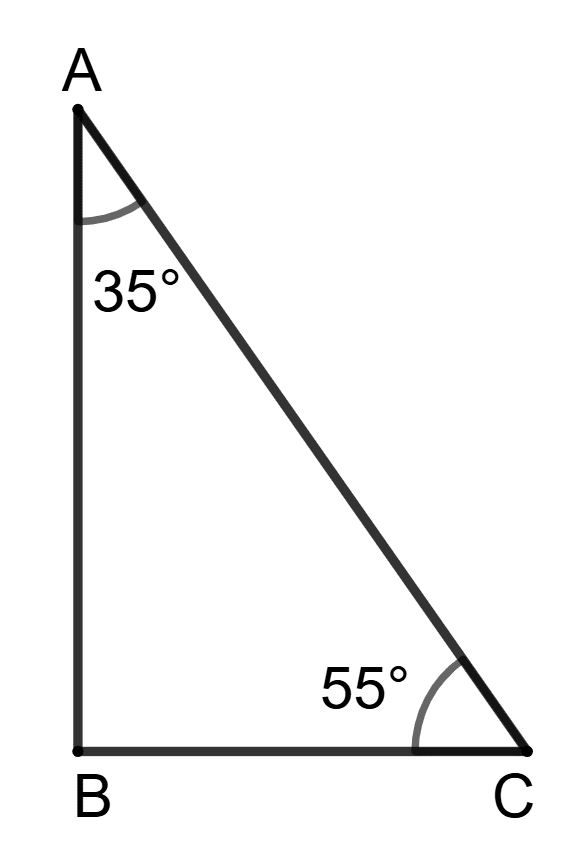
Assertion (A): Circle with AC as diameter will pass through the vertex B.
Reason(R): ∠ABC = 180° - (35° + 55°) = 90° = angle of semi-circle.
A is true, R is false.
A is false, R is true.
Both A and R are true and R is correct reason for A.
Both A and R are true and R is incorrect reason for A.
Answer
Given, in triangle ABC, ∠A = 35° and ∠C = 55°.
The sum of angles in a triangle is always 180°.
⇒ ∠A + ∠B + ∠C = 180°
⇒ 35° + ∠B + 55° = 180°
⇒ 90° + ∠B = 180°
⇒ ∠B = 180° - 90°
⇒ ∠B = 90°.
An angle inscribed in a semicircle is always a right angle (90°).
So, reason (R) is true.
Since ∠ABC is 90°, and AC is the diameter of the circle, the circle must pass through point B.
This is because the angle subtended by the diameter (AC) at any point on the circumference of the circle (in this case, point B) is always a right angle.
So, assertion (A) is true.
∴ Both A and R are true and R is correct reason for A.
Hence, option 3 is the correct option.
Related Questions
For a regular hexagon of perimeter 18 cm inscribed in a circle, the radius of the circle is :
6 cm
9 cm
3 cm
none of these
In triangle ABC, bisectors of angles A and B meet at point P.
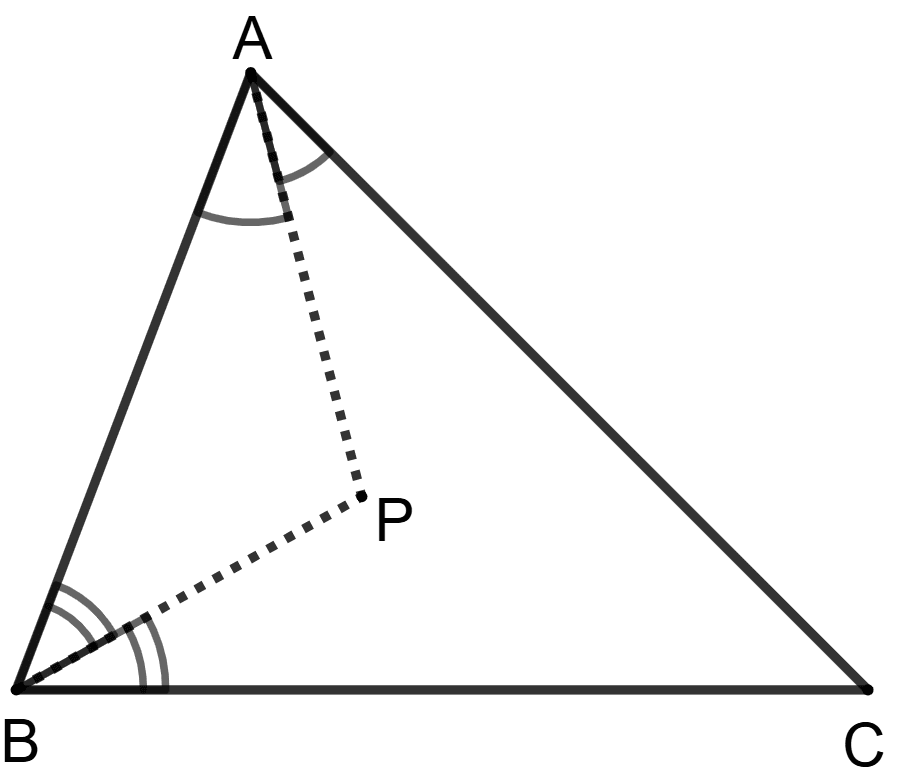
Assertion (A): PC bisects angle C.
Reason(R): Bisectors of angles of a triangle are concurrent.
A is true, R is false.
A is false, R is true.
Both A and R are true and R is correct reason for A.
Both A and R are true and R is incorrect reason for A.
In ΔABC, PQ is perpendicular bisector of side AB and PR is perpendicular bisector of side BC.
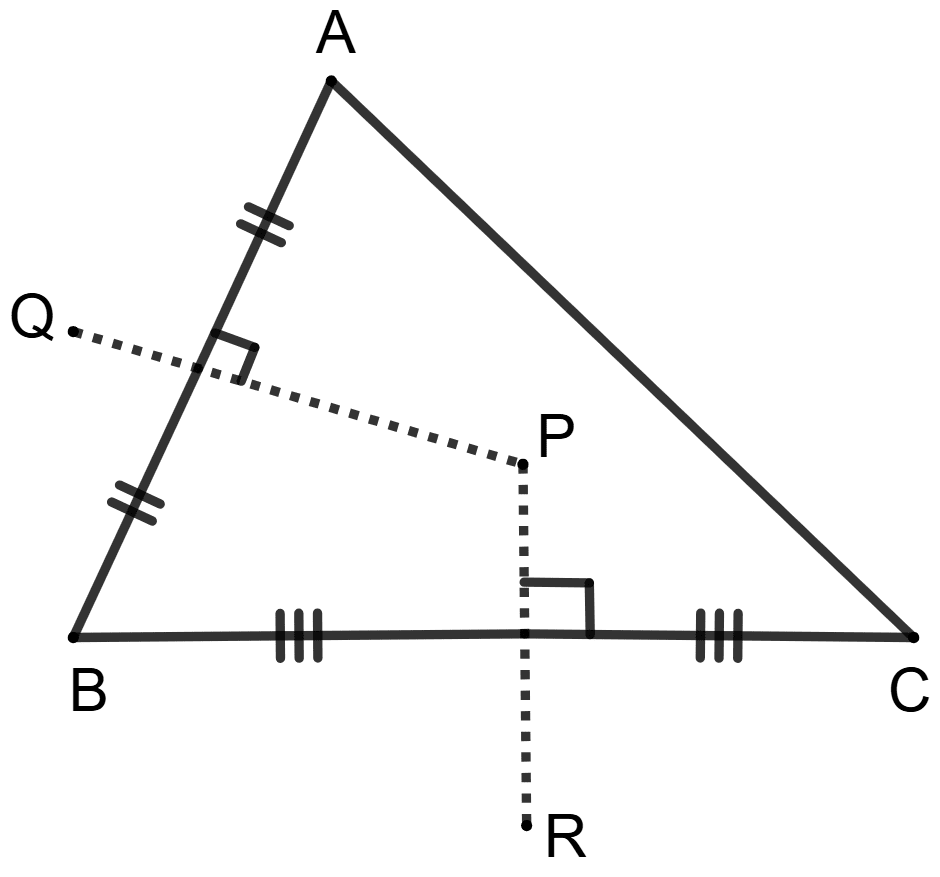
Statement (1): Perpendicular bisector of side AC will pass through point P.
Statement (2): Perpendicular bisectors of sides of a triangle are concurrent.
Both the statements are true.
Both the statements are false.
Statement 1 is true, and statement 2 is false.
Statement 1 is false, and statement 2 is true.