
Geography
Why is a water crisis in the world even though most parts of the Earth is covered with water?
Water Bodies
1 Like
Answer
The water crisis in the world is due to the following reasons:
- Abundance of Salt Water — About 71% of the Earth's surface is covered with water, but 96.5% of it is saline and found in oceans and seas, which is not suitable for drinking or irrigation.
- Limited Freshwater Availability — Only about 3.5% of the Earth’s water is freshwater. However, most of this is not easily accessible:
- Frozen in glaciers, ice caps (Arctic, Antarctic)
- Stored underground in deep aquifers
- Tiny Share for Direct Use — Just 0.5% of freshwater is found in rivers, lakes, and ponds, which is the primary source for all human, plant, and animal needs.
- Pollution by Human Activities — Many freshwater sources are being polluted by industrial waste, sewage, agricultural runoff, and plastics, making the water unsafe and reducing the usable supply.
- Overuse and Waste — Water is often wasted through careless usage, leaking pipelines, over-irrigation, and excessive extraction from rivers and underground sources, especially in urban and agricultural areas.
- Unequal Distribution — Freshwater is unevenly distributed across the world. Some regions face scarcity while others have relatively abundant resources.
Thus, despite the Earth's water-rich appearance, the actual usable freshwater is extremely limited. Human pollution and wasteful practices are making the situation worse, leading to a growing global water crisis.
Answered By
3 Likes
Related Questions
Explain how human activities are degrading water bodies all over the globe.
Read the passage given below and answer the questions that follow:
Rising from the Gangotri Glacier in the Himalayas, river Ganga is the lifeline of the northern part of India. Its plains provide food to millions of Indians. The rich fertile plains grow diverse crops and support high density of population. Being a glacier-fed river, it carries water throughout the year and hence provides irrigation, navigation and also helps in the generation of hydroelectric power. On the banks of this sacred river, many pilgrimage cities such as Haridwar, Rishikesh, Allahabad (now Prayagraj) and Varanasi have grown. The combined drainage system of the Indus, Ganga and Brahmaputra forms the vast Northern Plains of the Indian subcontinent that is one of the most populous regions of the world.
- How does the Ganga Plain grow food for millions of Indians?
- Why does the river carry water throughout the year?
- Besides farming, which are the other two benefits of this river to the people of India?
Have you heard the term voyagers? Since olden times voyagers have ventured into faraway lands for explorations. Many a time they discovered new lands. Name any three famous explorers and write briefly about them under the following headings:
- Name :
- the country she/he belonged to :
- the expedition which made her/him famous :
- the year in which it was done :
- the discord that followed (if any) :
- any landmark named after her/him :
Picture-based Questions
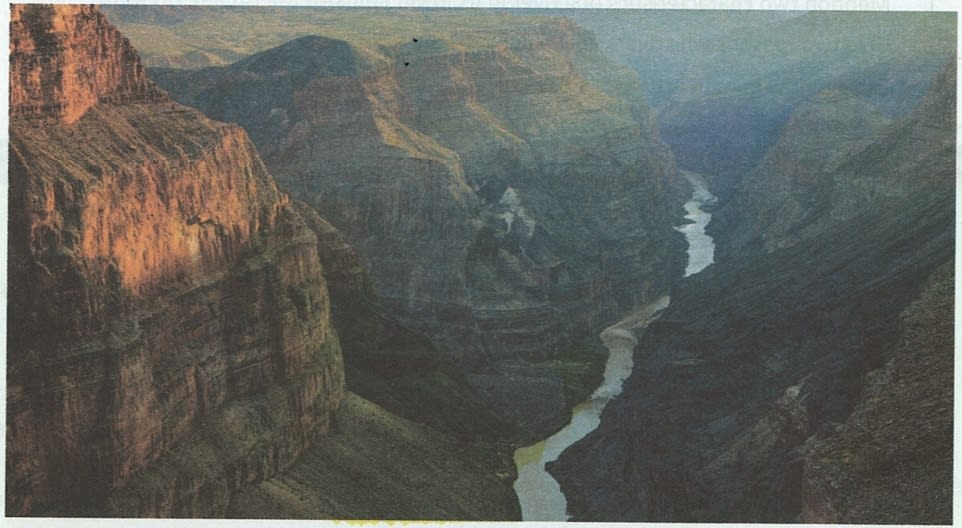
- Identify the feature shown in the picture.
- In which course of a river does it form?
- What is the speed of the river during this course?
- Name another river feature formed during this course of the river.