Chemistry
What is meant by metal reactivity series? State its importance (any two points).
Answer
A list in which the metals are arranged in a decreasing order of their chemical reactivity is called the metal reactivity series.
The importance of metal reactivity series are:
- The series facilitates the comparative study of metals in terms of the degree of their reactivity.
- The compounds of the metals like oxides, carbonates, nitrates and hydroxides too can be easily compared.
Related Questions
(a) What is meant by metal activity series?
(b) A metal P was placed in a solution of silver nitrate. After sometime, silver was deposited on metal P and the solution turned blue.
(i) Which is more reactive - metal P or silver?
(ii) What kind of reaction is this?
(iii) Give an example of this type of reaction.
Following is a list of metals :
Na, Zn, Fe, Ag, Pb, Hg, Cu.
Answer the questions that follow :
(a) Which of the above metals can displace all the metals from their salt solution ?
(b) Name one of the above metals which cannot react with dilute acid to produce hydrogen gas.
(c) Name one of the above metals which reacts with oxygen upon heating to produce an amphoteric oxide.
(d) Arrange the above metals in a decreasing order of their reactivity.
Given below is a diagram showing a type of reaction between two compounds. Answer the questions that follow :
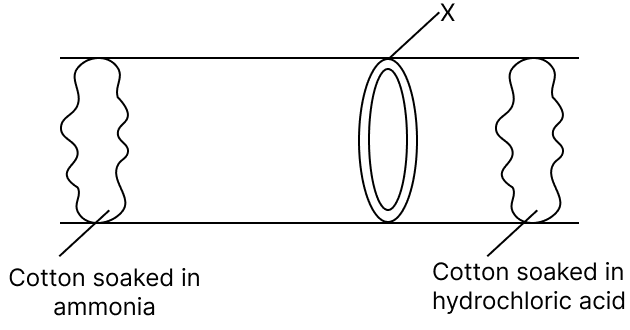
(a) What compound is X ?
(b) Give a balanced chemical equation to form X.
(c) Name the type of reaction shown.
A teacher showed a chemistry experiment in the class to her students. She poured about 100 ml of sodium hydroxide into a beaker and added a few drops of phenolphthalein to it. The colour of the solution immediately changed. Then she added dilute sulphuric acid to the beaker slowly, while constantly stirring the solution with a glass rod. She kept on adding dilute sulphuric acid until the solution became colourless again. Then she called her students to touch the beaker.
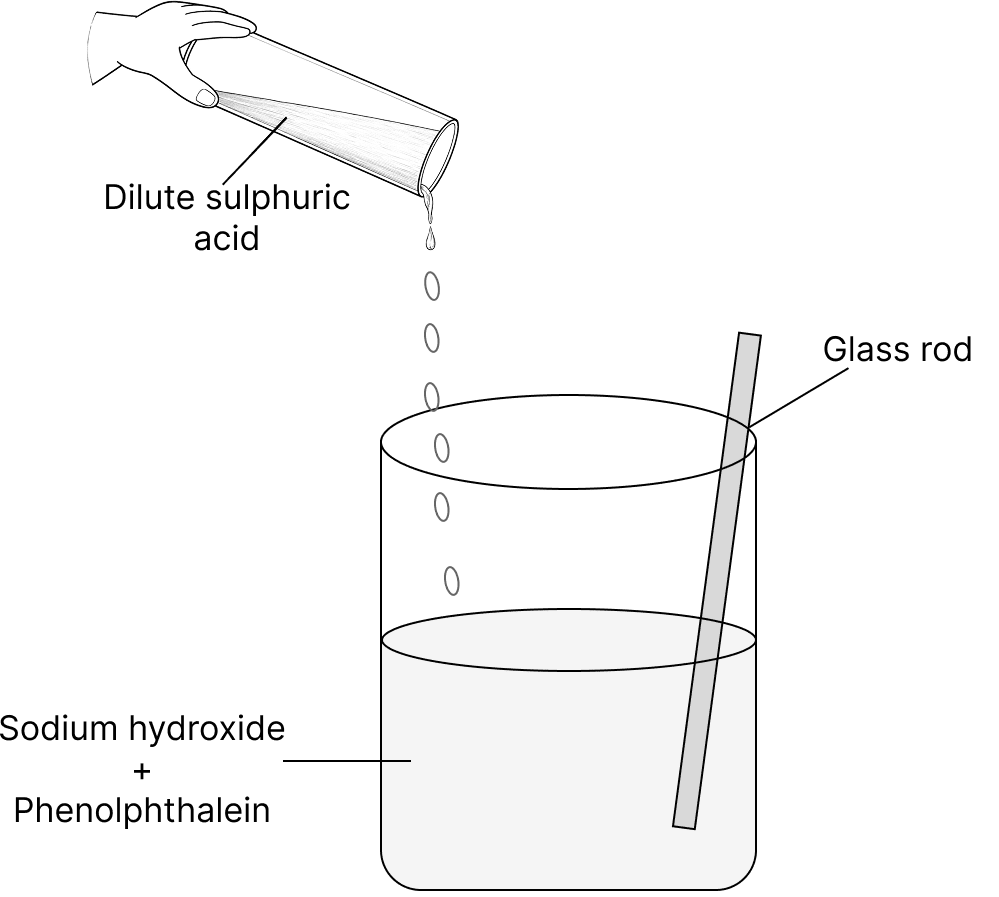
(a) Name the type of reaction which involves an acid and a base as shown by the teacher.
(b) What colour change was observed when phenolphthalein was added to the beaker?
(c) Write a balanced chemical equation for the reaction between sodium hydroxide and dilute sulphuric acid.
(d) What will the students feel on touching the beaker after the reaction? Why?
(e) Why do many toothpastes contain bases?
(f) Name:
(i) a basic substance to treat an acidic soil.
(ii) an acidic substance to treat a basic soil.