The unpaired structure of human reproductive system is:
- Ovary
- Testis
- Uterus
- Uterine tube
Answer
Uterus
Reason — The uterus is the only unpaired structure of the human reproductive system. There are two ovaries, two testes, and two uterine tubes, one on each side.
The posterior part of the retina located just opposite to the lens is:
- Fovea centralis
- Cochlea
- Yellow spot
- Both 1 and 3
Answer
Both 1 and 3
Reason — The posterior part of the retina just opposite to the lens is called the yellow spot. The fovea centralis lies at the centre of the yellow spot. Cochlea is a part of the ear, not the eye.
Assertion (A): Alleles are the different versions of a gene that occur at the same location on the chromosomes.
Reason (R): The genes have two alternative forms of alleles — dominant and recessive.
- A is true and R is false.
- A is false and R is true.
- Both A and R are true.
- Both A and R are false.
Answer
Both A and R are true.
Reason — A is true because alleles are alternative forms of the same gene found at the same position on homologous chromosomes and affect the same characteristic in different ways. R is true because genes may exist in alternative forms called alleles, commonly expressed as dominant and recessive.
Therefore, Both A and R are true is the correct option.
During photosynthesis, the photochemical phase occurs in (P) ............... and biosynthetic phase in (Q) ............... .
- P- Stroma, Q- Granum
- P- Stroma, Q- Thylakoids
- P- Fret, Q- Stroma
- P- Granum, Q- Stroma
Answer
P- Granum, Q- Stroma
Reason — During photosynthesis, the photochemical phase occurs in the grana, while the biosynthetic phase occurs in the stroma.
Loss of water as water vapour from the aerial parts of a plant is termed as:
- Guttation
- Transpiration
- Translocation
- Perspiration
Answer
Transpiration
Reason — Transpiration is the loss of water vapour from the aerial parts of a plant. Guttation is the loss of water in liquid form from the leaf margins. Translocation is the movement of food through the phloem. Perspiration refers to sweating in humans and animals.
The point of attachment of two non-sister chromatids of a pair of chromosomes is termed as:
- Chiasmata
- Centromere
- Centrosome
- Chromomere
Answer
Chiasmata
Reason — Chiasmata are the points where non-sister chromatids of homologous chromosomes remain attached after crossing over during meiosis.
Centromere is the primary constriction of a chromosome where sister chromatids are attached. Centrosome structure in the cell that helps in spindle formation during cell division. Chromomere is small, bead-like structures along a chromosome.
Assertion (A): An injury to medulla oblongata causes sudden death.
Reason (R): Medulla oblongata is the part of midbrain which controls all the voluntary actions of the human body.
- A is true and R is false.
- A is false and R is true.
- Both A and R are true.
- Both A and R are false.
Answer
A is true and R is false.
Reason — A is true because injury to medulla oblongata can cause sudden death because it controls involuntary functions like breathing and heartbeat.
R is false because medulla oblongata is not a part of the midbrain, it's a part of hindbrain. It controls involuntary actions not voluntary actions.
Therefore, A is true and R is false is the correct option.
Rajesh tried to match the kind of leukocytes with their specific functions in the human body. He tabulated the pairs as follows:
| Kind of leukocytes | Function |
|---|---|
| P | Secretes antitoxins |
| Q | Produce antibodies |
Identify the correct pair of leukocytes.
- P- Lymphocytes, Q- Monocytes
- P- Eosinophils, Q- Lymphocytes
- P- Monocytes, Q- Basophils
- P- Neutrophils, Q- Lymphocytes
Answer
P- Eosinophils, Q- Lymphocytes
Reason — Eosinophils help in neutralising toxins. Lymphocytes are responsible for antibodies production.
Monocytes perform phagocytosis, Basophils release histamine.
The phytohormone that triggers the fall of older leaves and ripened fruits from plants is:
- Gibberellins
- Auxins
- Ethylene
- Abscisic acid
Answer
Ethylene
Reason — Ethylene is a plant hormone that promotes fruit ripening.
Gibberellins promote stem elongation and help in flowering and fruit growth. Auxins promote cell elongation and prevent abscission. Abscisic acid induces seed dormancy.
Which of the following criteria does not support the 'Darwin's theory' of evolution ?
- Natural selection
- Struggle for existence
- Use and disuse
- Survival of the fittest
Answer
Use and disuse
Reason — Darwin's theory is based on natural selection. Use and disuse concept was given by Lamarck.
Natural selection - organisms with favorable variations survive and reproduce. This is the central idea of Darwin’s theory.
Struggle for existence - Only the fittest or best adapted survive in this struggle. This concept helps explain why natural selection occurs.
Survival of the fittest - Means individuals best adapted to environment survive and reproduce. This is similar to natural selection.
Assertion (A): Wooden doors swell up on contact with water/moist air and it becomes difficult to open or shut the doors.
Reason (R): Wood is made up of a hydrophobic substance which can absorb surface moisture by the process of osmosis, thereby increasing in volume.
- A is true and R is false.
- A is false and R is true.
- Both A and R are true.
- Both A and R are false.
Answer
A is true and R is false.
Reason — A is true because wooden doors swell up as it absorbs water and expands on contact with water/moist air.
R is false as wood is hydrophilic in nature, not hydrophobic. So, it can absorb surface moisture by imbibition, not osmosis.
Therefore, A is true and R is false is the correct option.
Ramesh has applied for a job of traffic police. He went for the interview and the physical test. He was not able to discriminate between certain colours like red and green during his vision test. He might be suffering from which of the following eye defects ?
- Night blindness
- Colour blindness
- Astigmatism
- Presbyopia
Answer
Colour blindness
Reason — Colour blindness is the inability to distinguish between certain colours, mostly red and green. Night blindness is inability to see properly in dim or dark light. In astigmatism blurred or distorted vision at all distances. In Presbyopia, near vision becomes weak.
Assertion (A): The process of maintaining the percentage of water and salt concentration in the body is called osmoregulation.
Reason (R): Urethra is the main osmoregulatory centre of the body as it releases urine outside the body.
Which of the following is correct?
- A is true and R is false.
- A is false and R is true.
- Both A and R are true.
- Both A and R are false.
Answer
A is true and R is false.
Reason — A is true because osmoregulation is the maintenance of the proper balance of water and dissolved salts in body fluids. R is false because the urethra is only a passage for urine; it is not the osmoregulatory centre of the body.
Therefore, A is true and R is false is the correct option.
A biology teacher has asked her students to give the names of two hormonal disorders caused due to abnormal secretion of somatotropin hormone in the human body.
P said : Myxoedema and Hypoglycemia
Q said : Dwarfism and Gigantism
R said : Hyperglycemia and Cretinism
S said : Gigantism and Acromegaly
Who were correct?
- P and Q
- P and R
- Q and S
- S and R
Answer
Q and S
Reason — Somatotropin is the growth hormone. Dwarfism, gigantism and acromegaly are growth hormone disorders caused due to abnormal secretion of somatotropin hormone.
Myxoedema is caused by thyroid hormone deficiency, hypoglycemia is low blood sugar, it is related to insulin imbalance. Hyperglycemia is high blood sugar. Cretinism is thyroid hormone deficiency in infants.
A biology teacher had shown a chart of an eye defect in the classroom and asked the students to identify it and suggest a corrective lens for the same. Which of the following will be the correct response?
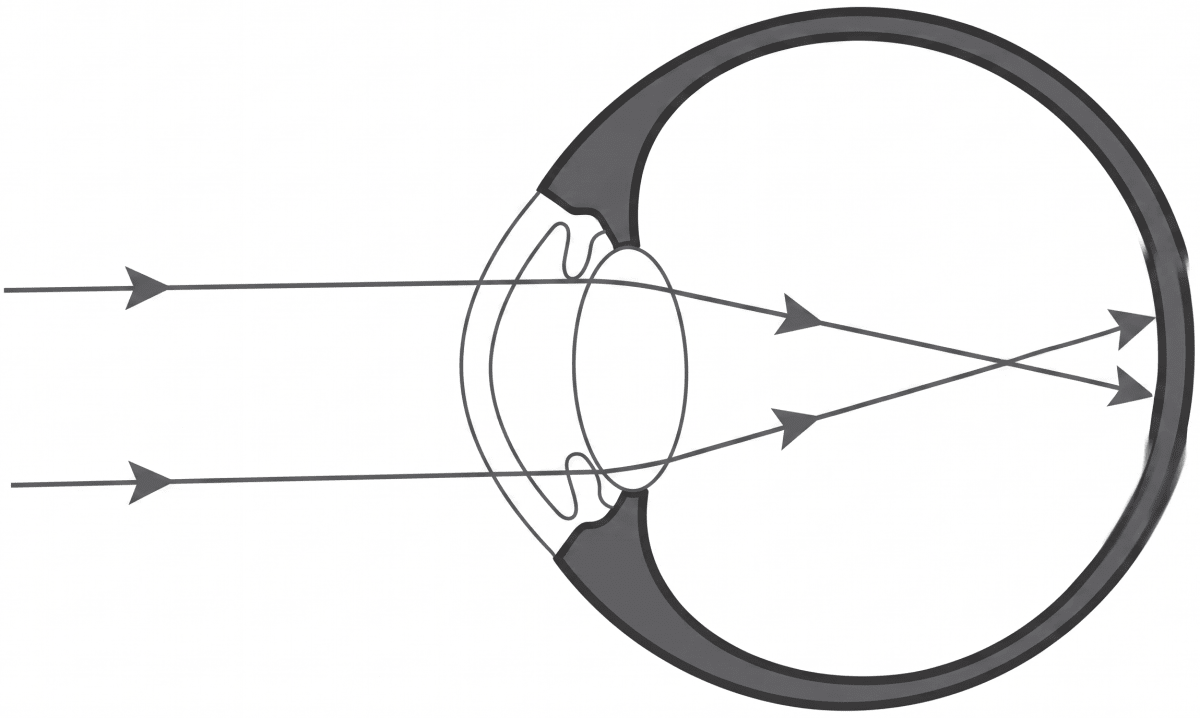
- Myopia, convex lens
- Hyperopia, converging lens
- Myopia, concave lens
- Hypermetropia, diverging lens
Answer
Myopia, concave lens
Reason — In the figure, light rays are converging and forming the image in front of the retina. This indicates myopia. Myopia is corrected by using a concave lens.
Name the following:
(a) The basic unit of granum of the chloroplast.
(b) The statistical study of human population.
(c) The part of the adrenal gland which secretes adrenaline.
(d) The liquid waste from domestic activities.
(e) The number of live births per 1000 people of population per year.
Answer
(a) Thylakoid
(b) Demography
(c) Adrenal medulla
(d) Sewage
(e) Birth rate
Given alongside is the longitudinal section of a human kidney. Read the information below the diagram and fill in the blanks:
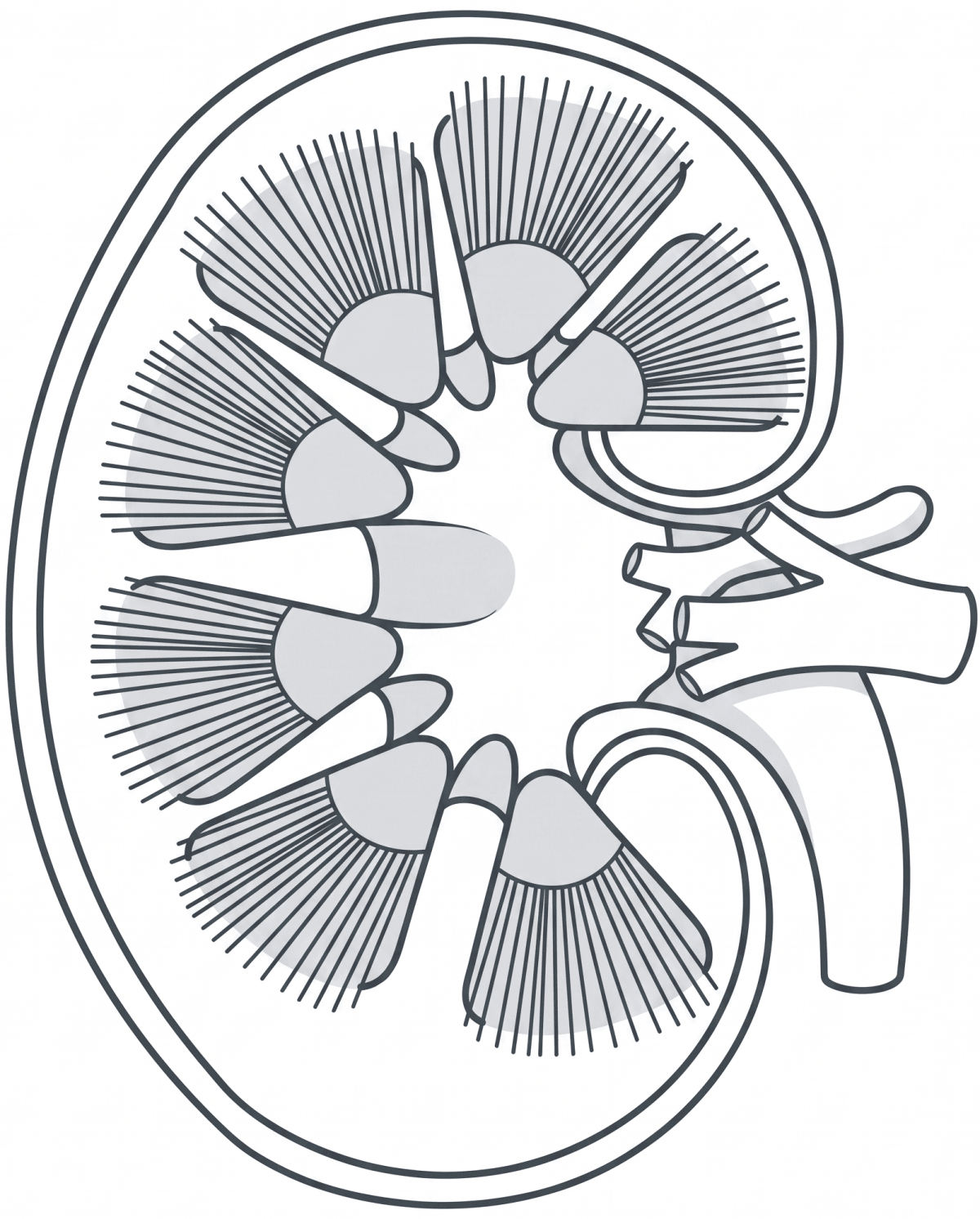
The kidneys are the primary excretory organs, located on either side of the backbone and protected by the last two pairs of the ribs. Kidneys eliminate nitrogenous wastes (chiefly urea) from the blood and throw them out in the form of urine.
The kidney is composed of an enormous number of minute tubules called (a) ............... tubules or nephrons or renal tubules or just kidney tubules. The longitudinal section of the kidney shows two main regions- an outer dark (b) ............... and an inner lighter (c) ............. . The medulla contains several finely striped structures in conical shape, termed as (d) ............... . The papilla is another fine structure which projects into the (e) ............... of the kidney.
Answer
(a) Uriniferous
(b) Cortex
(c) Medulla
(d) Conical pyramids
(e) Pelvis
Arrange and rewrite the terms in each group in the correct order so as to be in a logical sequence beginning with the term that is underlined.
(a) Anaphase, Interphase, Cytokinesis, Metaphase
(b) Endodermis, Pericycle, Epidermis, Cortex
(c) Aorta, Lungs, Body tissues, Left ventricle
(d) Cornea, Macula lutea, Pupil, Vitreous humour
(e) Ear ossicles, Tympanum, Membranous labyrinth, Oval window
Answer
(a) Interphase, Metaphase, Anaphase, Cytokinesis
(b) Epidermis, Cortex, Endodermis, Pericycle
(c) Left ventricle, Aorta, Body tissues, Lungs
(d) Cornea, Pupil, Vitreous humour, Macula lutea
(e) Tympanum, Ear ossicles, Oval window, Membranous labyrinth
Read the explanation given below and name the structure:
Example: The respiratory pigment in human body that carries oxygen and carbon dioxide during cellular respiration.
Answer : Haemoglobin
(a) Special pore bearing structure present on the margins of the leaves.
(b) The waxy layer on the surface of leaves.
(c) The part of forebrain that relays pain and pressure impulses to cerebrum.
(d) The specific structure of human testis which produces the male hormone testosterone.
(e) The thin, highly coiled spring like structure in plants that provides support to the weaker parts of the plant.
Answer
(a) Hydathodes
(b) Cuticle
(c) Thalamus
(d) Leydig cells
(e) Tendril
Given below is the structure of human ear. Match the structures marked (1) to (6) with their correct function:
Example : (1)-(f) converts air current into vibration.
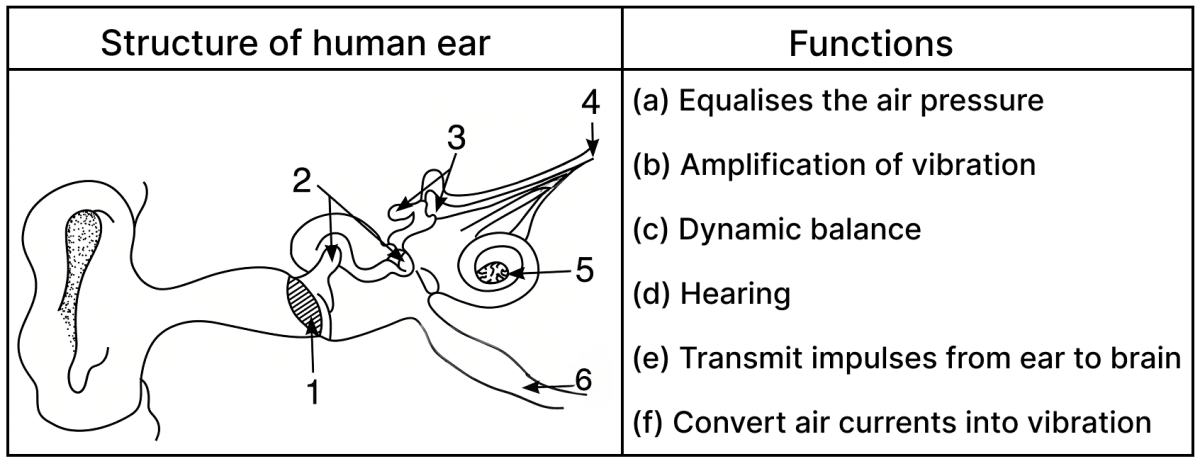
Answer
Eardrum - Converts air currents into vibrations
Ear ossicles - Amplification of vibration
Semicircular canals - Dynamic balance
Auditory nerve - Transmits impulses from ear to brain
Cochlea - Hearing
Eustachian tube - Equalises the air pressure
Explain the term osmosis.
Answer
Osmosis is the movement of water molecules from a region of higher water concentration to a region of lower water concentration through a selectively permeable membrane.
What are the two kinds of blood circulation occurring in the human body?
Answer
The two kinds of blood circulation occurring in the human body are:
Pulmonary circulation - Movement of deoxygenated blood from the heart to the lungs for oxygenation and oxygenated blood from the lungs back to the heart.
Systemic circulation - Movement of oxygenated blood from the heart to the body tissues and deoxygenated blood from the body tissues back to the heart.
How does the composition of blood differ in the renal artery and renal vein with respect to the following:
(a) Oxygen content
(b) Nitrogenous waste
Answer
(a) The renal artery has a higher oxygen content, whereas the renal vein has a lower oxygen content.
(b) The renal artery has more nitrogenous wastes, whereas the renal vein has less nitrogenous wastes.
Write two important characteristics of roots which make them suitable for absorption of water from the soil.
Answer
Two important characteristics of roots which make them suitable for absorption of water from the soil are:
Presence of numerous root hairs, which increase the surface area for absorption.
The walls of root hairs are thin and permeable.
Rahul observed a slide of 'Blood smear' under a compound microscope in the laboratory. He saw three different kinds of cells, suspended in the plasma.
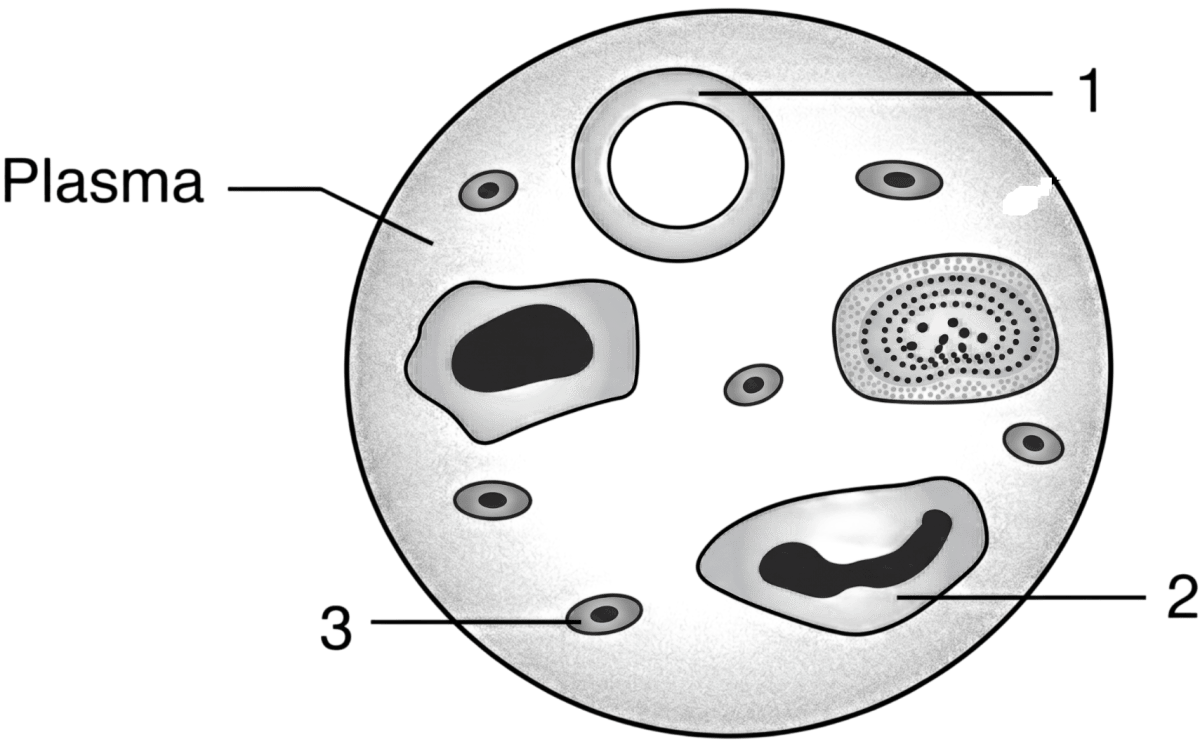
(a) Write the technical term for structure 1.
(b) Mention one structural difference between structures 1 and 2.
(c) Write one functional difference between structures 1 and 3.
Answer
(a) Red blood corpuscle (RBC) / erythrocyte
(b) RBCs are biconcave and lack a nucleus, whereas WBCs are irregular in shape and have a nucleus.
(c) RBCs transport oxygen and carbon dioxide, whereas platelets help in blood clotting.
Why do testes descend down into the scrotum shortly before the birth of a human child?
Answer
Testes descend into the scrotum because they require a temperature slightly lower than the normal body temperature for sperm production.
Expand the abbreviation NADP. Write its one important role during photosynthesis.
Answer
Nicotinamide Adenine Dinucleotide Phosphate.
NADP gets reduced to NADPH during the light reaction, and NADPH is then used in the Calvin cycle for the synthesis of glucose.
Mention one significant role of:
(a) Sympathetic nervous system.
(b) Parasympathetic nervous system.
Answer
(a) The sympathetic nervous system prepares the body for fight-or-flight situations by increasing the heart rate and breathing rate.
(b) The parasympathetic nervous system brings the body back to the resting state by slowing the heartbeat.
Write two ways by which we can help lessen the plastic menace.
Answer
Two ways by which we can help lessen the plastic menace are:
Using eco-friendly alternatives such as cloth bags and paper bags.
Recycling plastic waste.
Draw a neat, labelled diagram of the structure of a human sperm.
Answer
Labelled diagram of a human sperm is shown below:

Mention one characteristic of cell membrane which makes it suitable for the process of osmosis.
Answer
One characteristic of the cell membrane which makes it suitable for osmosis is its selective permeability.
What are conditioned reflexes' ? Give one example of it in humans.
Answer
Conditioned reflexes are acquired responses that develop due to experience or training and are not present by birth.
Example: Salivation on hearing the lunch bell.
State the difference between mutation and variation.
Answer
Mutation is a sudden heritable change in a gene or chromosome.
Variation is the difference in characteristics among individuals of the same species.
Write two functions of amniotic fluid.
Answer
Two functions of amniotic fluid are:
It protects the foetus against mechanical shocks or injury.
It prevents the foetus from sticking to the amnion.
Study the picture given alongside and answer the questions:
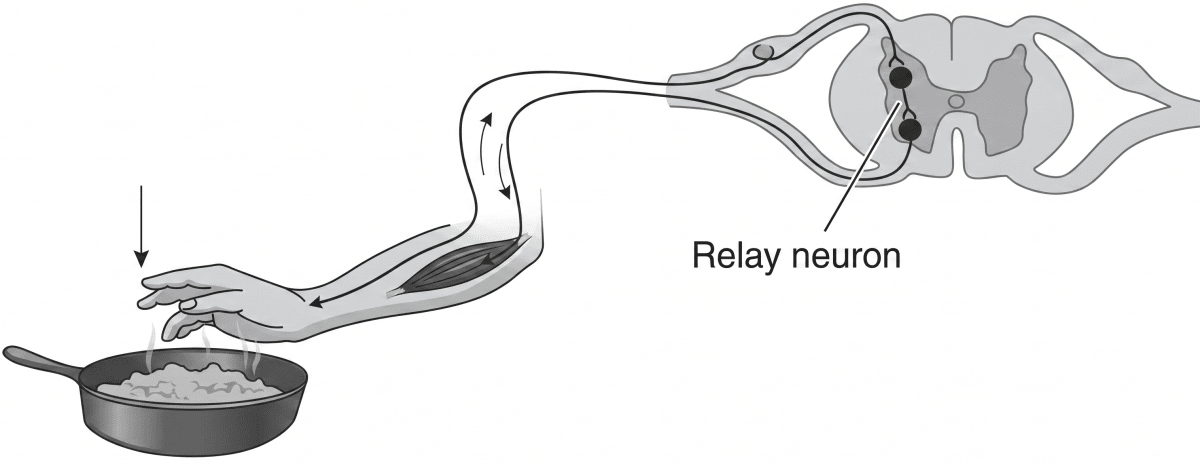
(a) Name the phenomenon shown here.
(b) Mention the nerve which carries impulses from sense organs to the central nervous system.
(c) Which effector is active in the above action?
Answer
(a) Reflex action
(b) The sensory nerve carries impulses from sense organs to the central nervous system.
(c) The muscles of the hand/arm act as the effector.
What are genes?
Answer
Genes are the basic unit of heredity made up of DNA, located on chromosomes.
What are 'Islets of Langerhans' ? Name one pancreatic hormone.
Answer
Islets of Langerhans are endocrine cells in pancreas that secrete hormones.
One pancreatic hormone is insulin.
Differentiate between the terms Karyotype and Karyokinesis.
Answer
| Karyotype | Karyokinesis |
|---|---|
| The complete set of chromosomes in the cells of an organism is its karyotype. | The division of the nucleus during mitosis is called karyokinesis. |
Write two significant values of placenta which is an intimate connection between the foetus and the uterine wall of the mother.
Answer
Two significant values of placenta which is an intimate connection between the foetus and the uterine wall of the mother are:
The placenta acts as a bridge that transfers essential nutrients and oxygen from the mother’s blood to the developing foetus.
Placenta helps in removing waste products like carbon dioxide and nitrogenous wastes from the foetus and passes them into the mother’s blood for excretion.
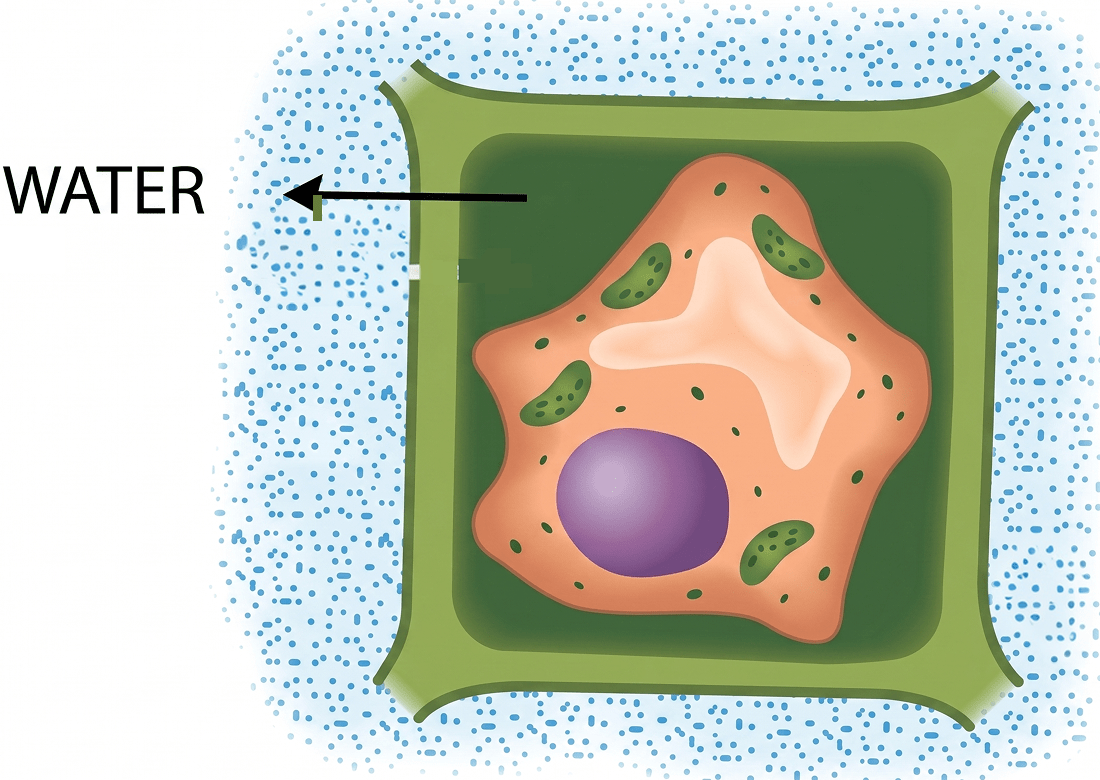
Draw a neat, labelled diagram of the shape and structure of a plant cell kept in a hypertonic solution of sugar.
Answer
Labelled diagram of the shape and structure of a plant cell kept in a hypertonic solution of sugar is shown below:
What do you mean by 'crossing over'?
Answer
Crossing over is the process in which non-sister chromatids of homologous chromosomes exchange corresponding segments of genetic material during meiosis.
Mention the diseases caused due to the hyposecretion of:
(a) Insulin
(b) Vasopression
Answer
(a) Diabetes mellitus
(b) Diabetes insipidus
What are the two harmful effects of burning garbage in an open land?
Answer
Two harmful effects of burning garbage in an open land are:
It releases harmful gases that pollute the air.
The toxic smoke may cause respiratory diseases such as asthma and bronchitis.
How is the rate of transpiration affected by the following extrinsic factors:
(a) Increase in atmospheric CO2 levels
(b) Velocity of wind?
Answer
(a) Increase in atmospheric CO2 levels decreases the rate of transpiration.
(b) Increase in the velocity of wind increases the rate of transpiration.
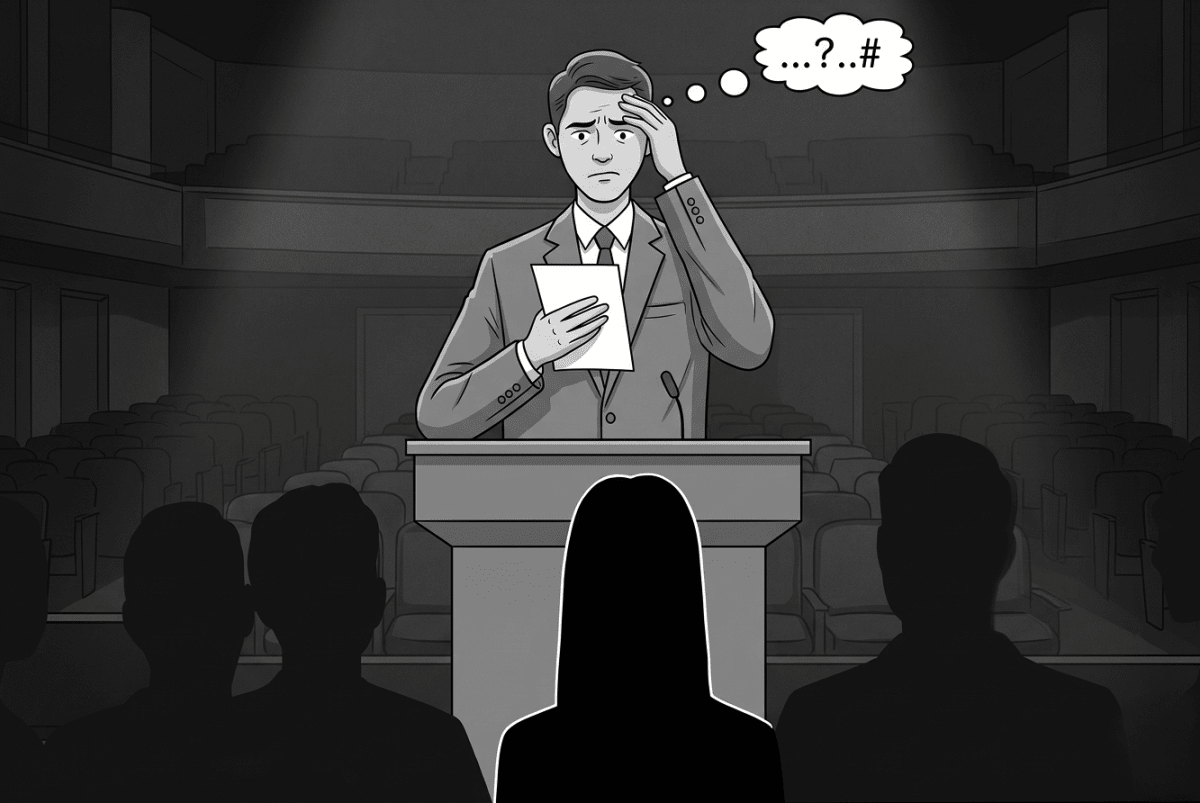
To address a large crowd of public is a great learning opportunity for a person. Most people manage it nicely but some people become nervous as shown in the figure given alongside:
(a) Name the hormone secreted in the body during nervousness.
(b) Write the exact location of the gland which secretes the above mentioned hormone.
(c) Mention two more situations during which the same hormone is usually secreted.
Answer
(a) Adrenaline
(b) The hormone is secreted by the adrenal glands situated above the kidneys.
(c) Two more situations during which the same hormone is usually secreted are:
During fear or danger.
During anger or physical stress.
How does the hormone oxytocin help in the process of parturition?
Answer
Oxytocin stimulates uterine contractions and thus helps in childbirth.
Given below are two statements which are incorrect. Correct and rewrite the statements.
(a) The accumulation of high quantities of urea in the human body is termed as diuresis.
(b) Population density is the mass of individuals per square kilometre (km2) at any given time.
Answer
(a) The accumulation of high quantities of urea in the human body is termed as uremia.
(b) Population density is the number of individuals per square kilometre (km2) at any given time.
Identify the stages of mitosis with the following clues:
(a) Chromosomes are arranged at the equatorial plane of the cell.
(b) Chromatids are pulled apart towards opposite poles of the cell.
Answer
(a) Metaphase
(b) Anaphase
A dog runs away while seeing a person picking up a stick to hit it.
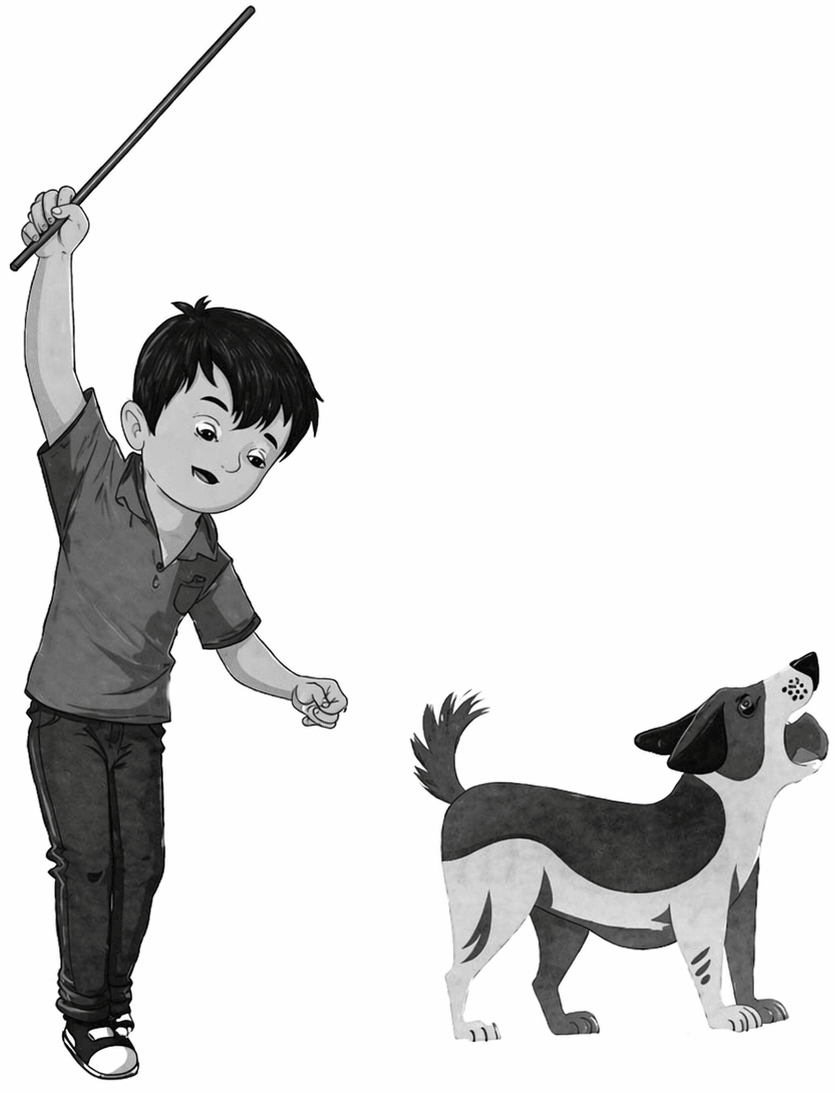
(a) What kind of reflex is shown by the dog?
(b) Name the part of the central nervous system which controls the above phenomenon.
(c) Categorise the following into different types of reflexes:
(1) Knee-jerk reaction.
(2) Playing a musical instrument.
Answer
(a) Conditioned reflex
(b) Cerebrum
(c) Different types of reflexes :
(1) Unconditioned reflex
(2) Conditioned reflex
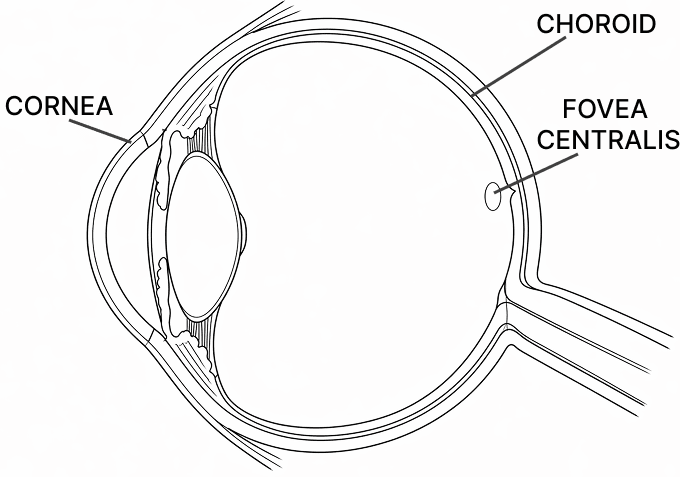
Draw a neat, labelled diagram of the human eye showing - cornea, choroid and fovea centralis.
Answer
The labelled diagram of the human eye showing - cornea, choroid and fovea centralis is shown below: