
Which of the following assistant robots does the given picture depict?
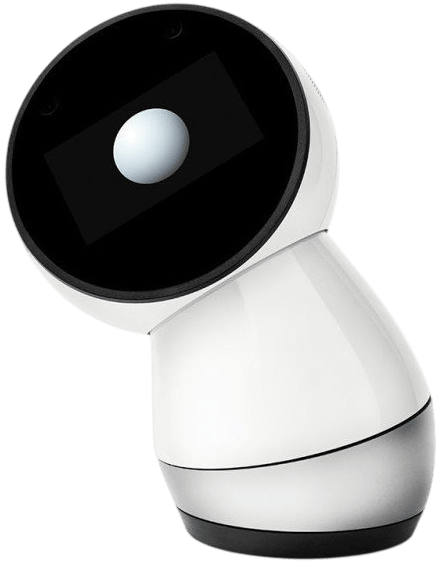
- Mitra
- Jibo
- Aibo
- Medi
Answer
Jibo
Reason — The picture shows Jibo, which is a social assistant robot designed to interact with users through voice recognition, facial recognition and expressive movements. Jibo can schedule reminders, deliver news updates, take photos and engage in conversation, making it a unique and interactive companion for the home environment.
The robotics are used in the designing prosthetic devices. Which of the following statements are not relevant to the given statement?
- Enabled with highly functional artificial limbs.
- Mimic natural movement.
- Help people with disabilities
- None of these
Answer
None of these
Reason — Robotics in prosthetic devices are used for designing advanced, highly functional artificial limbs that mimic natural movement and help people with disabilities by providing a more natural and adaptable user experience. Hence, all the given statements are relevant to the use of robotics in prosthetic devices.
AMRs means ............... .
- Automatic Mobile Robots
- Autologous Mobile Robots
- Autonomous Mobile Robots
- Automation Mobile Robots
Answer
Autonomous Mobile Robots
Reason — AMRs stands for Autonomous Mobile Robots. These are self-navigating robots designed to move independently within warehouses and industrial spaces.
Which of the following is irrelevant to autonomous cars?
- to improve safety
- to reduce human error
- to increase congestion
- to increase efficiency
Answer
to increase congestion
Reason — Autonomous cars are designed to improve safety, reduce human error and increase efficiency in transportation. Their goal is to ease congestion, not increase it.
In the word GPS, what does the letter G signify?
- Global
- Glory
- Globe
Answer
Global
Reason — GPS stands for Global Positioning System. The letter G signifies Global, as it provides worldwide positioning and navigation using satellite signals.
Which of the following statements is related to Smart Mobility?
- It includes electric and autonomous vehicles.
- It promotes shared mobility services
- It utilises real-time data to optimise routes.
- All of these
Answer
All of these
Reason — Smart Mobility includes electric and autonomous vehicles, promotes shared mobility services such as ride-sharing and bike-sharing, and utilises real-time data to optimise routes and manage traffic flow, making transportation more efficient and sustainable.
State whether the following statements are True or False:
- 'Smart Living' promotes eco-conscious behaviour such as recycling, energy conservation and sustainable transportation choices.
- Assistant robots are intelligent machines designed to discourage humans in various tasks.
- Autonomous drones are referred to as Unmanned Aerial Vehicles flying robot system.
- Warehouse robots are manual machines designed to streamline various warehouse tasks.
- Smart School is an educational institution to create an engaging, personalised and efficient learning environment.
- Robots in rehabilitation do not assist patients recovering from injuries or surgeries by providing physical therapy and support.
Answer
- True
- False
Corrected Statement: Assistant robots are intelligent machines designed to support humans in various tasks. - True
- False
Corrected Statement: Warehouse robots are automated machines designed to streamline various warehouse tasks. - True
- False
Corrected Statement: Robots in rehabilitation assist patients recovering from injuries or surgeries by providing physical therapy and support.
Write down the full forms of the following:
- AGVs
- AMRs
- ICT
- UAVs
- NARS
- BCIs
Answer
- AGVs — Automated Guided Vehicles
- AMRs — Autonomous Mobile Robots
- ICT — Information and Communication Technologies
- UAVs — Unmanned Aerial Vehicles
- NARS — New Age Robotics Systems
- BCIs — Brain-Computer Interfaces
Name two types of Warehouse Robots.
Answer
Two types of Warehouse Robots:
- Automated Guided Vehicles (AGVs)
- Autonomous Mobile Robots (AMRs)
Name two Assistant Robots.
Answer
Two Assistant Robots:
- Mitra
- Jibo
Name two Autonomous Drones.
Answer
Two Autonomous Drones:
- Multi-Rotor Drones
- Fixed-Wing Drones
Assertion (A): A drone is an unmanned aerial vehicle (UAV) flying robot system.
Reason (R): The robotic systems, designed to fly autonomously or via remote control are known as Arial Robots or Unmanned Aerial Vehicles (UAVs).
Based on the above discussion, choose an appropriate statement from the options given below:
- Both A and R are true and R is the correct explanation of A.
- Both A and R are true and R is not the correct explanation of A.
- A is true but R is false.
- A is false but R is true.
- Both A and R are false.
Answer
Both A and R are true and R is the correct explanation of A.
Reason — A drone is defined as an unmanned aerial vehicle (UAV) flying robot system. Robotic systems that are designed to fly autonomously or via remote control are known as aerial robots or Unmanned Aerial Vehicles (UAVs).
Smart Homes aim to improve the quality of life and make our life more comfortable than a non-smart home. It can be customised as per our need. It is energy efficient, provides safety as well as security. The main objective of smart house is to improve the quality of life.
On the basis of the above statements, some of the features of Smart Homes are mentioned below:
(a) We can control various aspects of our homes remotely through smartphone apps or web interfaces, allowing them to monitor and adjust settings from anywhere with an internet connection.
(b) The user can modify their smart homes as per their preferences in every aspect of their lifestyle.
(c) Most of the smart devices facilitated with timers which minimises energy consumption. In addition, the devices like sensors turn off lights automatically when the room is vacant and ensuring no energy wastage.
(d) Smart locks and doorbell cameras provide secure access to the home and monitor the entry of the visitors. Thus, allowing the owners or people staying in home to trusted individuals.
Now, read the above statements and give your answer in one or two words depicting the feature.
Answer
(a) Remote Access
(b) Customisation
(c) Energy Efficiency
(d) Smart Security Systems
Write short notes on Warehouse Robots.
Answer
Warehouse Robots are automated machines designed to streamline various warehouse tasks, improving efficiency, accuracy and speed in handling, sorting and transporting goods. They use technologies like artificial intelligence, computer vision, sensors and machine learning to perform complex tasks autonomously or semi-autonomously.
These robots are developed to replace or supplement human labour in factory and warehouse settings as part of automation efforts. They are equipped with sensors to detect obstacles, allowing safe navigation, and can adjust their routes based on stock availability. Warehouse robots help in reducing human error, enhancing safety and increasing overall productivity.
Write short notes on Assistant Robots.
Answer
Assistant Robots are intelligent machines designed to support humans in various tasks. They perform tasks that are traditionally provided by humans, such as customer service, personal assistance, industrial and healthcare support. They are equipped with AI, voice recognition and sometimes mobility.
These robots perform functions like answering questions, providing navigation, monitoring health or assisting in physical tasks. The applications of assistant robots range across retail, hospitality, home care and manufacturing. By handling repetitive, demanding or time-consuming jobs, assistant robots free up human time for more complex activities and improve overall service efficiency.
Write short notes on Smart Homes.
Answer
Smart Homes are homes equipped with smart devices that use a network of interconnected devices using internet connectivity. These devices can be managed remotely and controlled through smartphones, offering convenience, efficiency and security to the residents.
Smart homes are energy efficient and provide safety as well as security. The main objective of a smart home is to improve the quality of life. Smart homes can be configured according to the user's need as they automatically adapt to living patterns. They include features such as automated lighting, smart security systems, energy efficiency, voice and app control, and remote access.
Write short notes on Smart Mobility.
Answer
Smart Mobility refers to the integration of advanced technology and data-driven solutions to make transportation more efficient, sustainable and accessible. It includes electric and autonomous vehicles, shared mobility services and smart infrastructure such as connected traffic lights to reduce congestion, lower emissions and enhance safety.
Smart Mobility utilises real-time data to optimise routes, manage traffic flow and improve intercity travel. It also prioritises eco-friendly transport options and aims to create a seamless, efficient and environmentally conscious transportation network.
Write short notes on New Age Robotics Systems.
Answer
New Age Robotics Systems (NARS) is a cutting-edge field in robotics that blends artificial intelligence, machine learning and neural networks to create robots capable of adaptive, human-like responses. These systems rely on neuro-adaptive technologies and machine learning algorithms to enable robots to learn and make decisions based on their experiences.
By integrating sensory data and cognitive computing, NARS excels in dynamic decision-making, collaboration and autonomous operation. It enables robots to make real-time adjustments to changing environments and tasks, making them more adaptable and versatile.
Write short notes on Smart Elevators.
Answer
Smart Elevators refer to advanced, AI-driven systems designed to optimise the vertical transportation in buildings. They use sensors, automation and destination control to reduce wait times, manage energy usage and enhance security. They are integrated with IoT and thus they are able to communicate with building systems for efficient, user-friendly and customisable transport solutions.
In robotic applications, elevators are used to transport goods, tools and even robots between different levels, making multi-story automation possible. Smart elevators help in streamlining workflows, enhancing productivity and optimising space utilisation. They play an important role in automated processes, precision and safety within industrial and commercial settings.
Enlist any five features of New Age Robotic System.
Answer
Five features of New Age Robotic System are:
- Advanced AI and Machine Learning
- Enhanced Sensor Integration
- Autonomous Navigation
- Flexibility Across Industries
- Remote Monitoring
In what ways Smart Homes differ from Non-Smart Homes? Explain.
Answer
Smart Homes differ from Non-Smart Homes in the following ways:
- Smart Homes are equipped with smart devices that use a network of interconnected devices using internet connectivity, whereas Non-Smart Homes do not have interconnected or internet-enabled devices.
- In Smart Homes, devices can be managed remotely and controlled through smartphones or apps, while in Non-Smart Homes, devices are operated manually.
- Smart Homes are energy efficient, as devices such as smart thermostats, sensors and timers minimise energy consumption by automatically adjusting or turning off appliances, whereas Non-Smart Homes may lead to energy wastage.
- Smart Homes provide safety and security through smart locks, surveillance cameras, motion sensors and alerts, while Non-Smart Homes rely on traditional locking and security systems.
- The main objective of Smart Homes is to improve the quality of life by offering comfort, convenience and automation, whereas Non-Smart Homes do not adapt automatically to the living patterns of the residents.
What are the benefits of Warehouse Robotics?
Answer
The benefits of Warehouse Robotics are:
- Increased Efficiency — Warehouse robots boost efficiency by operating nonstop and performing tasks accurately, which results in reducing human error.
- Improved Accuracy — Warehouse robots improve accuracy by using precise sensors and advanced algorithms for tasks like picking, sorting and inventory tracking, ensuring consistent, reliable handling of materials.
- Enhanced Safety — Warehouse robots enhance safety with advanced sensors and navigation systems. They detect obstacles and avoid collisions, thereby minimising workplace accidents.
- Optimal Space Utilisation — Warehouse robots enable optimal space utilisation by navigating confined spaces and narrow aisles, maximising storage capacity and efficiently organising inventory.
- Reduced Human Labour — Warehouse robots save labour and reduce costs by automating repetitive tasks, decreasing staffing expenses and enhancing operational efficiency.
Enlist any five advantages of Smart Homes.
Answer
Five advantages of Smart Homes are:
- Energy Efficiency
- Customisation
- Ease of Access
- Ensures Security
- Remote Access
What are the features of Smart Homes?
Answer
Smart homes have several useful features that make living more convenient, safe, and efficient:
- Automated lighting: Lights can be controlled from a phone or can turn on/off automatically based on a fixed timetable, room occupancy, or the amount of natural light.
- Smart security systems: Devices like video doorbells, motion sensors, and smart locks improve safety by allowing remote monitoring and sending instant alerts if something unusual happens.
- Energy efficiency: Smart thermostats and smart appliances help optimise electricity use, which can reduce energy wastage and lower utility bills.
- Voice and app control: Many smart home devices can be controlled using mobile apps or voice assistants such as Alexa or Google Assistant.
- Remote access: Homeowners can monitor and control devices like cameras, locks, and lights from anywhere using a smartphone or tablet.
In what ways Smart Schools are beneficial to us? Explain.
Answer
Smart Schools are beneficial to us in the following ways:
- Enhanced Learning Experience: They provide an enhanced learning experience by using digital technology, allowing teachers to deliver lessons through videos, presentations, audio and visual aids, making learning more engaging and understandable.
- Enhance Student Engagement: Smart Schools enhance student engagement by creating a highly interactive teaching environment through activities like online tests, quizzes and group activities, which improve knowledge retention.
- Personalised Education: They offer personalised education, where learning is tailored to each student’s strengths, pace and interests using AI and data analytics.
- Greater Accessibility: Smart Schools ensure greater accessibility by providing instant access to online information and digital platforms, enabling learning from anywhere and ensuring continuity during disruptions.
- Increased Student Safety: They improve student safety through real-time monitoring, secure access controls, CCTV and AI-driven alerts.
- Ensure Parent Involvement: Smart Schools ensure parent involvement by enabling communication through classroom management apps, keeping parents informed about their child’s progress.
- Efficient Administration: They support efficient administration by automating tasks like attendance, grading and record-keeping, saving time for educators and administrators.
What are the features of Autonomous Cars?
Answer
Autonomous cars (self-driving cars) have the following key features:
- Advanced sensors: They use cameras, radar and other sensors to detect pedestrians, obstacles, road signs/signals, and nearby vehicles, giving the car 360° awareness of its surroundings.
- Artificial Intelligence (AI): AI algorithms analyse the sensor data and take real-time driving decisions like lane-keeping, controlling speed, and avoiding obstacles, similar to how a human driver decides.
- Connectivity: They can communicate with other vehicles, traffic systems and cloud services to get live traffic updates, road conditions and hazard warnings, which improves navigation and safety.
- Safety systems (backup): They have multiple backup systems so that if one part fails, another can take over, making the car more reliable and helping to reduce accident risk.
What is meant by Autonomous Drones? Give two examples.
Answer
Autonomous Drones are referred to as unmanned aerial vehicles (UAVs) flying robot system. They can be controlled remotely or operate autonomously using software-driven flight plans integrated with sensors and GPS.
Examples:
- Multi-Rotor Drones
- Fixed-Wing Drones
Mention any five features of Smart Cities.
Answer
Five features of Smart Cities are:
- Smart buildings – Use automated systems (e.g., smart lighting, access control) to save energy, improve security, and increase comfort.
- Smart security and surveillance – CCTV, emergency response systems and predictive analytics help prevent crime and keep people safe.
- Environmental monitoring – Sensors track air quality, water quality and waste management to support public health and reduce pollution.
- Energy-efficient power systems – Smart grids and renewable energy sources reduce carbon emissions and promote sustainable energy use.
- E-government services – Online services for transactions and permits, along with citizen feedback platforms, make public services faster and more efficient.
In what ways robotics are useful in healthcare? Explain.
Answer
Robotics are useful in healthcare in the following ways:
- Surgery: Robots in healthcare are used for surgeries. Surgical robots are enabled with precise, minimally invasive procedures. They are transforming routine surgeries, especially laparoscopic procedures, by providing unmatched precision while operating on delicate structures within the body.
- Rehabilitation: Robots in rehabilitation assist patients in recovering from injuries or surgeries by providing targeted physical therapy and support. They offer precise, repetitive motion exercises, helping patients regain mobility, strength and coordination. These robots are equipped with sensors and real-time feedback.
- Diagnostic: Diagnostic robots support healthcare by analysing medical images, lab results and patient data with speed and accuracy. By using AI, they help in early diagnosis and assist clinicians in making informed decisions.
- Prosthetics: Robotics is used in designing prosthetic devices. These robots are enabled with advanced, highly functional artificial limbs that mimic natural movement and help people with disabilities. They use sensors and AI to respond to muscle signals.
- Patient Care and Assistance: Care robots assist patients by monitoring vital signs, providing reminders for medication and offering mobility support. They improve patient safety, reduce the burden on healthcare staff and enhance overall comfort.
What are the various applications of New Age Robotics Systems?
Answer
Various applications of New Age Robotics Systems (NARS) in robotics are:
- Advanced manufacturing (smart factories): NARS-based robots perform high-precision tasks and can adapt to changing workflows, helping in smooth production and logistics.
- Healthcare and rehabilitation: Robots assist in physical therapy by giving personalised rehabilitation and adjusting support in real time based on the patient’s progress (e.g., exoskeletons and neuro-adaptive prosthetics).
- Autonomous vehicles: NARS helps vehicles make real-time adjustments to traffic, terrain, and user needs, improving safety and efficiency.
- Agriculture (precision farming): Adaptive robots can do crop monitoring, weed removal, pest control, and autonomous harvesting, improving yield and reducing labour and resource use.
- Search and rescue operations: In disaster areas, robots can navigate difficult environments, make quick decisions, and help locate and assist survivors effectively.