
With reference to the given picture, answer the following questions.
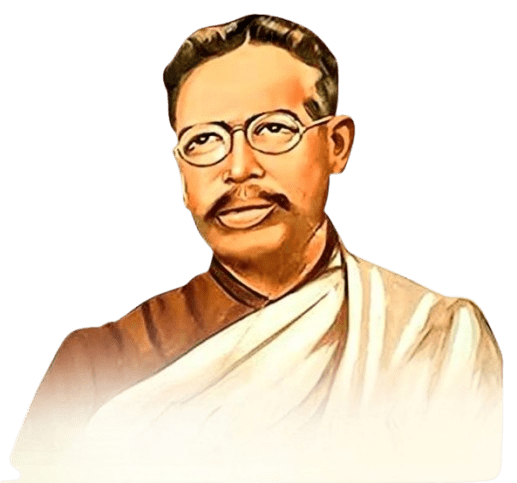
Identify the person.
- Madan Mohan Malaviya
- Bipin Chandra Pal
- Satyapal
- Raja Rammohan Roy
Answer
Bipin Chandra Pal
Reason — The person in the picture is Bipin Chandra Pal, one of the eminent freedom fighters of the Assertive/Radical Nationalist trio (Lal-Bal-Pal), who led the Swadeshi Movement in Bengal (1905-07) along with Sri Aurobindo.
With reference to the given picture, answer the following questions.
He was one of the main architects of the ............... along with Sri Aurobindo.
- Swadeshi Movement
- Civil Disobedience Movement
- Non-Cooperation Movement
- Quit India Movement
Answer
Swadeshi Movement
Reason — Bipin Chandra Pal opposed the Partition of Bengal and led the Swadeshi Movement in Bengal (1905-07) along with Sri Aurobindo. Hence, he was one of its main architects.
Which of the following leaders was the forerunner of Mahatma Gandhi in many ways?
- B.C. Pal
- Aurobindo Ghosh
- Bal Gangadhar Tilak
- Lala Lajpat Rai
Answer
Bal Gangadhar Tilak
Reason — Tilak transformed the freedom struggle into an agitation of the millions and the common masses. He promoted Swadeshi and Boycott, believed in vigorous political action, and declared, “Swaraj is my birth-right and I shall have it.” These methods and ideas were later adopted and developed further by Mahatma Gandhi, making Tilak his forerunner in many ways.
Whose death unleashed hectic revolutionary activity in Punjab and elsewhere?
- B.G. Tilak's
- Lala Lajpat Rai's
- B.C. Pal's
- All of these
Answer
Lala Lajpat Rai's
Reason — Lala Lajpat Rai died of the lathi blows he received while opposing the Simon Commission in 1928. His death unleashed hectic revolutionary activity which culminated in the execution of Bhagat Singh, Rajguru and Sukhdev in 1931. Hence, Lajpat Rai dead proved even more dangerous than Lajpat Rai alive.
In the question given below, there are two statements marked as Assertion (A) and Reason (R). Read the statements and choose the correct option.
Assertion (A) : Lala Lajpat Rai dead was even more dangerous than Lajpat Rai alive. Reason (R) : His death unleashed hectic revolutionary activity which culminated in the execution of Bhagat Singh, Rajguru and Sukhdev.
- Both Assertion (A) and Reason (R) are correct and Reason (R) is the correct explanation of Assertion (A).
- Both Assertion (A) and Reason (R) are correct but Reason (R) is not the correct explanation of Assertion (A).
- Assertion (A) is true, but Reason (R) is false.
- Assertion (A) is false, but Reason (R) is true.
Answer
Both Assertion (A) and Reason (R) are correct and Reason (R) is the correct explanation of Assertion (A).
Explanation — Lala Lajpat Rai's death unleashed hectic revolutionary activity which culminated in the execution of Bhagat Singh, Rajguru and Sukhdev. Since his death proved more dangerous to the British than his life by triggering this revolutionary activity, Reason (R) correctly explains Assertion (A).
Identify the methods of political strategy of the Radical Nationalists.
P : They popularised the ideas of Swadeshi and organised bonfire of foreign goods.
Q : They emphasised on the boycott of foreign goods.
R : They believed in violent revolution to overthrow the British.
S : They had full faith in the British sense of justice and fair play.
- P and Q
- Q and R
- P and R
- R and S
Answer
P and Q
Reason — The Radical Nationalists popularised Swadeshi, organised occasional bonfires of foreign goods, and emphasised the boycott of foreign goods. They did not advocate a violent revolution, nor did they have faith in the British sense of justice and fair play.
A college student named Varun is doing a project on the Radical Nationalist era of the freedom struggle. About whose contribution is Varun most likely to write about?
- G.K. Gokhale
- Mahatma Gandhi
- Lal-Bal-Pal
- Bal Gangadhar Tilak
Answer
Lal-Bal-Pal
Reason — The Radical Nationalist era of the freedom struggle (1905-1919) was led by the trio of Lala Lajpat Rai, Bal Gangadhar Tilak and Bipin Chandra Pal, popularly known as Lal-Bal-Pal. Hence, Varun is most likely to write about their contribution.
Tilak : Gita Rahasya : : Lala Lajpat Rai : ?
- Vande Mataram
- Young India
- Unhappy India
- The People
Answer
Unhappy India
Reason — Just as The Gita Rahasya was a book written by Bal Gangadhar Tilak, 'Unhappy India' was the famous book written by Lala Lajpat Rai.
Lord Curzon partitioned Bengal into two provinces apparently on
- social grounds
- administrative grounds
- caste grounds
- political grounds
Answer
administrative grounds
Reason — Lord Curzon claimed that Bengal was too large to be administered efficiently by one Provincial Government and justified the partition on administrative grounds.
The British officials relied on the policy of 'Divide and Rule' to weaken the
- Nationalist Movement
- Education system
- Social Development
- Agricultural Development
Answer
Nationalist Movement
Reason — The British adopted the policy of "Divide and Rule" by giving concessions to the Early Nationalists and attempting to wean away the Muslims in order to weaken the Nationalist Movement.
Identify the odd one out of the following Assertive Nationalists Leaders.
- Bipin Chandra Pal
- Dadabhai Naoroji
- Lala Lajpat Rai
- Bal Gangadhar Tilak
Answer
Dadabhai Naoroji
Reason — Lala Lajpat Rai, Bal Gangadhar Tilak, and Bipin Chandra Pal were Assertive Nationalist leaders, whereas Dadabhai Naoroji was a leader of the Early Nationalists (Moderates).
Read the two statements given below about the split in Congress and select the option that shows the correct relationship between (A) and (B).
(A) Leaders with moderate political opinions wanted to insert a clause in the Congress Constitution that said that Swaraj was to be achieved through constitutional means.
(B) Swadeshi and Boycott were the basic components of methods of struggle of the assertive nationalists that led to the split in the Congress in 1907.
- (B) contradicts (A).
- (B) is the reason for (A).
- (A) is true, but (B) is false.
- (A) and (B) are independent of each other.
Answer
(B) is the reason for (A).
Explanation — The Assertive Nationalists' emphasis on Swadeshi and Boycott led to serious differences with the Moderates and resulted in the Surat Split of 1907. After the split, the Moderates wanted to insert a clause in the Congress Constitution stating that Swaraj was to be achieved through constitutional means. Hence, (B) is the reason for (A).
Read the two statements given below about the Partition of Bengal and select the option that shows the correct relationship between (A) and (B).
(A) The partition of Bengal was a mere readjustment of administrative boundaries.
(B) The nationalists believed that the Government did not intend to strike at the roots of Indian nationalism.
- (B) contradicts (A).
- (B) is the reason for (A).
- (A) is true, but (B) is false.
- (A) and (B) are independent of each other.
Answer
(A) is true, but (B) is false.
Explanation — The Government justified the Partition of Bengal as a mere readjustment of administrative boundaries. However, the nationalists believed that the real motive was to curb the rising tide of nationalism and to strike at the roots of Indian nationalism. Therefore, Statement (A) is true (as the Government's stated justification), while Statement (B) is false.
In the question given below, there are two statements marked as Assertion (A) and Reason (R). Read the statements and choose the correct option.
Assertion (A) : Lord Curzon partitioned Bengal in 1905.
Reason (R) : Bengal was too big a province to be administered efficiently by one provincial government.
- Both Assertion (A) and Reason (R) are correct and Reason (R) is the correct explanation of Assertion (A).
- Both Assertion (A) and Reason (R) are correct but Reason (R) is not the correct explanation of Assertion (A).
- Assertion (A) is true, but Reason (R) is false.
- Assertion (A) is false, but Reason (R) is true.
Answer
Both Assertion (A) and Reason (R) are correct and Reason (R) is the correct explanation of Assertion (A).
Explanation — Lord Curzon partitioned Bengal in 1905. The reason he gave to the Congress leaders was that Bengal was too large a province to be administered efficiently by a single provincial government. Hence, (R) is the reason for (A).
Identify the reasons for the Surat Split in 1907.
P : Both the groups within the Congress began to oppose vehemently the policy and programmes of each other.
Q : The list of subjects to be discussed at the Surat session did not include resolution on Swaraj, Swadeshi, boycott and national education.
R : When S.N. Banerjea got up to propose the name of Lala Lajpat Rai as President, he was shouted down by the Radical group.
S : The Radical group proposed the name of Bipin Chandra Pal as the President of the Surat Congress.
- P and Q
- R and S
- Q and R
- P and S
Answer
P and Q
Reason — Statements P and Q are correct: both groups began to vehemently oppose each other's policies, and at Surat the list of subjects did not include resolutions on Swaraj, Swadeshi, boycott and national education. Statement R is wrong because S.N. Banerjea proposed the name of Dr. Ras Behari Ghose (not Lala Lajpat Rai), and statement S is wrong because the Radical group proposed the name of Tilak (not Bipin Chandra Pal) as President of the Surat Congress.
Mr. Gupta is a student doing project on the Surat Split in the Congress. He is to highlight the roles of which of the following leaders.
- S.N. Banerjea and Dr. Ras Behari Ghose
- S.N. Banerjea and Bal Gangadhar Tilak
- Dadabhai Naoroji and Lala Lajpat Rai
- W.C. Bonnerjea and Bipin Chandra Pal
Answer
S.N. Banerjea and Bal Gangadhar Tilak
Reason — At the Surat Session, S.N. Banerjea proposed the name of Dr. Ras Behari Ghose for the presidentship but was shouted down. Tilak was refused permission to address the session, leading to disorder and the eventual split. Hence, the roles of S.N. Banerjea and Bal Gangadhar Tilak are most relevant to the Surat Split.
The nationalist's felt Bengal was partitioned.
- To divide Hindus and Muslims
- For effective administration
- To stop the spread of Swadeshi
- None of these
Answer
To divide Hindus and Muslims
Reason — According to the nationalist leaders, the real motive of the partition was to curb national enthusiasm and to drive a wedge between the Hindus and the Muslims, thereby weakening national unity.
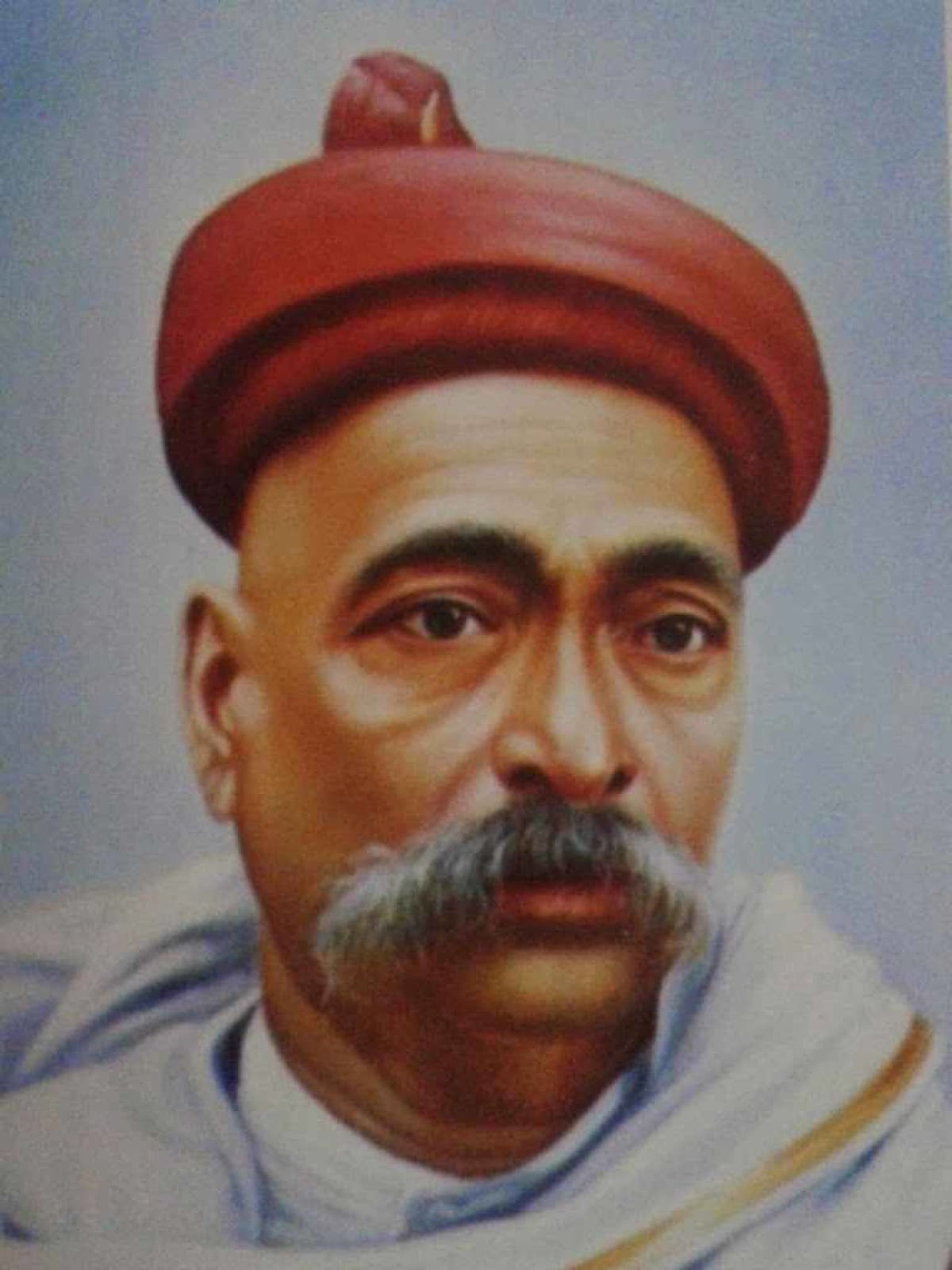
Identify the leader in the given picture:
- Bipin Chandra Pal
- Bal Gangadhar Tilak
- Lala Lajpat Rai
- Gopal Krishna Gokhale
Answer
Bal Gangadhar Tilak
Reason — The given picture shows Bal Gangadhar Tilak, an assertive nationalist leader.
The main objective of the Assertive Nationalists was ............... .
- Constitutional agitation
- Peaceful protests
- Purna Swaraj
- Self-government under British Rule
Answer
Purna Swaraj
Reason — The main objective of the assertive nationalists was to attain Purna Swaraj from the British Government in India and establish their administration and government.
In the question given below, there are two statements marked as Assertion (A) and Reason (R). Read the statements and choose the correct option.
Assertion (A) : Lord Curzon partitioned Bengal in 1905.
Reason (R) : The Nationalists felt that the British wanted to divide the Hindus and the Muslims.
- (A) is true and (R) is false.
- (R) is true but (A) is false.
- Both (A) and (R) are independent of each other.
- (A) is the reason for (R).
Answer
(A) is the reason for (R).
Explanation — Lord Curzon partitioned Bengal in 1905. The nationalists believed that the real motive behind the partition was to divide the Hindus and Muslims and weaken Indian nationalism. Therefore, the partition mentioned in (A) led to the belief expressed in (R).
The market of a small industrial town X has been dominated by many products of foreign companies. The local residents decide to save the Indian industries by helping them increase their sales. Which method of the Assertive Nationalists must they follow to become self-reliant?
- Passive Resistance
- National Education
- Swadeshi
- Revivalism
Answer
Swadeshi
Reason — Swadeshi meant producing and using goods made in one's own country in preference to imported goods. It encouraged Indians to support indigenous industries and boycott foreign goods.
Identify the odd one out of the following Assertive Nationalists Leaders.
- Bipin Chandra Pal
- Lala Lajpat Rai
- Dadabhai Naoroji
- Bal Gangadhar Tilak
Answer
Dadabhai Naoroji
Reason — Lala Lajpat Rai, Bal Gangadhar Tilak, and Bipin Chandra Pal were Assertive Nationalist leaders, whereas Dadabhai Naoroji was a leader of the Early Nationalists (Moderates).
Name the leaders who constituted the Assertive/Radical Nationalist trio in the early years of the 20th century.
Answer
Bal Gangadhar Tilak, Lajpat Rai and Bipin Chandra Pal constituted the Assertive/Radical Nationalist trio in the early years of the 20th century.
Name any two papers started by Tilak to propagate his faith.
Answer
Tilak started two well-known papers, the Kesari and the Mahratta.
Who was known as Father of Assertive/Radical Nationalism in India?
Answer
Bal Gangadhar Tilak is known as the Father of Assertive/Radical Nationalism in India.
In which two ways can Tilak be called the forerunner of Gandhi?
Answer
Tilak was the forerunner of Mahatma Gandhi in many ways:
- Tilak anticipated many of the movements later launched by Mahatma Gandhi, such as the no-rent campaign, boycott of Government services, prohibition and Swadeshi.
- He talked of Swaraj as early as 1897.
How was 16 October, 1905 observed throughout Bengal?
Answer
The Partition of Bengal became effective from October 16, 1905. The leaders declared it to be "a day of mourning" throughout Bengal. Every city, town and village now rang with the cry of 'Bande Mataram' which symbolised patriotism and unity. The Hindus and Muslims tied Rakhi on one another's wrist as a symbol of brotherhood. They fasted during the day. Mass meetings were held all over Bengal and big crowds took the oath of Swadeshi. The Bengalis rose like one man to resist, to suffer and to sacrifice everything.
Name the nationalist who said, 'Swaraj is my birthright and I shall have it'. State any one of his contributions to the National Movement.
Answer
Bal Gangadhar Tilak declared, "Swaraj is my birth-right and I shall have it."
One of his contributions to the National Movement was that he started the Home Rule Movement in 1916. With his ideas and weapons he infused a new life in the National Movement and transformed the freedom struggle into an agitation of millions of the common masses.
Write any two contributions of Lala Lajpat Rai to the National Movement.
Answer
Two contributions of Lala Lajpat Rai to the National Movement were:
Social and Educational Work — He founded the Servants of the People Society and helped establish the D.A.V. College at Lahore.
Opposition to the Simon Commission — He led a protest against the Simon Commission at Lahore in 1928, was injured in a lathi charge and gave his life for the country.
Mention any two contributions of Bipin Chandra Pal in promoting Nationalism.
Answer
Two contributions of Bipin Chandra Pal in promoting Nationalism are:
- He opposed the Partition of Bengal and led the Swadeshi Movement in Bengal (1905-07) along with Sri Aurobindo, preaching the use of Swadeshi and the boycott of foreign goods to eradicate poverty and unemployment.
- He was a great orator who could influence people by the magic of his tongue. Through national education he worked to remove social evils and to arouse the feelings of nationalism and patriotism among the people of India.
Why is October 16, 1905 regarded as an important day in the history of the Indian National Movement?
Answer
October 16, 1905 was the day on which the Partition of Bengal came into effect. It was observed as a "day of mourning" throughout Bengal. Every city, town and village rang with the cry of 'Bande Mataram'; the Hindus and Muslims tied Rakhi on one another's wrists as a symbol of brotherhood, fasted during the day and took the oath of Swadeshi. It marked a mass upsurge of patriotism and unity and gave a great impetus to the Swadeshi and Boycott Movement. Hence, it is regarded as an important day in the history of the Indian National Movement.
In which year did the Surat split happen? What was the result of this split?
Answer
Surat Split happened in the year 1907. The Surat Split of the Indian National Congress (INC) resulted in the party’s division into two groups, i.e., the Early Nationalists and the Assertive Nationalists, due to different ideologies and methods. The Split in the Congress gave an opportunity to the British to exploit the situation and it weakened the national movement.
How did the Early Nationalists and the Assertive/Radical Nationalists differ in the following fields?
(a) Their political goals
(b) Attitude towards the British rule
(c) Their method of work
Answer
(a) The difference between Early Nationalists and Assertive Nationalists with respect to their political goals are given below:
| Early Nationalists | Assertive Nationalists |
|---|---|
| They wanted Self-Government and strove for autonomy within the British Empire. | They wanted Swaraj and regarded it as the only remedy for all the Indian woes. |
(b) The difference between Early Nationalists and Assertive Nationalists with respect to their attitude towards the British rule:
| Early Nationalists | Assertive Nationalists |
|---|---|
| They were loyal to the British Rule and English Crown. They considered British rule a boon for India. | They believed that the British were unworthy of guiding India towards self-government. |
| They had full faith in the British sense of justice and fair play. | They had no faith in British sense of justice and fair play. |
(c) The difference between Early Nationalists and Assertive Nationalists with respect to their method of work are given below:
| Early Nationalists | Assertive Nationalists |
|---|---|
| They adopted constitutional and peaceful methods to achieve their objectives. | They believed in political agitation, passive resistance and active opposition to British policies. |
| Early Nationalists had full faith in policy of cooperation. | The Radicals believed in non-cooperation, adopted programme of boycott against foreign goods, propagation of Swadeshi and a system of national education. |
| Early Nationalists were in favour of British institutions, ideals and literature. | They believed in supremacy of Indian culture and civilisation, religion and traditions. They wanted to reconstruct Indian society on those models. |
| They had no contact with the masses. Their success depended on the good-will of the Englishmen. | Under their leadership, the movement derived strength from the masses. They believed the people of India were the masters of their destiny. |
The conflict between the two sections of the Congress came to surface in its Session in 1906 at Calcutta. In this context, explain the following:
(a) The Split in the Congress in 1907.
(b) With reference to the picture given below, answer the following:

(i) What were the three personalities popularly known as?
(ii) Which section of the Congress did they represent?
(iii) Mention two of their popular Beliefs.
(c) State any four methods that they advocated for the achievement of their aims.
Answer
(a) The Surat Split of 1907 occurred due to differences between the Moderates and Radicals over Swaraj, Swadeshi, Boycott and National Education. At the Surat Session, clashes broke out over the election of the President and Tilak was not allowed to speak. The session was suspended, and the Radicals were expelled from the Congress, resulting in the split.
(b) (i) The three personalities are popularly known as Lal-Bal-Pal (Lala Lajpat Rai, Bal Gangadhar Tilak and Bipin Chandra Pal).
(ii) They represented the Assertive/Radical Nationalist section of the Congress.
(iii) Two of their popular beliefs were:
- They wanted Swaraj and regarded it as the only remedy for all the Indian woes.
- They had no faith in the British sense of justice and fair play and believed in active resistance, self-reliance and political agitation.
(c) Four methods that the Assertive/Radical Nationalists advocated for the achievement of their aims were:
- Swadeshi — producing and using goods made in one's own country instead of imported goods, an idea popularised by occasional bonfires of foreign goods.
- Boycott — giving up the use of foreign goods to encourage indigenous industries, provide jobs to Indians and harm British trade.
- National Education — a national scheme of education to replace government-controlled universities and colleges, for which a large number of national schools were set up.
- Passive Resistance — refusing to cooperate with the Government by boycotting government schools, colleges, courts and services.